

Interview with Avi Nesher
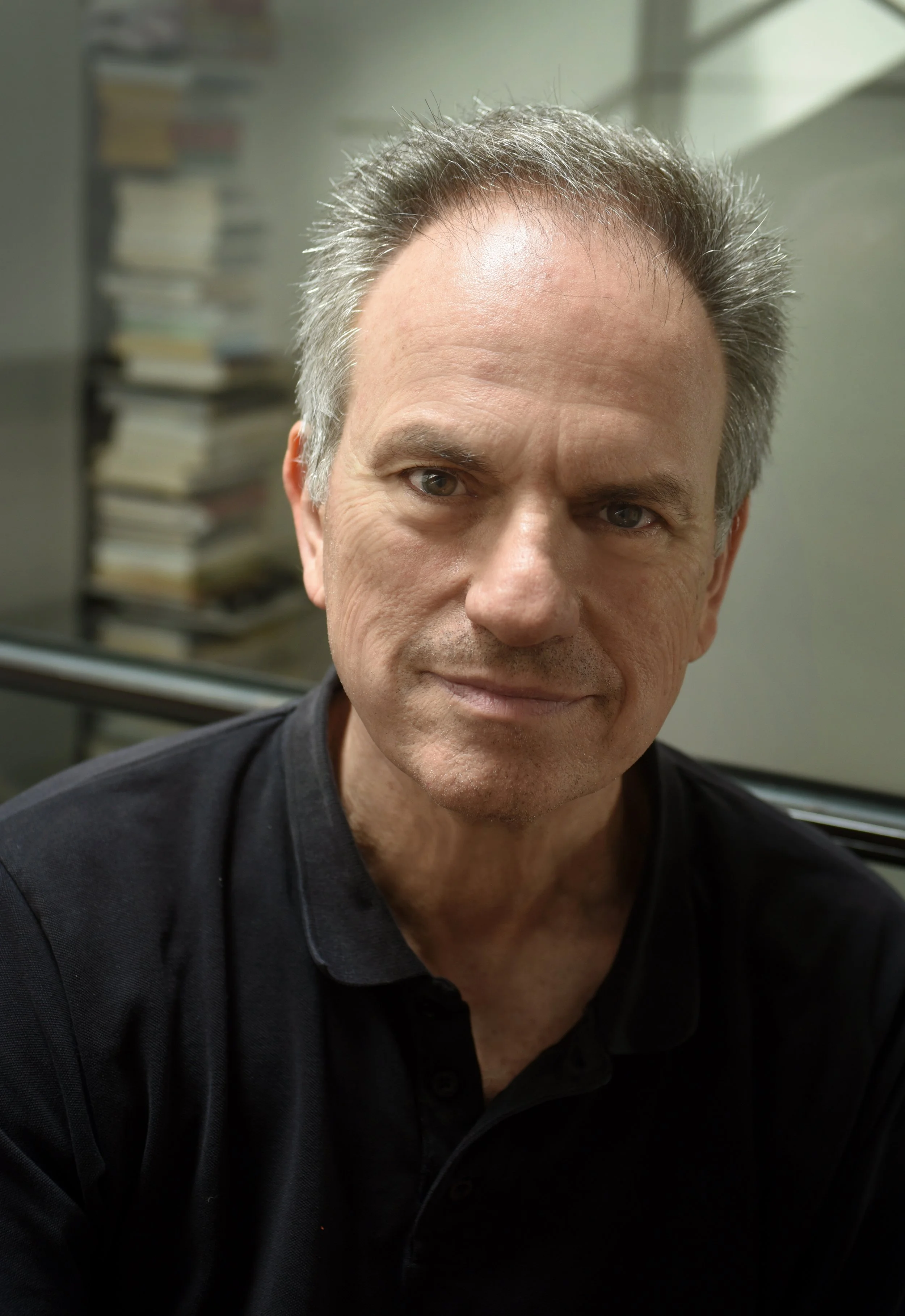
Avi Nesher is a director and screenwriter.
Waiting for the Show
Contents
MR: I wanted to start by talking about memory. Memory is such a big part of your movies, whether it's childhood or significant moments, and your movies always have a time element to them.
How do you remember things? Do you have any old notebooks or photo albums or journals? How do you remember things from your past?
AN: Well, strangely enough, my memories are of movie houses. I understand geography based on where old movie houses used to be. Turn left where this old movie house used to be and then turn right. It’s my strongest childhood memory.
MR: Was there a movie that's your strongest childhood memory?
AN: Not really. It was just the whole idea of movies.
I grew up in Ramat Gan, a suburb of Tel Aviv, and every Sunday morning, the local butcher would put a cardboard display in his front window with stills from the attractions playing that afternoon and evening. And I would await this anxiously because this would dictate my week — which movies I was going to see.
There were movies that showed in the afternoon — many Westerns, many war movies. And I saw them the way you really see movies. You see it with your body, you see it with your soul, you see it with your identity.
MR: Was it mostly American movies you would see?
AN: Yes, almost exclusively, up till I was 16, when I started seeing European movies. But these early movies — the Westerns, the war movies — really build up your character.
I've been known to do crazy things later in life, and when I go back and ask, "Why did I do it?" it’s the way these movies brought me up.
MR: But your movies are so much about first loves or getting into teenage trouble — do you remember, for instance, your teachers in high school? Do you think about them? Do you remember your first girlfriend?
AN: Yes, but I remember things that made a great impression on me. I don't think there was a teacher in high school who did. There was one teacher at Columbia that I admired greatly, but of course he was a movie critic.
MR: Who was it?
AN: Andrew Sarris, who wrote this book called The American Cinema that I knew the way a yeshiva bochur knows the Talmud. You could have asked me what's on page 58 and I would know.
Many years later, when I made my own movies, he was no longer at the Village Voice — he wrote for the New York Observer — and he wrote about a movie of mine called The Secrets, and he called it one of the best movies of the year. And I was just so touched, and I sent him a note to thank him, and he had no idea who I was.
MR: Are you this way about music? Do you viscerally remember the music that had an impact on you?
AN: Well, in my early life, the impact was huge. I thought I was going to be a musician. The whole idea of filmmaking was so far removed for me because I don't think I knew what a director was until I read The American Cinema when I was 16.
I grew up in New York City and there was a movie house on 19th and 8th called the Elgin. They would do retrospectives. They would show all the Howard Hawks and all the John Fords and all the Bergmans and all the Fellinis. I would go there in the morning — they had double bills — so I would see four screenings of movie X, four screenings of movie Y, and I would just go away knowing these movies inside out. And that was my obsession.
Luckily enough, I was a reasonably good athlete, so I was never kicked out of any school, so that was basically what I did. And I was a guitar player, not a very good one. I was a jazz guitarist. So I have this reputation of being the best director among musicians and the best musician among directors.
Watching and Listening
MR: What's the movie you think you've seen most in your life?
AN: Oh, God.
MR: Will you rewatch things a lot?
AN: A lot. I mean, I must have seen Rio Bravo countless times. I must have seen Amarcord countless times. North by Northwest, Vertigo, Rear Window.
MR: Are you saying you’ve seen them like once a year or like 100 times?
AN: On Vertigo, I would go and watch 15 minutes and listen to the great Bernard Herrmann score and take in the lusciousness of the color, and I would just feel it in my body. Or there are some really obscure filmmakers, like Budd Boetticher, who made a bunch of Westerns with Randolph Scott, which have a very interesting sense of honor and morality, kind of like samurai movies. Every now and then I would go watch 10 minutes of them. So it's not like I would watch the full movie. I would watch a part of the movie just to remind myself of a certain sensibility.
MR: When you were younger, was there a band or musician you were really into?
AN: Steppenwolf was a big band for me when I was a kid.
But once I got deeper into movies, I need to understand the soundtrack before I write, because the soundtrack is the emotion and the soundtrack allows you to write things not through dialogue.
I know by heart all the Bernard Herrmann scores. I know Georges Delerue extremely well. Philippe Sarde wrote a score for The Matchmaker, and it was a great experience. At some point in my life, I got really involved with soundtracks.
MR: Do you play music when you write?
AN: Yes, I do. I do a whole soundtrack collection for each screenplay. If I'm on the wrong beat, the soundtrack will tell me.
If I put the music on and I start writing and the music doesn't match, I miss out. Again, for me, the music allows me to write in counterpoint, to write against the expected. I once did a keynote speech in Toronto called “The Structureless Structure,” and so I'm really big on sabotaging every known structure.
I'll tell you a funny story: The last time I was at the Toronto Film Festival was for a movie called The Other Story. The movie finishes and people applaud, and I get up on stage and this one critic I know really well gets up and runs out in a huff. Like this guy couldn't even wait for me to start my Q&A? And I go, "My God, was the movie that bad? He couldn't even give me a courtesy."
Anyway, I kind of go through it, and then when I'm done, the critic comes back. And I get off stage and he hugs me and he says, "Great movie, Avi, amazing."
And I say, "Why did you do that? Why did you run out?"
"Your fault."
"Why is this my fault?"
“This structureless structure thing of yours messes me up because normally when I see a movie, I understand the structure and identify the 10 minutes when I know the narrative won’t move, when I can go to the bathroom. In your movie, I can never find those 10 minutes because I don't understand the rules of the game.”
MR: What does watching movies for you look like?
AN: Well, the most enjoyable is seeing it on a big screen.
MR: What’s the last movie that you sat and watched straight through beginning to end?
AN: I saw a movie I've never seen before called Munich.
MR: The Spielberg movie?
AN: No, not the Spielberg movie.
It was a movie about the Munich Conference, and it's told through a young Brit and a young German and this woman in between them. The narrative was easy to anticipate, but in many ways it showed you Chamberlain in a different light, and structurally it was interesting.
MR: And what about TV? Do you watch a lot of TV?
AN: TV moves too slowly for me. The Crown is incredible. Early Sopranos is extraordinary.
MR: The best, the best.
AN: They have those characters. But suddenly you have to do a narrative line for the wife. We're not watching this for the wife. We got other things we want to see.
Television is an industrial phenomenon because they have to produce so many minutes per season and so many seasons in order to turn a profit. And you can tell that the writers are not doing their best, but they have assignments and they have to measure up to the number of minutes they need to produce.
But then again, in movies, The Godfather Part II is one of the best-written screenplays of all time, and it's a sequel.
I've always turned down offers to do sequels to some of my movies because the idea bores me.
Writer’s Block and the Lebanese Border
MR: How do you write? Do you use a computer? Handwrite?
AN: I have rituals. I write longhand. I write on a yellow pad.
I live on the beach, so when I get stuck, I go to the beach and I start walking north. The border with Lebanon is 100 kilometers away, and so I’d better figure it out at some point before.
I have a great assistant. One of her greatest skills is being able to read my handwriting. Basically, I trick myself because I write longhand, then I get the thing typed, and when I read it, it's as though someone else wrote it. It's very easy for me to identify my mistakes because I'm not invested in that thing that I read because I didn't type it. So it's like some screenwriter I liked wrote it, but I can identify what I need to cut and what I need to add.
MR: When you waste time, when you just need to shut your brain off, what do you do?
AN: Big problem. Really, really big problem. Shutting my brain off is really, really difficult. One of the things I like about baseball is there's no need to shut your brain off because the game is so slow.
MR: But do you scroll on Instagram or something like this? What do you do when you're wasting time and just potching around?
AN: Sadly enough, I'm not wasting time. It's one of the greatest tragedies of my life. I'm working on a script, but my mind is also working on the screenplay I'll write afterwards.
Yoni Netanyahu and Bridget Bardot
MR: Have you ever written a full script that you thought you could make a movie out of, but it truly went nowhere?
AN: No. I'm so aware of that situation and that it represents a threat to me, so I look for my redundancy when I start writing. I've been known to stop writing after 20 pages. Actually, the very first movie I made in Israel, The Troupe, when I was 24, I originally started writing about the unit where I served in the army, which was a special forces unit.
MR: Sayeret Matkal?
AN: Mhmm.
MR: You served with Yoni Netanyahu?
AN: He wasn’t my direct commander, but he was the commander. I was not very good, mind you, and I was not even close to being heroic or anything like that. Nothing to boast about. It was very highly educational for me. And I think the reason I write so many movies which are ensemble pieces is because I was really fascinated with the politics within the platoon. I mean, it was beautiful and vicious at the same time.
MR: What was Yoni Netanyahu like?
AN: I didn't know him that well. He was in charge of the whole basic training program. So my only semi-funny story — it's not that funny — but that unit was very big on the idea that you are obeyed not because you're an officer and not because you have bars, but because you're a better soldier than your men, which is incredible. I mean, that's my directing thesis. I'm not there to give orders. I'm there to push people to the right places.
So we had a dining room and there was no separation between officers and enlisted men, which I loved. And outside, there was this board and they had the listing of officers in charge of something for next week. And there was a guy in Hebrew called Bibi Netanyahu, and I thought somebody was making fun of some guy, calling him “Brigitte Bardot” Netanyahu.
MR: So you’re like the perfect Israeli. Have you heard of the American term WASPs?
AN: Of course.
MR: In Israel, it stands for White Ashkenazi Secular Paratroopers.
AN: [Laughs] Okay. Didn't know that.
MR: So at least according to that, you’re kind of the perfect Israeli in a certain sense. If you're thinking of a classic perfect Israeli, you're that mold. I don't know what I'm asking, but what does it feel like to be that guy?
AN: The perfect Israeli who grew up in New York City, right?
MR: I think that's maybe even part of it. Bibi grew up in Philadelphia.
When you walk down the street in Tel Aviv, do you know everyone? Do you feel like you're at the top of the heap in Israel?
AN: No, that's not how I feel. I feel that my movies have touched the lives and hearts of many Israelis. And I'll tell you a sad story about that. We had this great tragedy with my son, and close to 8,000 people came to the funeral and it was broadcast. And you go, "What the hell?" And these were just people who were touched by my movies, and they came to hug me. And that's very beautiful. That's making movies in a small country.
MR: On a personal level, does that do something for you? Do you like that people like your movies or do you just make them and whatever happens with them happens with them?
AN: I like that my movies make people think, and I like that they go back and see them a second and a third time.
MR: I've seen The Matchmaker probably six times. It’s a fantastic movie. I’ve seen a lot of your movies and it’s not even a question that it’s the best one.
Faith & Art
MR: Do you floss?
AN: Yes.
MR: Do you believe in God?
AN: I have conversations with an entity. Yes, I guess you can call it God — as good a name as any. For me, religion is a political structure of belief. Belief is a very individual thing.
MR: Do you have any regimentation around your spirituality?
AN: No. I do try to run on the beach a couple of times throughout the week.
MR: Do you listen to music when you run?
AN: No, I don't. I listen to the sea. I love the feeling of the sand. I run barefoot, and I love the sound of the waves, and I love the sound mix of the beach. It's a great sound mix.
MR: Do you believe in an afterlife?
AN: I never think about that. I mean, part of my education is military because I spent four years in the army. So one year I was in special forces, and the other three, I was an analyst. I was an intelligence analyst.
MR: You were on the Soviet desk.
AN: Yes, the Soviet desk. And what they teach you is that which is not factual, and you know that for a fact, no need to bother with it. That becomes a part of your thinking. So it's interesting for me because I have a lot in common with Orthodox Jews because they believe in the abstract, and I think of the abstract because I'm a filmmaker. I think of things that exist only in my mind, and they believe in things that exist only in their mind. And in Hebrew there’s a connection between omanut (art) and emunah (faith). It's the same root. Some of my movies have to do with religion, and so does the movie I'm working on now.
MR: What's the movie you're working on now?
AN: Bad luck to talk about it.
MR: When you're working on something, do you talk to people about it?
AN: Yes, very much so. But only after I've made up my mind that I think this is what I want to write. I mean, I don't want to tell you something and then a couple of days later I will think it's complete foolishness and why did I waste your time and my time. So I don't want to commit to something until I’m sure.
MR: But will you ask your wife or your friends about a specific character or something like that?
AN: Only my wife, again, because she's a great artist and a very sensible person. And if I change my mind, she will not think I'm stupid.
MR: Do you ever struggle with writer’s block?
AN: Of course. Again, I beat it using the fear of the Lebanon border.
MR: That’s one of the funniest things I’ve heard.
AN: But whenever I sit down to write, I'm convinced today's the day when I will discover that I cannot write. And a few hours go by, I do this, I do that, I do this, I do that. And suddenly from somewhere, this word comes up, this line comes up, this character comes up and I write it and then suddenly I begin to write. I was a jazz musician for a while. Again, not very good at all. Did you ever play in a band as a guitarist?
MR: Yeah.
AN: So, in jazz combos, the idea is you have four or five guys on stage and if each insisted on his own line, it would be complete cacophony. So there has to be one guy whose talent is not to have an ego and to listen to the thing which is most interesting and to drag everybody into that direction. And it's very rare that it’s his own thing. It's usually someone else's.
And that's the thing I can do. When I work with actors, for example, we do rehearsals and I go, "Who wrote this idiotic line? Oh, that's me. I'm sorry. Okay." And basically, when I write, my screenplays are not the Bible. My screenplays are an invitation to the dance. And when I cast people, I cast creative partners. I never know what my characters look like. And I don't tell actors what to do, I ask them what they feel. And at some point, my actors become my characters, and my characters become my actors. And then when we shoot, there's never a bad take.
And my job on the set is just to create an atmosphere where they can be completely open and not act. My whole thing is: Do not act but be truthful.
MR: Do you have any kooky things you have people do to get to know one another? Do you play basketball or do icebreakers or anything like that?
AN: No. I hate the word “work-related” because work is passion and passion is work and it's not like we go to the office and sell insurance. So I had lunch yesterday with this guy who plays the matchmaker in the movie.
MR: Adir [Miller]?
AN: He's the top comedian in Israel and it's very funny because he makes movies only with me.
MR: Really?
AN: He's completely not interested in acting in movies. No interest whatsoever, but he likes the artistic process. And whenever he works with me, he loses money because he cancels all his shows. And we had lunch yesterday.
So I guess he heard very good things about Our Loves and he said, "Suddenly I got jealous, so let's have lunch." And it's beautiful because we really like each other, but it has to do somehow with doing things well. So we have lunch and we haven't seen each other for a long time and there's great camaraderie and great affection. And yet, boy, would we love to meet on a movie set a year from now. And whenever I write a screenplay which he's wrong for, I'm really pissed off at myself, but I have no control.
He's a wonderful, wonderful actor. He's an unbelievably funny guy.
MR: If my readers haven’t watched any of your movies or know anything about you, which would be the movie that you would say, "Watch this movie"?
AN: Well, I would ask you which movie do you think they should watch?
MR: Well, that's an easy one, The Matchmaker.
AN: Okay. I mean, I hear good things about Image of Victory.
MR: Oh, I mean, the last scene in that, or rather the scene where she’s smiling. How many takes did that take you?
AN: Two.
MR: No way.
AN: My actors are so into the characters that there are very, very few bad takes. I edit in no time whatsoever because the creative process is during rehearsals. If I go to a third take, I become disappointed. If you have done your homework well, there's no reason.
MR: I guess it's a little bit like jazz. If you listen to Charlie Parker at Massey Hall or any live concert, I guess it’s obviously a first take. The opposite of that is when Coltrane counts off “Giant Steps” and Tommy Flanagan is holding on for dear life. Kind of Blue is the good kind of spontaneity.
The Family Business
MR: Have you ever done psychotherapy?
AN: I've done one session and I got bored.
MR: Why not?
AN: It’s not a question of why not — I dig into my soul when I write. That's my therapy. And when I work with actors, my whole method is I expect full disclosure from them, and in exchange, I give them full disclosure. They can ask me about myself, anything they want.
MR: Do they ask you about your son?
AN: Well, many of them knew him. This is still pretty fresh.
I'll tell you a thing, a sad thing. So we open the Haifa International Film Festival in a couple of weeks. We have the opening movie and I'm getting some kind of an award, which is something I don't like to do, but they really insisted. And it's on his birthday. And I'll be going on stage, which is the stage I stood on when The Other Story played and I went on stage for the Q&A and that whole audience — huge auditorium, 2,000 people — got up and I saw him standing in row 17 with a huge smile on his face and applauding, and it's the last time I saw him. So I'll be standing there.
MR: Do you think you'll cry? Do you cry?
AN: Anything that has to do with him, yes.
MR: Can you write about it or no?
AN: Well, my daughter made an extraordinary movie called Come Closer. It won a prize at Tribeca a couple of years ago. It's a first movie, a wonderful movie. It’s about a brother and a sister. So she did that.
And in everything I write now, there's a dead son somewhere.
MR: How many interviews do you get where people ask you normal questions about yourself and how you are as a filmmaker versus as an Israeli filmmaker?
AN: Well, I'm enjoying this conversation a lot because we haven't spoken about politics.
MR: Were you close with Arik Einstein?
AN: No, he was much older than me.
MR: I feel like you're the next Arik Einstein.
AN: I'm more like the next Uri Zohar. He acted in my very first movie.
MR: Oh, wow. I didn't know that.
AN: It's kind of an interesting story. When I was in the army, I was a member of a film quarterly and I interviewed him, and I was supposed to spend like 45 minutes, and I went in the morning, and by the time we were done, the sun was setting.
MR: Wow.
AN: And when I left, he said, "When you make your first feature, I'll act for you." So four years went by, and neither he nor I expected me to make my first feature so quickly, and I didn't call him.
He calls me up and he says, "I understand you're making your first movie." And by then, I knew he had become religious, and I said, "Yes, yes, yes, but you don't need to honor your commitment."
And he said, “No such way. I made you a promise, and you cannot break your promise. Please do the thing. Let me play a small part and no touching of women.”
"Okay, let me see if I can do that."
"And it would be great if I can play a variation on myself because I don't like to read anything but the Talmud."
"I respect that."
So he came to the set and he gave me a blessing for a traveler. He says, “I expect you to join me in Jerusalem after about 10 years."
"Don't hold your breath."
MR: So you knew him before he became religious obviously?
AN: Yes. When I interviewed him, he was this wild, crazy Bohemian type.
MR: How do you call it? The New Sensibility cinema.
AN: It's another name for boredom, but don't quote me on that.
MR: I saw some of those movies — it’s not for me. It’s trying to be Fellini.
AN: It's trying to be European. You know?
MR: It's so lame.
AN: It's very European. It's New Wave with hummus. It’s like eating hummus with a baguette. You can do it but...
MR: Is there any chance you're going to go and become religious?
AN: No. I went to yeshiva in New York City. Ramaz.
MR: But you’re not going to become haredi?
AN: No, no, no, no, no. No. Not even close. I have a very good understanding with God.