
Interview with Sabrina Halper
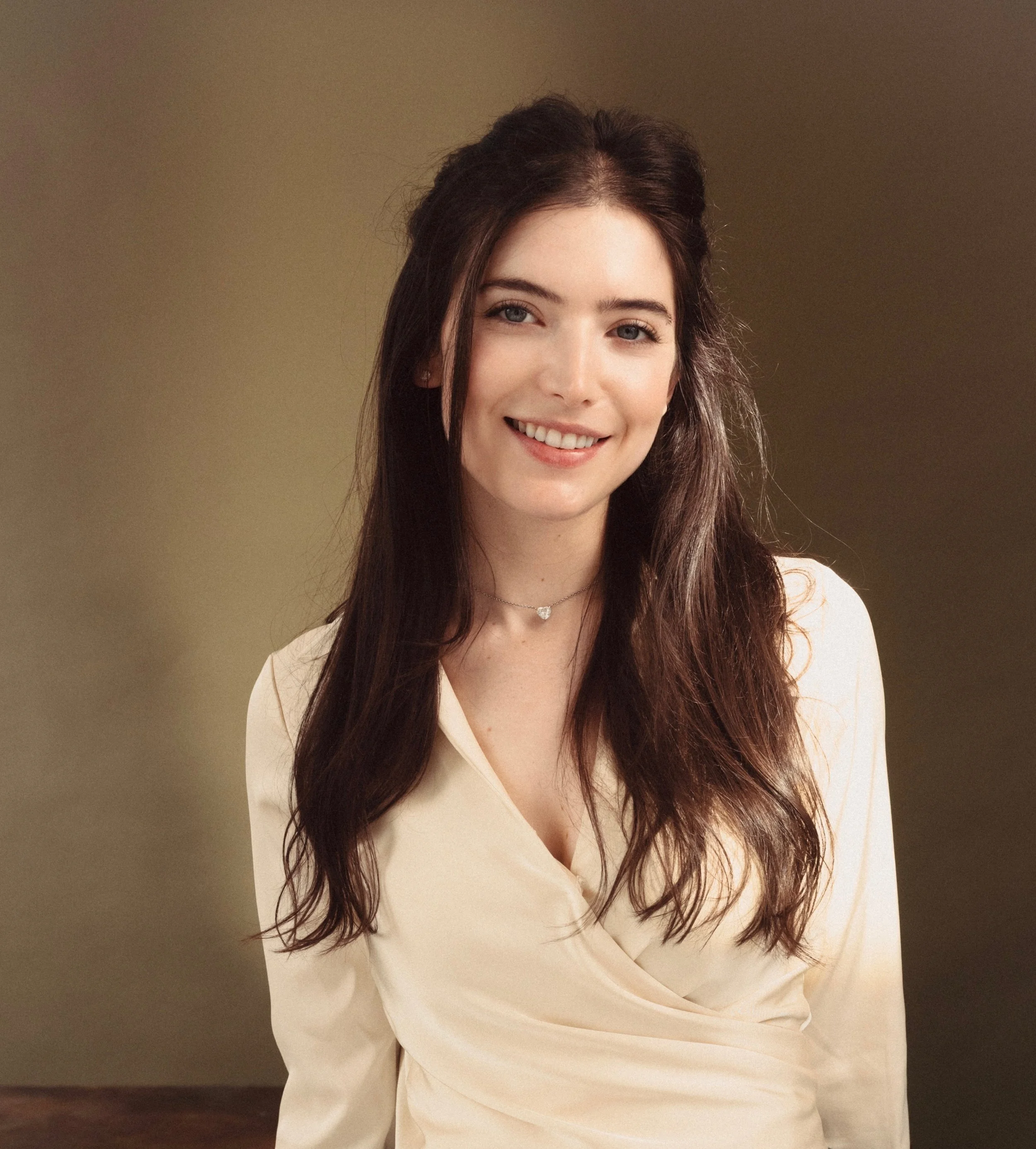
Sabrina Halper is a podcast host and investor.
All the World's a Stage
Contents
Max Raskin: It sounds like you grew up in a lot of different places. Where have you grown up?
Sabrina Halper: I was born in Greenwich. My parents lived in the city, had my first two brothers, moved to the suburbs, had me and my other brother. When I was two, we moved to Warsaw, and I lived there for two and a half years. We were about to move to India. We didn't. My dad ended up joining a private equity firm in LA, and we moved back to Greenwich for six months and then moved to LA. So, by the time I was five, I don't remember most of it, but I had been back and forth several times.
MR: Do you remember anything about Poland?
SH: I have bits and pieces that I remember, which was mostly the people we spent time with. I went to the American preschool in Warsaw, a year early. I was too young to go, and I remember one friend there I had named Avery, and I remember my brothers were obsessed with Legos and there was this floor of the house that was literally Legoland and everyone would just build every day.
There are photos of me in places in the world that I will probably never go again — obscure places in Eastern Europe. And I'm actually asleep in every single other photo with pigeons on me sometimes. So, I feel like I missed the most adventurous part of my life, which is a bummer.
I just remember this feeling of always being in taxis. Every weekend, we would go to different countries, and we were very exploratory at that time. I remember my dad always, always being the most inquisitive, curious person. My dad would be talking to the taxi driver about everything — politics or family, et cetera. So that I do remember.
MR: Do you get your curiosity about people from him?
SH: I think it was twofold. I think part of it was definitely from him because he engaged in a very different way than most people. We would get in a taxi and instead of saying, "Hi, how are you?" and just talking to our family, he would be like, “Oh, here’s someone who can tell us what life is really like in this part of the country.” And so he'd ask, "How do you feel about the president right now? How do you feel about the economy? How's it for your family?"
He would engage with people on such a deep level, and it was so distinct that I think that was definitely something that I loved in him — that I love in him.
I think the second thing is that I was very artsy when I was younger. So, in elementary school and high school, I spent a lot of my time dancing, singing, writing songs, acting. I was in a theater company where we put on all these productions and I went to theater camp, and I remember, when I got more into acting in middle school, I took this acting class in Santa Monica after school for a while. The way they taught you is, whenever you get a character, you have to fill out this entire sheet with a whole life around the character. You couldn’t just go say the lines, but you actually had to imagine this entire world around them.
That put me in this place of thinking that every single person is a character with this full life around them. During that, I had to understand myself a lot more. What makes me sad? What makes me angry? What am I lacking? And so, I could know myself enough to relate to this character. Even if you're playing the villain in the show, you need to think they're really a good person.
MR: Do you want to be famous?
SH: When I was younger, I think I did. I loved performing. The moment where you are on stage was the most fun moment. I've been a performer since I was young. I wanted to put on shows for my family since I was four years old. I also think, growing up in LA, there actually is a spirit of entrepreneurship there that I felt really intensely around me, but it was all in the creative field. So, people weren't starting companies, but there were tons of people around me getting homeschooled to go be an actress or a singer and actually doing it.
LA is a city where you can go take risks and put things out there and get the rewards of it. It wasn’t an environment that encouraged you to go climb some typical career ladder. But because it's in entertainment, that's also associated with success equals fame. So, I think there was a part of me that probably did want that.
In more recent years, I've actually thought about it pretty deeply because I'm building a podcast, which is inherently a public thing, and I do not want to be famous. I think the categories in which you have to be truly famous are if you're doing something in entertainment or maybe politics and a couple of business roles where people recognize you. But I want to be recognized in my field. It feels good when people that I admire recognize my work.
MR: And what do you define your field as?
SH: My field would be the frontier of technology and business. And some woo-woo stuff around understanding humans better on a biological and spiritual level.
MR: Before you perform, do you get stage fright?
SH: I used to get it, and then 20 seconds in, I was good and it was totally gone. I really feel like something turns on in me when I'm performing that I crave. I actually miss that part. When I started doing podcasts, I felt so nervous before every single one. Even if I was friends with a person, I would actually have a stomachache.
MR: Would you throw up?
SH: No, but my boyfriend at the time would joke, "Have you noticed that you're saying you have stomach problems right before you do this? You're obviously just nervous." And at this point, now, I don't have that.
Renaissance Fare
MR: A guest of mine said that everyone has character traits that, if left unchecked, would have a tendency to turn into mental illness. What would be yours?
SH: I have a really inherent natural tendency to want to connect with people and make them feel comfortable. I think the dark side of that is I realized you can become a chameleon that’s too adaptable. I had this moment where I was like, “Who am I and what are the things I actually would get in an argument over?” Because if you don't have these backbones of yourself as a person, you become this flailing thing in the wind that doesn't have grounding.
MR: What was the last time or the last thing you had a big argument with someone over?
SH: Oh, that's such a good question.
MR: Or let me ask you a different way. When was the last time you cried?
SH: Honestly, probably a couple of weeks ago, and it was about a breakup.
I am really not a combative person. I actually think I probably need to get more in touch with anger. I swear it's from the acting thing. I feel like the way I process emotions and the discomfort of feeling frustration is to radically empathize with that person's side of things in my head until I understand it, and then get to a point where I decide whether it's worth talking to them about it or not.
MR: What's your favorite thing to do in San Francisco?
SH: My favorite thing to do in San Francisco is bringing together 10 random, amazing people and hosting dinner.
MR: Do you cook?
SH: No, I'm not a cook.
MR: How do you keep track of people?
SH: For me, it's actually just in my head. I know people have these CRMs and stuff. I don't do that.
MR: Is your phone book well organized?
SH: No.
MR: How many contacts do you have?
SH: I have 2,285 contacts. I also have a lot of people on Twitter/X.
MR: Do you put in notes next to people?
SH: No. The truth is, if I meet someone and they make an impact on me, I just won't forget them. There's just a very innate feeling when you meet someone and you're like, "Oh, I want more of this in my life. I think you're brilliant in this way, and I love this conversation."
MR: And do you keep those relationships up?
SH: For sure. I don't think you need to see people so consistently to feel like you have a real friendship. I also think that's one arbitrage of hosting often.
I remember I went to this dinner in New York a few years ago, and I will not forget it. It was a very long table of all different types of people. I was seated near an artist, an astrophysicist, a musician, and a professor, and I was like, "This is the modern-day Renaissance, and if I could grow up and create this a lot more in my life, I would like to." Obviously, in SF, it's mostly tech people, but you can still get an amazing neuroscientist, a biology person, and an AI researcher, and it's just such good conversation. What is cooler than that?
MR: Do you collect anything?
SH: No.
The Universe Has Your Back, But Not Your Inbox
MR: What time do you go to sleep at night?
SH: I am not a highly regimented person. I'm a very type B person. I wish that I was at a place where I was like, "I go to sleep at 10 p.m. and I wake up at 6 a.m. every day." The truth is, in the last week, I got back from LA on Sunday and went to New Mexico on Tuesday at 4 a.m. for one day to interview three people. I got to New York this morning. My life is pretty hectic, so I have no routine right now, which I don't think is good for me.
MR: Oh, do you floss?
SH: Yes.
MR: Why did you just make a weird face?
SH: Well, there's two things. I have some weird tic with my mouth that I think I've started to do, because I'm seeing it on my podcasts. It wasn't intentional.
MR: Oh, interesting.
SH: Also, I am really into flossing. That's why I had a reaction. Because there's all these studies coming out that a lot of neurodegenerative brain disorders are associated with mouth bacteria crossing your blood-brain barrier. So I'm actually a huge believer that you need to floss a lot. I switched from the floss picks, which are so easy, to actual flossing because it's better.
MR: Why is it better?
SH: Apparently, you have a lot more flexibility and you're taking a lot more out.
MR: Have you gotten any great life hacks from any of your guests? Have you behaved differently because of any of your guests?
SH: That's such a good question.
MR: All my questions are awesome.
SH: I mean, they're the best questions. You need a podcast, Max.
MR: Do you have any woo-woo practice, like meditation or anything?
SH: I'd like to start meditating. As I told you, my routine currently is in flux, but I definitely feel like I have a pretty woo-woo viewpoint on the world. I just listened to this audiobook by Gabrielle Bernstein, The Universe Has Your Back. The book is basically about how everything you think and believe has an effect. Trying to control everything is the worst outcome — it’s the worst mechanism — and you have to release control, and you also have to expect the best in the world, and then you'll deal with whatever happens.
So, I feel hypersensitive and aware of my energy. I think everything in the world is energy. And what I mean by that is, I can tell at times in my life when I'm at my highest frequency and things just open up for me and everything feels natural and great, and I can tell when I'm just not at my highest vibration as a person, and I actually feel a lot of personal responsibility for keeping myself in a good place, and that requires work. I have to read things that inspire me again. I have to sit with myself. I will write out a lot of my inner thoughts and get back to that place, and then I have to reorient around what a dream life is.
There are different aspects of that. I do kind of believe in affirmations.
MR: Do you have any pinned chats on your phone?
SH: Yes. My pinned chats are all the people that I haven't responded to, so they're actually pretty random people.
MR: Are you an Inbox Zero person?
SH: I'm the opposite.
MR: Of everyone that you've spoken to in your whole life, and you've met tons and tons of people, is there anyone who you've met who feels like they're either the most charismatic or magical or blah, blah? Like they’ve just got it.
SH: Okay, this is a really good question. My friend Eileen Gu has the sauce. She's a skier. She's an Olympian.
[Shares another name.]
MR: It’s interesting that you picked two women.
SH: I think there's a lot of very successful guys. But I think there’s something even more special about the women that are, yes, all those successful things, but also have this magnetic and warm feminine energy.
MR: The judge I clerked for is like that.
What the Bleep Do We Know!?
MR: Do you believe in God?
SH: I do believe in God.
MR: Do you believe in an afterlife?
SH: I don't know yet. I believe in God and the universe, and I think the fact that we're here, we have no idea why we're here.
One thing I've really wanted to explore through the show is that people view science and technology on the opposite end of the spectrum from these more woo-woo philosophical questions about the world, and I really genuinely think they're a circle.
One tension I've been really interested in exploring is that we're at this moment in time where everyone's saying we're building a new superintelligence and we are building artificial wombs and in vitro gametogenesis. And in some ways, we're replicating these processes that were previously strictly natural processes we hardly understood, that some type of God had engineered. But the truth is, as much progress as we're making, we're so early in understanding anything about our own biology or our human brain or what really draws two people together. And so that's why the tagline of the show is “the mind, the machine, and the meaning of it all,” because I think we're at this really interesting crossroads where we still hardly know ourselves and why we're here.
MR: That's the famous line from The Genealogy of Morals, “We knowers are unknown to ourselves.”
SH: That’s such a good line.
MR: What do you think the chances are we're in a simulation, and do you think that ultimately consciousness is material?
SH: There are moments that make me feel like we might be, and others that don’t. There's a show on Netflix called Pantheon. I got to interview the writer of it. His name is Ken Liu. The last episode is all about this, and it was one of the craziest TV shows I've ever seen. It visualizes the idea that we're in a simulation in the most beautiful way, and it hits deep.
When I was younger, I had this recurring thought as I was going to sleep, like my entire life. It would happen to me once a week, and it was just this understanding that none of this is real, and it was a very scary feeling, and it felt very dissociative. When I was really young, I'd have to go run to my parents' room and touch them, and I'd be crying because I was like, "I just feel like we're in a channel, and none of this is real. I can't tell if any of this is real." And then, as I got older, when it would come, I just decided, I have no idea what is going on, but I am going to play along and play the best that I can.
MR: And then on the materialism question?
SH: On the material thing, yes and no. I am a very spiritual person, but I actually think that physics is very godly. And so, I think it's a circle. I still think energy is everything, but energy is a part of physics.
It's kind of a bad answer, but what I would say is that I think our brain on some level might just be a bunch of atoms. But if I think about the way I think and I believe in a more spiritual side, it changes those atoms and then it changes what happens. So, I really think they're the same thing. That's what I would say.
MR: So, a little bit like What the Bleep Do We Know!? Did you ever see that movie?
SH: No. You have to send me a whole list of things.
MR: Are you a fan of Counting Crows?
SH: What’s their biggest hit?
MR: You should check them out. The lead singer had a dissociative personality, and his music really reflects that. It’s also a lot about the Bay Area. You’d like them.
Counting Crows, the San Francisco Treat (and Everything After)
MR: What's the band you've seen most in your life?
SH: The band I've seen most in my life is Rainbow Kitten Surprise.
MR: Can you send me your top three songs from this year?
SH: “Aperture” by Harry Styles, “Camera” by Charli xcx, and “Groceries” by Mallrat.
My music taste is based on the vibe that I want, so sometimes it's very EDM if I want to get hyped. I recently went through a breakup and Charli xcx’s new album was the best thing ever because it just gets you moving again in a way that was so good. Honestly, I love Taylor Swift. I’ve loved her music since I was 10, and there are songs that I associate with distinctive times in my life, so it's cool to go back through those.
MR: What's the first song of hers that pops into your head right now?
SH: I guess this song “Gorgeous,” which I just listened to. It's a very playful take on life.
MR: Is there anything that you always ask your guests?
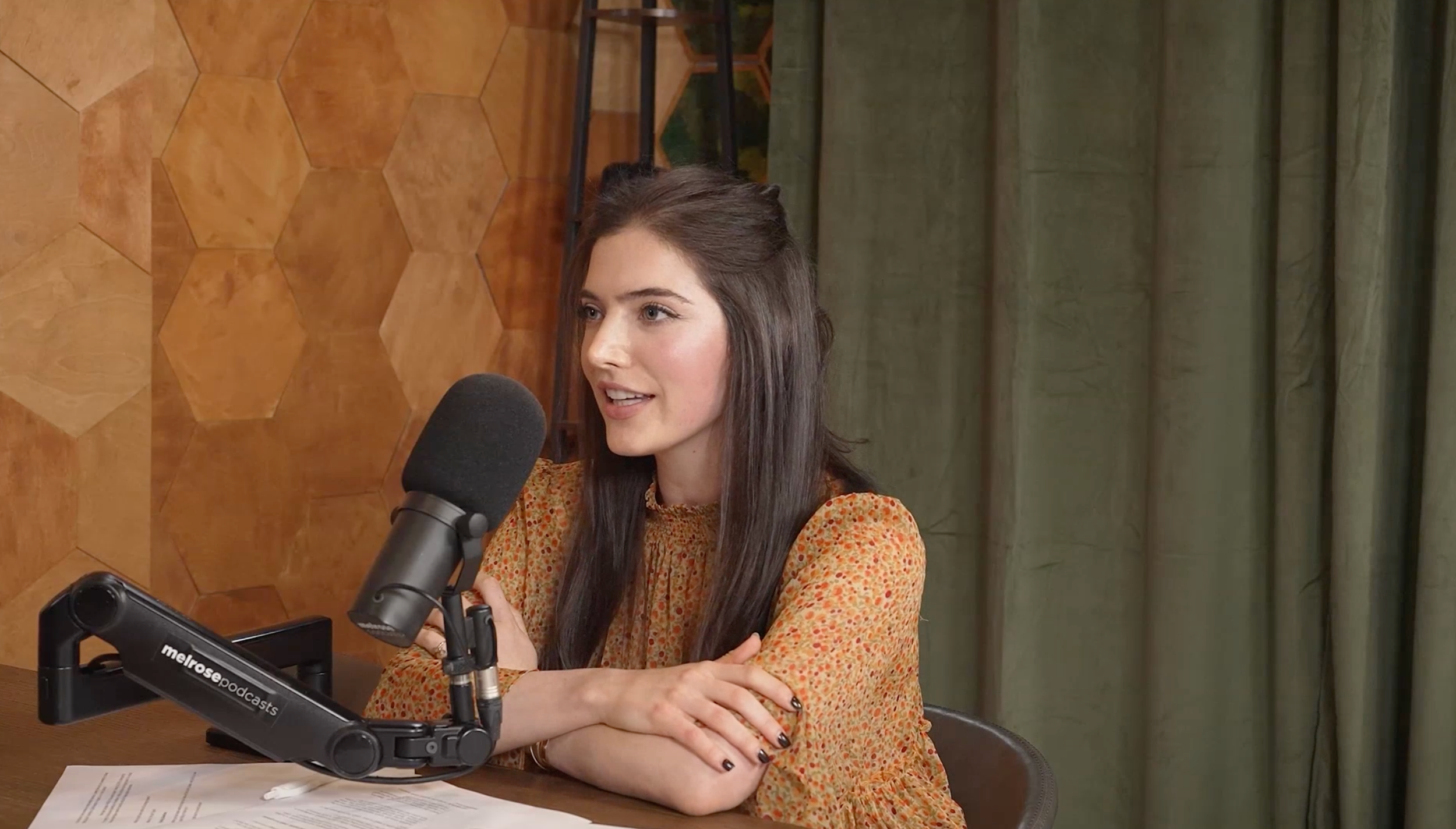
SH: I used to always ask, "What are you optimistic about?" But I stopped asking that because I don't think it's that interesting of a question.
MR: If someone's never read or seen any of your interviews before, what would be the one that you would point them to, or what's the first one that comes to mind that would give a good indicator of who you are?
SH: If you're more into people's stories, I would watch my episode with Keri Findley. She just has an awesome story, and she's such a good communicator, and she is way more raw than anyone else I've had on the podcast.
MR: Who's your most favorite interviewer? Who influenced you?
SH: Oprah is amazing. I still listen to Oprah's podcast, and she's great. She just gets deep with people in a really special way. I think for business and tech, Patrick O'Shaughnessy is great. I really like Invest Like the Best and All-In. I like the Goop podcast. And then sometimes I listen to Call Her Daddy, so it's kind of a broad spectrum. Also, How to Take Over the World is a really good podcast.
MR: What’s your favorite way to interact with the world social media-wise?
SH: On X, for sure. I got my algorithm to be what I want, and it basically just sends me the coolest things happening in science in a really digestible way. So I'm on the feed where I just get every cool thing happening in science, and then I get tech news too. And I think X is just the place where the most serendipity in life has happened. Jobs, interviews, podcast guests.
MR: Who’s your dream guest right now?
SH: Now? I would love to interview Andrej Karpathy. I think I would have so much fun with that one.
MR: This may be too cute by half, but is there anything you wouldn’t want people on the internet to know about you? You can speak in generalities.
SH: There's nothing that's core to me that I wouldn't want people to know. I guess the truth is, in the show I'm building, there's not a lot of me in it. I almost have revealed nothing about myself or my life or even the ways that I have grown a lot over the last few years. I don't think even the people that I interact with on Twitter know anything about me, which is kind of nice.
MR: But what do you want to tell them about you?
SH: I don’t think there’s anything I want to tell them, but I guess there's some capacity in which I'm engaging with people that are the best at their field in pretty technical areas every week, and I often feel like I am, quote, unquote, “faking it.” I'm trying to get enough knowledge to have a conversation. But I look at someone like Dwarkesh Patel, and I think there's a different technical level at which he's engaging with his guests. But I’ve gotten over my insecurity around that. I’ve realized I'm really interested in people and that's more my thing.
MR: You could just be like me and ask the smartest people in the world if they floss or not. Then you don’t have to do any homework.
SH: Exactly.