

Interview with Jeffrey Tucker
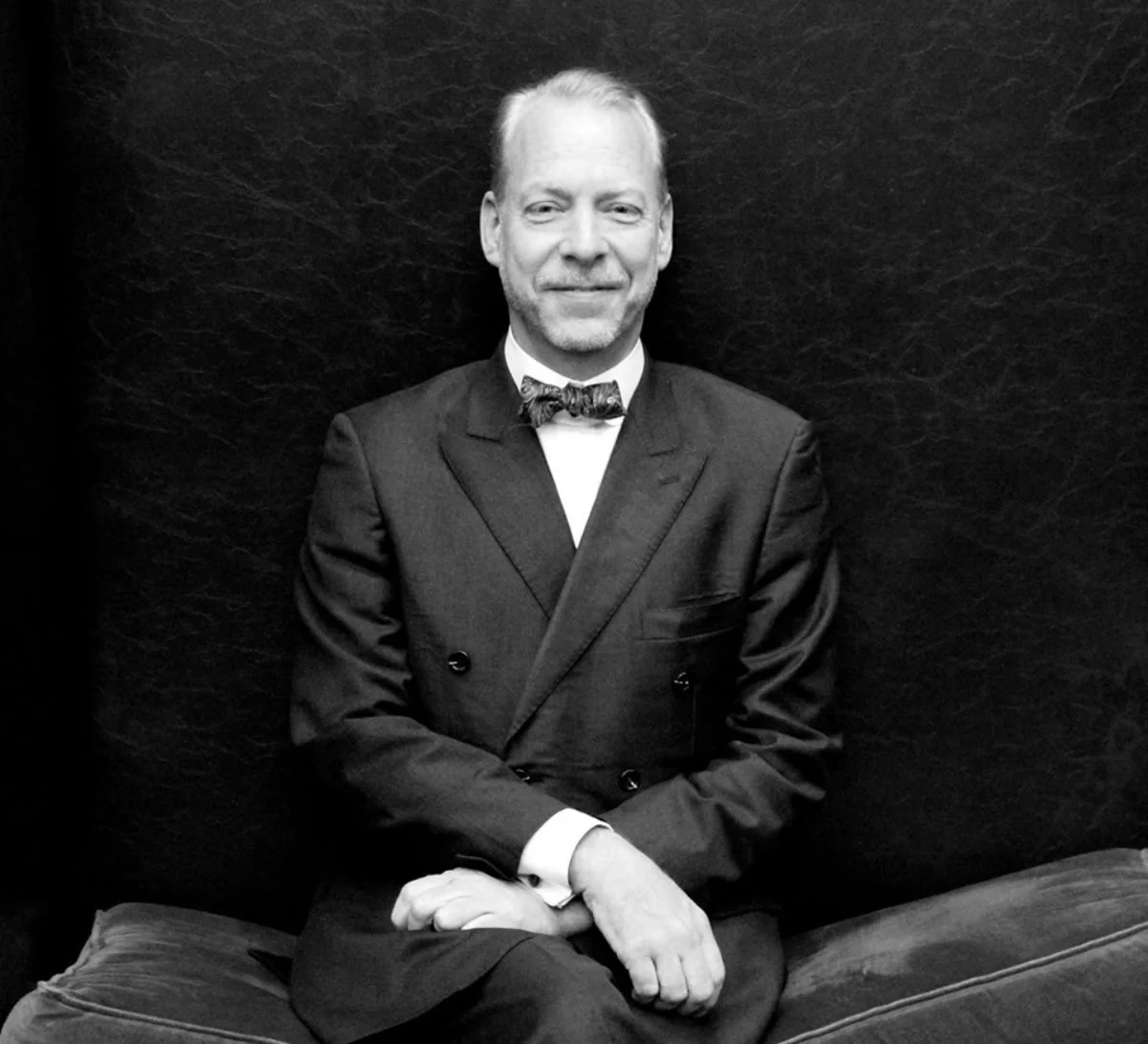
Jeff Tucker is an American writer and publisher.
Things Replace Things
Contents
Max Raskin: I remember when I was young, you were the person who turned me on to using Gmail in the browser instead of downloading it through POP. I remember it really vividly — I didn’t get it, but you just said, “Just do it and it'll change your life." And it actually did. You changed my life from that. It was 2006.
Where did you get that tech-forwardness from?
Jeffrey Tucker: I remember I was sitting at my desk, and I had been busy putting articles and other things online. I looked at my bookshelf about five feet away and I thought, wouldn't it be just wonderful if instead of standing up and getting that book from across the way there, I had the book on a screen in front of me that I could also simultaneously share with billions of other people.
MR: When was that?
JT: I'm going to make up a number…say 1997…something like that.
Then of course we had the Dot-Com Bust and everybody turned against the Internet, saying it was stupid and wasn’t going to amount to anything. I never really believed that line. I always thought this was a temporary setback stemming from a typical sort of bubble behavior, but that this is meaningful.
And so I began to upload things. At first it was articles. I've always been a very disciplined worker. When I get focused on something, that's what I do. I never get bored with it. I'll do this every day for as long as it takes to get it done. I'm very patient.
I don't set long-term goals. My goal every day is to do something great. And so that's what I did. And that largely consumed me for the next 15 years.
MR: But specifically on tech and doing things different, who did you get that from?
JT: It was just from experience. I think I was temperamentally quite conservative, even technologically, but I developed a wild enthusiasm for the possibilities of digital tech and what it could do for human knowledge and for social progress and for economic advance.
I felt like I was surrounded on all sides, in all directions, by slow adopters — people who are not willing to branch out. They're stuck in their ways.
MR: What was the impetus behind adopting cloud email?
JT: Well, it's funny, Max, you mentioned that because that actually was the very first time that people began to realize that you can move into the cloud using third-party services and clean up your life. But back in the day with POP emails, your entire hard drive would be filled with malware and spam and crap, and you kept having to buy bigger and bigger hard drives. Nobody remembers this, but it's just true. And then when you'd need a new computer, moving from one machine to the next was a day or two or three. You had to drag and drop so many files.
Same thing with your music. That was just madness because you would put in all your CDs.
MR: Did you have a big CD collection?
JT: This is probably what gives me the sense of progress.
After I got my first job, which was working for Ron Paul, moving my LP collection to my new apartment was an immense undertaking. It was huge and heavy. I'm going to make up a number and say I had more than a thousand LPs.
I decided to move to Washington and now I had to make a decision about what to take. But right before that, there's these new things that came out called CDs. And I thought it was very interesting. So I went to the store and I bought a CD player and I bought two CDs. One was Bach’s Brandenburg Concertos, and the second one was Palestrina's Missa Papae Marcelli. Well, the key thing with CDs is that you could play it over and over and over again. You could have constant streaming music, and also it was crisp. It sounded lovely and it was easy.
And so for six weeks before I was scheduled to move I listened only to Palestrina and Bach because it was so convenient. So I looked at the LP collection. I thought, I’m just not going to take this thing. I invited my brother, who picked through my collection. I knocked on my neighbors’ doors. “Does anybody want this?” Nobody wanted it.
Here I am with a trolley on wheels, dragging it down the staircase and walking over to the dumpster, and then I threw them all in. It was my pride and joy. I threw them all out. So there was that letting-go moment. I thought, “You know what? Things replace other things.”
MR: I had that moment a few months ago in a self-driving Tesla.
JT: You just got to let it go.
The Man Who Makes the Clothes
MR: What are some things in the past that you were a fast adopter of? I know bitcoin, but was there anything else?
JT: So I would say that I got carried away with almost a techno-utopianism. I did not understand that there could ever be a downside to any of this. I didn't understand the surveillance point at all. I did not understand what it means to lose control of essential services.
MR: Is that a Zyn in your hand?
JT: Yes — I love nicotine.
MR: Which one do you use?
JT: I'm not even going to say it because you can't buy it in the US.
MR: But I want my readers to be able to know what you use.
JT: Noat.
MR: What are some other things that you do that other people don't do?
JT: I went through this technology utopia stage, but now I'm really interested in getting in contact with the physical world again. So I love burning beeswax candles.
MR: Famously also bourbon for breakfast.
JT: Well, you can't do that forever.
That was the beginning of my celebration of progress and defiance. I've still got a defiant spirit, but I also embraced a lot of what RFK is doing with the MAHA agenda.
MR: What does your daily eating look like?
JT: I'm a desktop knowledge worker, and as a consequence, there's no way you should be eating three meals a day. If I did, I would be as big as this house. So I tend to be very fussy about natural ingredients…grass-fed beef and that sort of thing. I drink raw milk now.
MR: Do you snack during the day?
JT: No, I have no snacks. I eat one meal a day — just dinner, and mostly it's meat.
MR: What'd you have for dinner last night?
JT: I made a three-egg omelet with spinach and garlic.
MR: No carbs?
JT: That's it. I love carbs, but you just got to have a little more balance. These days, I'm 62, and as you get older, you have to be conscious in your choices for your health.
MR: Do you use Claude and ChatGPT?
JT: I do. But with all these things, there should be a balance. I'm a publisher at the Brownstone Institute, so I'm vetting articles all the time, and I can easily tell the ones that are written with ChatGPT or Grok or anything like that. And I just can't stand it.
MR: You really think you can tell?
JT: I can tell. There are signatures. There are little markers in there.
MR: Do you think we're going to get to a place where you can't tell?
JT: Surely. And I pretend as if I can tell, but it's possible that maybe I can't always tell. The problem is these machines are not as smart and clever and creative as people.
MR: …maybe not yet.
JT: And they don't have the judgment. I can really tell when somebody's written something and when they haven’t. When somebody sends me something written with AI, it's a problem for them because now they've lost credibility in my eyes.
Now, I use Grok all the time for remembering facts that I don't immediately have at my fingertips.
But using it for creativity? It can sometimes spur you towards thought a little bit, but it cannot do your thinking for you. And I worry, Max, about people coming up in high school and college, and they think that these LLMs are going to substitute for real education.
MR: Where's your jacket from?
JT: This one's from Alan Flusser. He was a very interesting designer, a man of incredible integrity who did all the clothing for Wall Street and American Psycho. America's greatest men’s designer. He wrote Dressing the Man, one of the most essential books you could ever get on dressing.
He’s an amazing example of a brilliant businessman who would not compromise in the right ways. If you're going to be levered up, as all businesses eventually become, you've got to have an income stream to service that leverage. Alan Flusser wouldn't do it. He just wouldn't do it — he would never compromise in his quality. That’s a principled decision. On the other hand, his empire completely collapsed. He couldn't maintain it.
MR: Are you fastidious about your shoes?
JT: I'm fussy about my shoes. I usually like to wear Aldens.
MR: Where are your shirts from?
JT: Oh, thank you for asking. I get all my shirts from Darcy's in London. Most of their shirts have detachable collars. I buy shirts separate from collars — this is the old way that all men used to dress before 1938 or something like that. World War II destroyed the detachable collar for men because all military shirts had attached collars.
And then in the 1950s, detachables never came back again. I think it's very regrettable. Alan Flusser tried to bring them back, but he failed because men did not have the patience for the apparatus and the sheer machinery of assembling it. He actually sent out tutorials and the guys just could not figure it out. He would not compromise. He failed on that. That was only the first of many failures. Nowadays, Alan Flusser does have a bespoke shop in Manhattan, but apart from that, all of the clothes that you'll find by Flusser are entirely legacy items. It's really a very sad thing.
MR: Your glasses are from where?
JT: Oh, I don't know. I'm not fussy about that. I've always been a big fan of Sigmund Freud, and he's got these great glasses, and I just looked for a pair that would look like Sigmund Freud’s. Not because I want to look like a psychoanalyst. It's just that I'm an admirer of Freud, and I like to give some homage to him.
Phones and Lent
MR: Do you have an iPhone or Android?
JT: iPhone.
MR: Are there any apps you have that people may not have heard of that you use?
JT: Well, there's some things that people buy that I don't understand. There are people that have physical scanners even now. They'll put a piece of paper down. It's unbelievable. I have an app for scanning whatever I need to scan. It’s called Scannable.
I don't understand why people do... And faxing is another one. It's so crazy. It's this utility thing called Scannable.
MR: Is there anything else on your phone that you use that other people would not have heard of?
JT: Probably not. I probably have five different bitcoin wallets, of course. That's not very common.
The only thing that I do differently on my phone from everybody else is that I don't leave any haptics on. I don't let the phone reach out and touch me at all. I keep haptics off all the time. That allows me to concentrate on my work.
MR: What if someone wants to call you?
JT: While I'm working, I've got the phone face up somewhere near me, and if somebody calls, you can see it. It'll get your attention, but if you're out shopping at the store or you're walking, then you're left alone. Turning off my haptics was a great way of just taking more control of my life.
Another great thing that I've recently done to liberate myself from phone tyranny is very simple: I've got a watch.
MR: What kind of watch do you wear?
JT: It's a nice Swiss watch — a Tissot. In the old days I thought I’ll never need a watch again because I have my phone…now I don't have to look at the phone, I can just look at my watch. I love the old wristwatch — another great American innovation. America used to be the world center of watches. I live in Connecticut — we used to be the world's center.
MR: How do you define yourself religiously?
JT: Well, I think that there are multiple levels for religion. There’s the conscious and then the indelible mark that's on you.
MR: I just meant what are you — Catholic? Eastern Orthodox? Lutheran?
JT: I was raised Southern Baptist, which I think is a little bit more orderly than independent evangelical stuff. That was always my family tradition. But I became a Catholic when I was in my early 20s. I got attracted to it the same way many people are…the incense and the bells and the rigor and the fun and the endless books and the literature and the permission to drink and live a good life also really attracted me.
But after some years of passionate fervor for my newfound Catholic faith, I settled into it as one does and relaxed in my attachments. There’s no sense in which I've left Catholicism.
MR: Do you have any dogmatic observance?
JT: The religious calendars track very well, in a biological sense, with good health practices. So during the season of Lent, I'll tend to adopt a Lenten adherence. But it makes sense. You've gone through the winter holidays probably indulging too much. And so you use the period of Lent to reset in anticipation of spring.
MR: What will you give up for Lent this year?
JT: This year I'm not eating any red meat for Lent. Sometimes Catholics talk about Lent as 40 days to a leaner, more beautiful you. So there's a vanity element.Oh, you're sacrificing for God, but actually you're losing weight. It's like a liturgical Ozempic.
MR: You're on the cutting edge of the return to the real world and the physical.
JT: My new book will be called A Man's Castle. It’s a gendered book about the capability of men to take back control to inhabit the home more completely with a full embrace of what domesticity requires.
MR: When you're at home and you're not working, what are some of the things you like doing?
JT: This can sound weird, but I love laundry. I've always loved laundry.
MR: You wrote one of the great pieces about the weakening of the chemicals in our detergents. You were on the forefront of explaining why everything sucks.
JT: That's right. Trump took his attack on bad showerheads entirely from me. I know this. And why the toilets don't flush anymore. That's all out of my stuff. I have no doubt that Trump got all this material from me, which is just great.
Even on light bulbs, I'm very fussy about lighting. I don't like fluorescence. I like old-fashioned lighting, which was more humane. And laundry, I mix my own detergent with TSP and bluing formulas from the old days.
Artisanal, Handcrafted Laundry
MR: What kind of washing machine do you have?
JT: This is going to sound weird to you, but I don't use it that much actually. I do my own laundry.
MR: What do you mean?
JT: You get a bathtub with scorching hot water and a washboard. It’s just therapy for me.
MR: What about your socks and stuff?
JT: Oh, you can wash all that by hand.
MR: And how do you dry it?
JT: You have to get really good at wringing your clothes out and then you hang dry.
MR: What about gardening or cooking or anything like that?
JT: I love cooking so much and I'm a very good cook. One of my earliest jobs was in a restaurant.
MR: What kind of restaurant?
JT: It was a steakhouse when I was very young. I loved working in the steakhouse.
I love baking bread. When I was in college, I baked a lot of bread for barter purposes because I was poor, but I learned that I could get laundry services and mechanic services for my car by bartering bread. I got very good at baking for that reason.
MR: Are your kids fastidious like you or do they just not care about any of this?
JT: No, they're all eccentric and all interested in every aspect of cooking and music.
MR: Do you have grandkids?
JT: No, not yet.
MR: I wonder if your grandkids will be eccentric.
JT: I don't know. My son is probably the most techie of all the kids. He's probably more interested in technology than the others. And he's an international phenom as a businessman. He lives here and there and there. You never know where he's going to live next. What a weird life!
When I was young, the idea that I would be 29 and flying all over the planet, living six weeks at a time and in a country I'd never visited before was just inconceivable. Our worlds have changed so dramatically.
The technologies that I championed early in my career, ever smaller laptops and ever more digital connection, has liberated us from the office, which I think is just one of the great achievements. The office became an oppressive place at some uncertain point in the 21st century.
MR: There’s this fun book called The Fourth Turning, which is a generational theory of history. It basically says history is this cycling of four archetypical generations. Do you think of yourself as portending a turn away from technology?
JT: It's going to take a different shape in the future than it has in the past. People are more concerned now about the loss of control of their data, about their privacy, about surveillance technologies.
MR: Are you mostly on your computer or on your phone?
JT: I spend all my time on my laptop and I use Mac. And there was one point at which I shifted from Windows to Mac, and it was a hard change, but anybody else who's done that, once you do it, you wonder why did you stick with Windows for so long? I used to think I was virtuosic on Windows, but it's a constant management. It was constant struggle.
Throw Away Your Toothpaste
MR: Along those lines, what’s the last sacred cow you killed? The last product or technology you just stopped using.
JT: Oh, I'll tell you — I've turned against all conventional cosmetics. Toothpaste? Forget it. I use baking soda. Deodorant? Forget it. I use a salt block. Shaving cream? I haven't used that in 40 years.
MR: What about Chapstick?
JT: No, because it's deeply addictive. Instead, I use a little bit of coconut oil or some tallow or lard or something like that. There are so many products for the home that are just junk. Window cleaner…that is stupid. You're much better off with the white vinegar.
This is where AI is amazing. Let’s say you’ve got a stainless-steel refrigerator and it's smudgy and terrible and you don't know how to clean it. There’s probably a product somewhere called “refrigerator cleaner,” but that's just stupid. So you think, “Well, okay, I'm not an idiot.” You go to Grok and ask, "I've got a stainless-steel refrigerator. How do I clean it?" It'll tell you immediately: use baking soda.
Baking soda is the single most useful thing. It’s not just good for stains on clothes, but it's great for brushing teeth.
MR: The ultimate irony is most stuff is just baking soda.
JT: Baking soda and vinegar…these are the things. Hydrogen peroxide is another useful product to have around the house. It's unbelievable how much crap is being sold to people unknowingly and how much people pay for their groceries because they want to shop in what Marge Simpson calls “a store with a philosophy.”
MR: Do you buy your stuff on Amazon?
JT: Yes. I don't shop in fancy places like Whole Foods. I think it's a rip-off. I go to ethnic grocery stores for fish and vegetables. I go to local butchers for meat. I'll go to the Brazilian, the Mexican grocery for tortillas and this kind of thing.
One other thing that has changed my life, and it's embarrassing to say, but I got a Costco membership. I guess not everybody knows this…
MR: …only intelligent people are clueless about it.
JT: Oh God, what a game changer that was. I was previously so devoted to all my little local ethnic shops. I would go to the Portuguese bakery to get my cheese or whatever. But ever since discovering Costco, I'm not going to be ripped off anymore by anybody. Fresh produce, meats, coffee…it's just amazing what Costco has. I'm not fussy about things. I like really fundamental things. I like rooted, foundational products.
I'm actually very skeptical more and more of the way people spend money so profligately on ridiculous things that don't actually achieve anything. These are harder economic times and people should live more frugally and it's possible to do so.
That's a lot of what's in my new book. I cover cooking and cleaning and products and cosmetics and even things like wallpaper and home furnishings, which you can get nowadays from Facebook Marketplace. The only real use of Facebook anymore is their stupid marketplace.
I'm a huge fan of sterling silver flatware and sterling silver candlesticks and these kinds of things and you can buy them on eBay. I only eat off porcelain china and I use only sterling flatware and lead crystal glassware.You can live extremely well these days. Everybody can live extremely well with these glorious digital innovations that are surrounding us.
So I've definitely been an early adopter of all of these things. These are things that used to belong to the rich only, and now anybody has access to them if they know what they're doing.