

Interview with Tarek Mansour
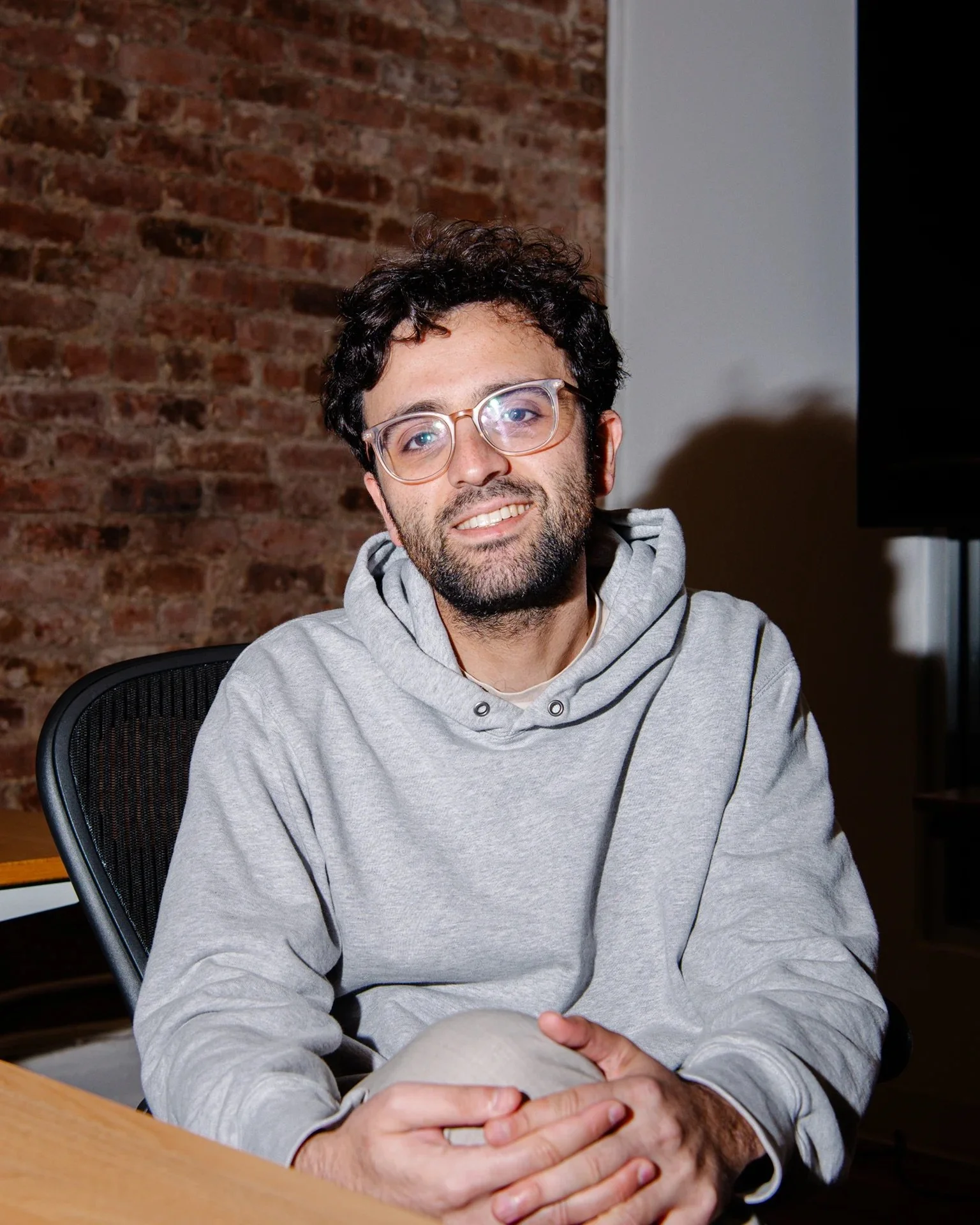
Tarek Mansour is the founder and CEO of Kalshi.
The End of the World as We Know It?
Contents
Max Raskin: Do you have any prediction markets that you follow every day?
Tarek Mansour: Have you heard of the Citrini report? It was published in February under the heading, “The 2028 Global Intelligence Crisis.” It’s basically this idea that artificial intelligence is going to create such profound gains in productivity that it will kill domestic consumption to the point where we’re going to go into a deep, dark recession, and everything’s going to become horrible. They came out with that thesis, and then Citadel, the hedge fund, ran a rebuttal.
Kalshi listed the market “Will the Citrini scenario happen?” immediately. I look at that a lot. It started at 13 percent when it was first listed, and now it’s at about a 25 percent chance of absolute AI doomsday. We’re talking about unemployment above 10 percent, the S&P declining more than 30 percent, the home price index down 10 percent year over year labor share of gross domestic product below 50 percent.
MR: But that could also pay out because of nuclear war.
TM: That’s true, but it’s hard to imagine all of these things happening. It’s hard to imagine nuclear war with deflation.
MR: Well, it depends on how bad the nuclear war.
TM: I mean, if we all die, yes, maybe. Maybe there’s a 1 percent to 2 percent chance of nuclear war that’s embedded in there, but I think the vast majority of this is AI.
MR: When your eyes open in the morning what’s the first thing you’re reading?
TM: I open Kalshi and I look at trending markets because that’s usually correlated with whatever you're going to find top of news. And then I do a little bit of back and forth between Kalshi and X.
MR: Is there anyone on X that you think is a must follow?
TM: I like Crémieux a lot [shares link]. He talks a lot about healthcare and how fast things are progressing. I follow a lot of our traders pretty religiously because they tend to predict things better than everyone else.
MR: I'm assuming you're not allowed to trade at all.
TM: I can't.
MR: If you could, would you?
TM: Oh, for sure. Of course. I love trading. I love making markets. I love pricing things.
MR: Do you like making markets or do you like taking views?
TM: I think they're not too different. Sometimes I have very high conviction. But the way I think is what is the fair value of something and I’ll buy it if someone offers it to me at lower than fair value, and I'll sell it if someone wants to buy it at a higher than fair value.
MR: Are you allowed to trade in anything right now?
TM: I can trade in stocks and securities, but I can't really trade on things like derivatives or commodity futures because I run a commodity futures exchange.
MR: Are you a sports guy at all?
TM: I love soccer. Soccer is my main sport.
MR: What team do you support?
TM: Barcelona. But since Messi is gone, it's been harder to support them.
MR: What about in the World Cup?
TM: I like Argentina.
Lebanon
MR: You were born in California but raised in Lebanon. Do you follow the news there at all?
TM: I’ve never been asked that. Not really. It’s just always utter chaos, and the news there is very biased. You’re getting a lens on it whenever you read anything.
MR: Do you follow your prediction markets about Lebanon?
TM: I’ve followed the Strait of Hormuz reopening. If you live in Lebanon, you get used to it. It’s always bumpiness on and off all the time.
MR: You grew up in the early 2000s. There were all kinds of wars and assassinations and protests in Lebanon then. How much do you think that influenced how you think about things — and your choice to go into prediction markets dealing in a world of uncertainty?
TM: A lot. I’ll say two things. First, the whole region — it isn’t bad. It’s not like there’s misery. It’s volatile, which is different. There’s a lot of upside — there’s a lot of positive and negative, and you can swing between the two overnight.
That creates a sense of being very adaptable. People from the Mediterranean area are very adaptable. They’re used to things getting thrown at them or changing, which I think generally is pretty good for someone who wants to become an entrepreneur or risk-taker or someone who needs to be in an environment where things are always dynamic and changing.
The second thing: I think the world was so chaotic on the outside that my refuge ended up being math. There were things going back and forth, and when I was young, the way to deal with it was to become obsessed with math. It instilled this feeling of clarity and precision and perfection. I think math was my refuge from a lot of uncertainty. And then that ended up being markets. I like that markets can help you make sense of all the chaos.
One recent example that I really like — did you see the political index we just launched?
MR: Yeah, I saw.
TM: It's the same idea. You go on Twitter and who knows what's happening. It's all so crazy. But now you have one clean number [shares link].
MR: How do you copy and paste so quickly?
TM: I don't know.
MR: What browser do you use? How many tabs do you have open?
TM: I use Chrome. I have a shit ton of tabs open right now.
MR: What do you have open on your screen right now?
TM: I have an essay that I've been writing about perps [perpetual contracts]. Then my calendar, drive, email.
MR: Do you have any free time in your calendar?
TM: No, it's crazy. It's completely crazy.
MR: Do you enjoy being back-to-back-to-back?
TM: No.
Markets in Everything
MR: What’s your religion?
TM: I'm Catholic.
MR: Were you brought up Catholic?
TM: Yes. My dad is Catholic. My mom is Orthodox Christian.
MR: Do you believe in God?
TM: Yes —maybe not in the super traditional sense, but there's something. But I don't think about it too much.
MR: Do you pray?
TM: Not frequently.
MR: Do you believe in an afterlife?
TM: I don't know. I prefer not to think about that too much.
MR: Do you meditate?
TM: No.
MR: If there were a prediction market in whether God existed, where would you set the line? How about whether we’re living in a simulation?
TM: Simulation is 1 in 4, I think.
If you look at the Bayesian lens on this, the probability that there’s a God is actually very high. The range of possible permutations for us to land here, given where we started, is really bad. And then the probability of us being here, given God, is one. The probability of us being here, given “not God,” is one in a gajillion.
MR: So where are you putting the line?
TM: The pure math side should say that the answer is a pretty clear “yes,” but I have to think about it a little bit more.
MR: Who influenced you philosophically?
TM: I like a lot of things that have come from Descartes in general. I like his systematic approach to everything.
Dragon Ball
MR: What did you like reading growing up?
TM: I read a lot of sci-fi, a lot of anime. A lot of anime.
MR: What kind of anime do you like?
TM: I grew up reading Dragon Ball. I read it a million times.
MR: That influenced you?
TM: For sure. Dragon Ball, anime, Japanese culture.
MR: Did you play video games growing up?
TM: Assassin's Creed, obviously Call of Duty. A bunch of them. I played a lot of FIFA.
MR: If you could live anywhere, where would you live?
TM: I don't really know. I've been thinking about this a lot recently. I like Europe a lot, but there's not as much of a drive to build and do things there, which bothers me.
Business
MR: A lot of people look at what you do and simply see another vehicle for sports gambling. What do you say?
TM: If you define gambling to mean any speculation, then all financial markets are gambling. There’s speculation on all financial markets. Actually, most activity in most financial markets is speculation, right? And you really don’t get liquid, vibrant financial markets with real price discovery without speculation. If it’s just hedging by itself or capital allocation by itself, that doesn’t build a real marketplace. So that definition of gambling, where people are putting some money to make more money on something they don’t control — well, that encompasses everything.
The core differentiator with sports gambling is whether you are trading on an open, fair, liquid marketplace or in a closed forum system against the house that picks winners or losers. One of them you can win. It doesn’t mean you will win, but you have the opportunity to win. That’s how the law has been set historically. That’s why we have the Securities and Exchange Commission and the Commodity Futures Trading Commission.
MR: What about culturally? For whatever reason, people love sports betting. There is a demand for it. Why?
TM: Because they understand it. It’s relatable. They get it.
MR: But people aren’t as interested in news-driven event contracts.
TM: I don’t think that’s right. I think the growth of the non-sports predictions on Kalshi is higher than that of the sports predictions.
MR: But that’s because it’s probably starting from nothing.
TM: That’s not quite right. I think the latest numbers I was looking at were basically at two-thirds, one-third now. It’s going to eat into the sports very quickly. I mean, it’s happening.
MR: I’m excited about prediction markets. I wish people used them more. What’s stopping people from doing so? Is it education? Is it because of some “ick” factor?
TM: It’s a mix of things. One, there aren’t enough events per week.
MR: But stuff happens every week.
TM: Yeah, but sports are scheduled and organized well and put on a calendar. People are used to that. They’re used to watching the sport. Over time, as you add more events and structure them better, that will catch up. So that’s one.
Number two is a question of education. People just need to learn more about them. That’s the beauty of this — if you onboard people to come trade on politics or sports or whatever, then they start getting interested in things like understanding AI and its consequences. Oh, what is that thing on Kalshi? Let me read about that. Now they’re learning about AI doomsday.
MR: Do you think your casual observer is going to read about the Citrini report?
TM: The way to think about it is: The more that people spend time on Kalshi and prediction markets, the less they’re spending time brain-rotting on Instagram. That doesn’t mean everyone is going to become an AI expert, but they will have moved toward something better.
I think a lot about the place of prediction markets. When I talk to parents, they’re super excited about using Kalshi because their 25-year-old kids are using it. Some will say: It’s awesome. All of a sudden, my son is talking to me about the State of the Union and inflation. They debate these things; they’re spending time on them. That’s a very positive externality because we’re pushing people toward financial literacy and literacy about the world.
MR: There are some very difficult problems to solve in prediction markets. How do you think about the question of insider trading?
TM: I think it’s actually easier to police insider trading in prediction markets than in the stock market. Don’t forget, we spent four years getting regulated before launching. We were thinking a lot about that all the time. So that’s why the foundation of Kalshi is robust; we’ve been building these systems for eight years now. Today, I think that we’ve just hired incredibly well. We’ve hired people from the FBI with a forensics background.
MR: When insider trading like this happens ...
TM: ... George Santos?
MR: I was thinking of the Nicolás Maduro case where the U.S. soldier was charged with using classified information to profit.
TM: That wasn’t on Kalshi.
MR: Which one was on Kalshi?
TM: We had a few politicians running campaigns, buying themselves. We had Santos, apparently. (Editor’s note: The former congressman has written that the basis of the accusation is “preposterous.”)
MR: Does that bum you out?
TM: No, I think it’s the system working. There will be fraudsters in any system. People will try to commit cyberattacks or steal credentials on any large consumer platform. They will try to cheat or commit insider trading. The question is: Are you doing a good job catching them? Now we say, “Great. We caught them. We caught them super fast.” Keep looking.
MR: How much do you think you don’t catch?
TM: I mean, look, you can’t say any system is perfect, but I think we catch most of them.
MR: I have a funny story about this. I once interviewed an enforcement lawyer at the SEC and asked, “What percentage of insider trading do you catch?” The answer: very little. He said they have big whale cases and the “control-F” cases. For the latter, he explained, “You subpoena someone who made a type of trade they’d never made before, then you press “control-F” on your keyboard and search for “jail” or “prison.” You go to their chat logs, and it says: “Dude, can we go to prison for this?” And that’s how you catch them. But he said those two types of cases make up a small amount of the insider trading that goes on.
TM: Prediction markets are easier than stock markets. The stock market is hard because you may have a piece of information, like a certain product is going to be released, and then you buy the stock. It’s very broad. Whereas in prediction markets, you have a piece of information, like a certain product is going to be released, and then you buy “This product is going to get released.” It’s very direct. It’s very noiseless.
MR: What are your plans for when the administration changes? The Trump White House is very amenable to prediction markets — the president told me he’s a fan and his CFTC just proposed a very favorable rulemaking. What happens if that’s no longer the case?
TM: I think people are making this out to be more partisan than it is. People, especially in D.C., love creating tension and drama. I think there are supporters of prediction markets on both sides. And there’s people who have questions and are skeptical about them. It’s significantly less of a partisan issue than people are making it out to be. That’s my general view.
Superhuman
MR: Do you use any of these productivity apps?
TM: I use Superhuman, but that's it. I don't use anything else.
MR: What about on your phone? Do you have any apps that people may not have heard of?
TM: I have all the financial apps because I like to see everybody's UI.
MR: Whose UI do you like best? Are you allowed to say?
TM: Robinhood.
MR: Well done.
MR: I want to talk to you about information overload. Are you just constantly getting bombarded all day?
TM: Yeah — insane. All the time, nonstop. It's legitimately insane.
MR: As an outside observer, it's a horrible thing. It's not natural and it's not healthy for you and it's not probably good for the business. How do you deal with it? How do you prioritize? How do you deal with the information and stimulation overload?
TM: Over time you just get used to the variance. Traders at the beginning, when their portfolio goes up or down on any given day it would sit with them and they would get worked up about it. They get too excited about it. But then a few years into their job, the more experienced traders don't really feel much because of the variance. They focus on expected value and whether they have the right strategy and they're okay with sometimes being down, sometimes being up, but they don't feel it as much.
And honestly, look, I think there's productivity hacks and prioritization hacks and all these different things, but I think by far, the most effective thing is to do it. It's just to do it repeatedly over a decently long period of time.
MR: To do what? Do you respond to every text, for instance?
TM: We respond to some, we don't respond to some. Some of it lapses. Over time, you get intuitively honed on what is important and where it's just urgent, which is different. Important and urgent are not the same thing. Everything is urgent, but certain things are important.
MR: And do you primarily live on email, text, WhatsApp?
TM: A lot of Slack and a lot of email, but I'm so flooded now in my email and text. It's literally just absolutely endless. You physically cannot catch up to the amount of inbound.
MR: So how do you unplug? How do you relax?
TM: I really don't. I'm pretty much on all the time. You have to get used to it. You ask marathon runners or people that ride bikes how it looks effortless and they say they are equally tired as pretty much the first day they started, but they’re just more used to it.
MR: But you know that people do stop riding their bikes at a certain point.
TM: Yeah, I know, but it's kind of the same. The analogy still applies because they’re doing extremely intense physical exercise for a long period of time.
MR: But there’s running a marathon for a few hours and then working continuously for weeks or months. That’s different. Do you go to a sauna?
TM: No, I watch anime. That's my biggest thing. I don't like saunas and stuff like that. I get angsty. I watch anime. I think that's the best.
MR: And what do you watch?
TM: I watch all the animes, a lot of them.
MR: And how long will you give yourself to watch an anime?
TM: Before going to sleep, I'll watch 30 minutes.
MR: On what site?
TM: Crunchyroll [sends link].
MR: Do you just do regular copy paste, or do you have a clipboard manager?
TM: I do a lot of copy pasting.
MR: So you don’t really relax?
TM: I don't want to relax. I just think when you start relaxing, it's just too tempting.
Anime, Not Anomie
MR: You just made a lot of money. You’re rich now. Do you spend any money on indulgences?
TM: I don’t have anything physical. I don’t own a car. I still have the same apartment.
MR: Do you collect anything?
TM: I have a bunch of anime posters, but they’re 20 bucks each.
MR: So you really like anime. Why do you like anime so much?
TM: I grew up reading it.
MR: What is anime? I know it’s like Japanese cartoons, right?
TM: It’s a form of show, but it has very strong Japanese culture embedded in it.
MR: Why do you like it so much?
TM: I just think there's a lot of strong foundational values that people basically abide by. And a lot of them are like, "How do you compete against yourself and keep getting better?" I think there's this very strong thread of resilience and basically fighting through life. I think that's something they celebrate, whereas I think a lot of Western cultures have stopped celebrating that. They don't have this sense of struggle anymore.
MR: Are you political at all?
TM: Not really.
MR: Are you not really political, or you just don't want to talk about it?
TM: No, I'm not really intrinsically.
MR: Is there a politician you love but you don’t want to say it because you’ll piss people off.
TM: I'm usually pretty honest and direct. For both sides of the aisle, I like people that just tend to be very direct and very honest and that don't use a lot of filler words.
MR: So who is that right now?
TM: I don't want to name, but there's a lot of people and honestly, it's very easy to see when they speak that it's real.
MR: What about in the past?
TM: Luana has a lot more. Look, I tend to like empire builders and I'm kind of fascinated by that. Caesar, Alexander the Great, Napoleon. I think Louis Quatorze [XIV] was also very interesting. His influence was not super military, but it was extremely dramatic. He’s perceived as an extremely strong leader, very charismatic, very, very powerful and dominant. But he was actually insecure and shy and introspective, which people don't know about him.
MR: Do you feel that way?
TM: Yeah, I think most people do. I think they just project something. But it's interesting, he struggled a lot in his life internally. It was a big struggle. Elon’s quote is, "You don't want to be me." And I think I find that fascinating. “You don’t want to be in my head.”
MR: Do you say that?
TM: Sometimes I do. My head is a little crazy. I have a lot going on. I'm also very anxious.
MR: How do you deal with your anxiety?
TM: I don't. I mean, it's very hard. You can get to slightly better, but if your baseline is much higher than another person…
MR: And when you say anxiety, what do you mean? Are you anxious about your health?
TM: I think a lot about all the ways that something could go wrong. Luana is very optimistic, forward-looking.
MR: Is that just for Kalshi or is that in your personal life too?
TM: Everything. But right now, it's pointed towards Kalshi.
MR: Do you take any SSRI or anything like that?
TM: No. I'm also OCD. I get obsessive with things.
MR: Did you ever do therapy?
TM: When I was younger, when I was 13, 14.
MR: But not now?
TM: No.
MR: Why not?
TM: It's a question of time. I don't know. It's okay to struggle. It's not a bad thing. It points towards achieving more goals.
MR: Do you feel like it gets to be too much sometimes?
TM: Sure. I mean, winning the Olympics is hard.
MR: But does the struggle get to be too much where it's just not enjoyable?
TM: No, again, I think a lot of the process is not always very enjoyable.
MR: Is there a moment in the company’s history where you were the happiest when something just really broke your way?
TM: Happiest was when we won the election lawsuit because that took us three, four years to get there. It was brutal and it was such a slog. It was really hard and we had to sacrifice a lot, but I don't think we've ever had the pat on the back thing. We are not a company that celebrates these types of things. I don't think I've ever had that because I immediately get stressed about the next thing.
MR: That's kind of sad though, no?
TM: I just think it's part of it.
MR: It's not part of it for everyone.
TM: I agree with you, by the way. I've been thinking about this recently. I just think Kobe was like that. A lot of people were like that.
MR: What about Luana?
TM: Less extreme than me, but she also has some of it. Right after we win something we're like, "Okay, here's all the ways we could lose it.” We won the election lawsuit — this is awesome — but now we have to capitalize on it. We have to make sure we don't miss the opportunity, and it goes one after the other.
When you play soccer, kicking a ball is not something that gives you a dopamine hit. But you’re 100% locked in on something. And I think that, on a long period of time, is what creates fulfillment.
Tarek.AI
MR: How do you use AI in your everyday life? Do you integrate it?
TM: I'm starting a lot more. We're actually building a version that you can think of as a replica of me that can do a bunch of things.
MR: Does it write emails for you?
TM: Not yet, but I think we're trying to figure out how far we can do. We have someone in the company actually working with us.
MR: Trying to replicate you?
TM: For a lot of us. And we're testing it. I’m pretty bullish. I think we're going to get there very soon.
MR: If Tarek AI passes the Turing test, would you keep doing what you’re doing?
TM: I don't know. Let's get there. It'd be sick if you got there. I have no idea.
MR: If you got there, what would you do?
TM: Knowing me, I think I just basically set up competition between the two of us and see how we perform.
Hot Dog Eat Dog
MR: I want to ask about competition. How do you distinguish Kalshi from others?
TM: Oh, I think this is night and day. We took the regulatory-first approach to every step of building the company. We started in 2018. Our primary competitor started around 2020. It launched immediately. We were waiting for the regulatory license. We never wanted to do anything illegal or offshore or whatever. We wanted to change the system and disrupt financial markets.
And so it was a much harder, more painful route, but it was definitely the correct one. And look at the market share today. We’re over 90 percent market share in prediction markets, but more important, we’re trusted. People, when they use Kalshi, they feel like they’re using a robust financial market versus an offshore gimmick. And I think that’s very important to our approach. So insider trading, we ban; we don’t have death markets. We have know-your-customer processes to verify people.
MR: If you could have a prediction market in something related to your business, what would be the thing that you’re most interested in finding out?
TM: We’d need to define a metric for how often people quote a prediction market when thinking about the future versus quoting any other traditional source. Imagine if we could have a metric that measures everything: news, pundits, social media. Are prediction markets more cited than any alternative? If that happens in the culture, I think we would’ve fundamentally achieved the mission.
MR: Where’s the place where you eat the most in New York City?
TM: Oh, it's a good question.
MR: Do you eat the same thing every day?
TM: I mostly eat the same thing, but I'm also random.
MR: What is the thing that you eat most?
TM: I think for the first few months in this office, I used to eat at the hotdog stand, but then it was pretty bad for my stomach so I stopped.
MR: You would eat a hot dog every day?
TM: Yeah, from the stand.
MR: How would you get it?
TM: Literally go downstairs and get it.
MR: No, no, but how do you take your hot dog?
TM: Oh, just ketchup and mustard.
MR: No sauerkraut on it?
TM: No.
MR: And do you get one or two?
TM: One.
MR: And that was lunch for you?
TM: That was lunch.
MR: And now, what do you do?
TM: Now, a lot of times I don't. I often eat cornflakes in the morning.
Money, Music, and Memes
MR: What about clothes? Do you wear the same thing every day?
TM: Mostly, yeah. I have basically, I don't know, 25 of this black shirt.
MR: Where’s it from?
TM: Uniqlo? I think this one is Uniqlo. I'm not sure.
MR: And then what about your glasses? Where are your glasses from?
TM: What is that fast glasses shop called? Warby Parker.
MR: What about your shoes?
TM: On.
MR: What is it like becoming extremely rich quickly? Do people reach out to you to hit you up for money?
TM: Yeah, it happens a lot more and then people like you more all of a sudden. I haven't changed my friends. Nothing's really changed. I just don't really think about it. I just don't really care. I care a lot more about Kalshi being renowned and people being excited about it.
MR: Would you trade the money for being able to keep doing what you're doing?
TM: Yeah.
MR: You would?
TM: For sure. I mean I did it six, seven years ago. I didn't take the Citadel offer. At the time the expected value of doing anything out of Kalshi essentially wasn’t even zero.
MR: Do you remember how much they offered you?
TM: Millions. And then within two, three years…
The whole place is crazy. If you look at the structure, anyone who's reasonably successful there it’s insane.
MR: What kind of music do you listen to?
TM: I like French.French is my first language.
MR: What do you mean French? Like Jacques Brel?
TM: More mainstream, Christophe Maé [sends message with name].
MR: Why did you just type that to me instead of just saying it?
TM: I would've assumed that you can't translate it into the text.
MR: But I do that — you say words and then I listen to them. You know that, right?
TM: Yeah. No, I do. It's faster to type, honestly.
MR: Do you think you live in this half world between the Internet and the real world?
TM: Yeah, I have that. I'm very online.
MR: What social media do you go on?
TM: Everything. Twitter, Instagram. I'm very meme-y. I love memes.
MR: What kind of memes are you into?
TM: I was into Italian brainrot when that was ripping.
MR: What's Italian brainrot?
TM: Oh man, here we go [shows memes].
MR: Oh I know about this — my brother-in-law’s really into it.
TM: Yeah, this stuff is crazy.
I just like all these internet phenomena. Did you see the Knicks’
“mayor is Muslim” meme? This was a Kalshi thing. It's just so funny. I mean, I could watch that a hundred times.
MR: How often will you initiate texts to people not in the company?
TM: Not very often right now.
MR: Do you have a group with your friends from high school?
TM: I have, but I've not initiated. My best friends are still the same from high school.
MR: When do you wake up in the morning?
TM: 7:00.
MR: And do you exercise?
TM: No.
MR: When do you go to sleep at night?
TM: 12:00
MR: Do you sleep well?
TM: No, I wake up a lot.