

Interview with Jon Levine
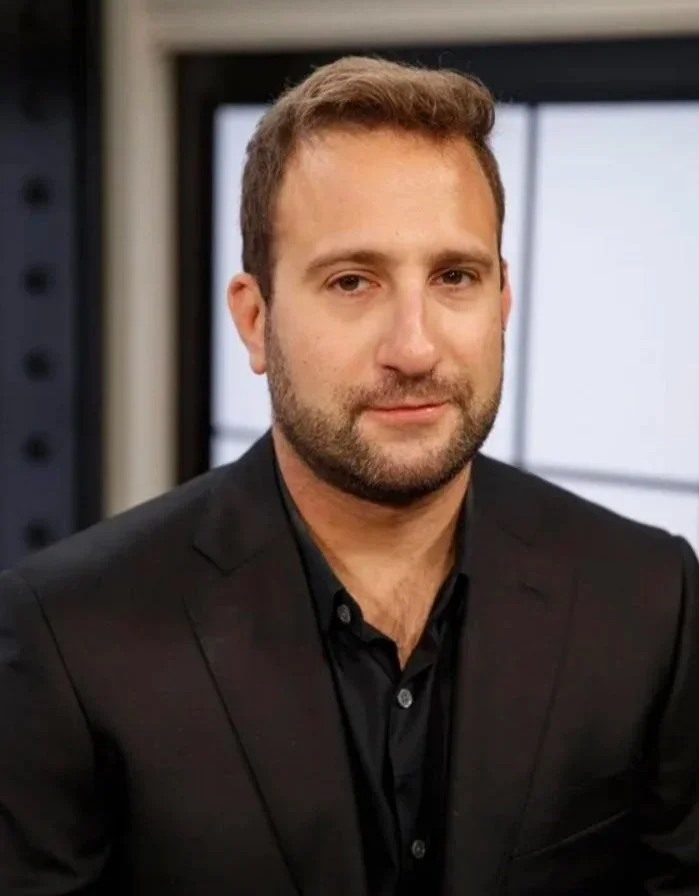
Jon Levine is a reporter.
Provoking into Posting
Contents
Max Raskin: Your own news consumption in the morning — what does it look like?
Jon Levine: It used to always include Twitter, but I deleted it from my phone. I don't feel that Twitter is as valuable a news source as it used to be — it’s much more about shoving explosive content in front of me that's going to jazz me up and provoke me into posting something I probably shouldn't. So I dropped Twitter from my morning routine. I still keep it on my computer, where it does still have a value, but not for the news immediacy that it once did.
I'm a pretty basic guy in terms of news. There's no magic bullet for me. I read the New York Times and the Wall Street Journal every day. Have to keep an eye on the New York Post, sometimes the Washington Post. Politico Playbook, Jewish Insider And of course, the Washington Free Beacon.
MR: Do you have any niche news that you’re into?
JL: I've become more into local domestic Israel news in a way that has no real bearing on my day-to-day work. But I keep up with it, and I've become more interested in that obviously after October 7th.
MR: Do you have any hobbies?
JL: I'm pretty regular at the Kennedy Center. I always try to go there to catch whatever's playing. Usually I do a lot of classical music.
I'm a big cyclist.
MR: What kind of bike do you have?
JL: I have a very nice bike that I bought at Conte's Bike Shop. I used to have a Trek and I just upgraded…what the hell bike did I get…a Cannondale. Big black Cannondale. It's a really beautiful bike.
MR: Do you collect anything?
JL: I'm not a big collector because collecting in your 30s and 40s becomes hoarding in your 50s and 60s. I've had hoarders in my life…it starts off with, “Look at my collection of Hummel figurines,” and before you know it…
Generally speaking, collections should be in museums. I'm very, very careful about the things I have around me.
But let me show you something [lugs out big Bible].
MR: Wow.
JL: I happened to be in Arkansas for a Walmart event, and I drove to a little resort town called Eureka Springs. I was on some real dirt roads and then I passed this antique store in Alpena, Arkansas. There was something about this store and I go in and I see this gigantic Bible. I could barely understand a word the owners said. This Bible is from the 1880s and it is in mint condition. When you leaf through the pages, you find all these news clippings of different events throughout the last century.
MR: Do you have any other things like that?
JL: Well, there's a wonderful painter in New York City named David Paul Kay, whose artwork I love to death. I think it has notes of Roy Lichtenstein and Warhol. I had such a cool apartment in New York…It was comically small but I was just surrounded by his epochal paintings in great gilded frames.
Stuff
MR: How do you keep track of your sources?
JL: I collect people. That's a better way of putting it. That's a much more meaningful thing to collect than Hummel figurines.
I think all kids have these passionate desires to collect things for no particular reason. It's instinctual. I would go to Jersey Shore with my family, and I would have a big shopping bag, and I had this compulsion to go to the beach and put shells in the shopping bag and take them home. And then after several months, our garage would smell like the ocean. But not like fun ocean smell. And then the shells would just get thrown away.
I'm not a Buddhist, but I do believe in the Buddhist principle that desire is the root of suffering. When we feel like we need to have things in our lives to make us happy — if I can just buy this dinner plate or this jacket or whatever — it won't make you happy. Desire for material things ultimately brings ruin.
MR: Do you feel that way about your writing though? That if you just write the one piece you are working on, you’ll be satisfied?
JL: The piece for what? The question is what are you trying to achieve with your writing?
MR: I don’t know, but it’s something like collecting shells. You just do it because it scratches an itch.
JL: Well, you first have to figure out what is the itch you're scratching? What are you trying to achieve with your writing? The reason I'm a news reporter, the reason I love what I do, is because I really think I can make the world better with what I put out. I really believe that. It's not just about clicks and getting — in the old days — a link on Drudge Report, which no one reads anymore…
MR: …I still read it.
JL: I really believe when you publish an article revealing some form of malfeasance or some objectionable qualities about whoever you're writing about and you effectuate a change that wouldn't have happened unless you had written…that matters. That's meaningful. News reporters take a vow of poverty, so you're not in the news game to make crazy money. It's really about making the world a better place to live in. And I really think I really try to do that with what I write.
Collections
MR: How do you keep track of people?
JL: When I got started in the business, the old timers were like, "Here's a pen and notepad, kiddo. You're going to need this." And I remember when I was starting out, you still had some real old timers who would have the hat that said “Press” in it. They were something out of a Frank Capra newsreel, and I love them and I miss them. They're mostly retired now or forced out. When I started and was interviewing someone, I would just type down a rapid transcription of whatever they said. That was intense.
MR: I remember doing that when I was at Bloomberg. It was a pain because you couldn't concentrate on the conversation.
JL: Right, right. You’d have a sort of duality in your brain — half of your brain is dedicated to just being a scribe and typing as quickly as I can with all my typos and hoping at the end it's somewhat legible. And the other half of your brain is thinking about the follow-up.
MR: Did you record back then?
JL: You know what? In the early days for many years, I didn't even do that. Just rapid live transcription.
MR: What about now?
JL: Now I'm very bougie. The advent of rapid transcription technology has been a real game changer.
MR: Do you have a spreadsheet with people in it?
JL: No. My phone has 5,000 phone numbers in it.
MR: Wow.
JL: This phone is the most valuable thing I own. It's so gigantic, I forget who's even in here.
MR: Do you keep notes on people?
JL: I always put something in the company field. And if I want to look up someone, I can just type in “White House” and I have 10 people. I can type in “Treasury” and I have 10 people.
MR: How do you keep track of your to-dos or notes on a story?
JL: Honestly, I'm low tech. I keep it in my head. But if I'm researching a long piece, I have a Word document where I put all my interviews and transcripts.
Writing vs. Typing
MR: Do you ever have writer's block?
JL: Writer's block is for novelists.
I am not a novelist. I am a working writer, and I don't believe in writer's block.
MR: You can't afford to have writer's block.
JL: You know what I am? I'm one of these Mexican chefs.
MR: Yes! I think Anthony Bourdain once said that all food in New York is Mexican food.
JL: I can make a Greek omelet, I can make a London broil, I can make a croquembouche. Whatever is needed for me to do, whether that's a cute feature story, whether that's a story that you have to write in five minutes, like someone fainted on television or the President of the United States threw up on the Prime Minister of Japan…
MR: How do you feel about Claude and ChatGPT?
JL: Well, look, I am not a Luddite. I'm a big techno, all-steam-ahead person. I think that there's no avoiding ChatGPT. There's no avoiding the AI conversation.
MR: Do you think people in journalism use it?
JL: Everyone uses ChatGPT or Claude or something similar for research — and this is wholly appropriate as long as you independently authenticate the facts. I am aware of major, big deal people at foreign embassies who have written press releases entirely with ChatGPT. I'm aware of people in many walks of life in shockingly high places who use it.
MR: I actually think the people who are higher up use it more because they know it’s a useful tool and they don’t have as much pride of ownership.
JL: Well, it's an incredibly useful tool.
MR: But how does that make you feel as a writer?
JL: I think it's all about how you use it.
MR: But how do you feel about it being trained on your corpus of writing and then being able to write something in your voice that’s indistinguishable from your writing it?
JL: I feel neither good nor bad. It is what it is. I don't have emotions about these things. As a news reporter, I try not to “feel” too much.
But you know what ChatGPT is not going to do? It's not going to call you up on the phone and say, “I have proof that you're cheating on your wife, or I have proof that you spent this campaign money at Disneyland with your children.”
MR: Well, that’s one of the two jobs of the reporter — one is writing and one is gathering information.
JL: I would push back a little bit on the writing part. I'm sure it's going to get better, but I think I can frequently spot a lot of ChatGPT.
MR: Fine, but I'm sure you can't spot a lot of it. And maybe you get a lot of false positives.
JL: But it's getting better. I'll take your point. It's getting better. And it could come to a place where I can't spot it anymore.
Levine, Not Levine
MR: So now here's my question. Le-VEEN or Le-VINE?
JL: Le-VEEN. Like Adam Levine. There is no such thing as Le-VINE. That is not a name.
MR: When I say that Jon Le-VEEN is a journalist, what part resonates with you?
JL: Writing is the tool by which we transmit information. What makes you a reporter is the quest, is the hunt.
AI could do very, very well going through financial disclosures. That is made for a robot.
But you know what? If I see Alec Baldwin on the street right after he told George Stephanopoulos, "I didn't pull the trigger," and I — at 3% battery — whip out my phone and start blowing questions at him and he runs at me with an umbrella and tries to hit me and that fake Spanish wife of his holds him back, let me tell you, AI's not doing that. That's a real video.
MR: No, but that's not writing.
JL: That's not writing, but it's journalism. I mean, it's not a Pulitzer Prize, but it is something where I was able to elicit newsworthy information.
MR: That's what speaks to you more?
JL: It is the work of journalism. Writing is just the last phase. It's when you've gathered all the info. It's the gathering of the info. Journalism is a full body experience. Do you want to know something? I'm never bored because my work constantly puts me in contact with not just people, but the most interesting people in the world.
MR: What was your most viral tweet?
JL: The late Sen. Orrin Hatch taking off glasses which he wasn’t wearing — followed closely by video of a shirtless Jack Schlossberg singing “Ticket to Ride.”
MR: Is shirtless Jack Schlossberg related to Shoeless Joe Jackson?
Trust Me, I’m Lying
MR: Is there someone you want to interview that you have not interviewed?
JL: Trump. I mean, I have interviewed the president, but I want to do a sit-down with him in the Oval Office. I'm very keen to do that.
MR: And who else is on the list? What about someone who’s dead?
JL: I'm a political guy by nature, so my interview choices are going to skew more toward political figures of the past. Right off the bat I would say Napoleon, Jesus, Winston Churchill and Ramesses II.
MR: Books written by reporters. Do you have a favorite or one that comes to mind right now?
JL: I will tell you the best book I ever read about the industry — and it's not about journalism per se — but it's an amazing book by a writer named Ryan Holiday called Trust Me, I'm Lying. Journalism is like a yin and a yang, and whatever the anti-side is, that's the PR flack side. Holiday wrote this book from the perspective of people who manipulate reporters and journalists.
I have been on the receiving end of so many flacks in my life. So many people have tried to threaten me in a million ways, manipulate me in a million ways, use me as an instrument for their purposes. And this is not a book about journalism per se, but it's an incredible book that you will learn much about our industry from.
Working?
MR: What about something from the past like David Halberstam or Truman Capote?
JL: I thought you wanted a useful answer.
MR: No, no. I wanted In Cold Blood, whatever.
JL: No, I'm not going to tell you I'm sitting here reading Studs Terkel. A lot of that world is no longer relevant to the news eco-system today.
MR: Is there any old-timey writer you enjoy?
JL: Robert Caro is probably the greatest author of nonfiction living today. I read The Power Broker when I was in college, and I had a brief period of funemployment once during my career, and in that time I read all of his Lyndon Johnson books and they were marvelous.
But I'm also very upset with him. He neglected to finish his magnum opus and instead focused on a self-indulgent autobiography that nobody wanted or asked for. He’s allegedly still working on the last LBJ book — let’s see.
MR: He should do my biography.
JL: He should. And I'm not disparaging him. I don't want to be gratuitous. He's produced tremendous, tremendous works.
MR: What are you reading now?
JL: The complete Second World War memoirs of Winston Churchill. It was hard to find this unabridged, by the way. I am a World War II nut because I'm basically an old Boomer.
I also enjoy anything from Bari Weiss, Michael Powell, Kevin Williamson, and Andrew Stiles to name a few immediate favorites.
MR: If you could ask Churchill anything, what would it be?
JL: Churchill was such a prescient person. He famously said in the 1890s at Harrow, “London will be in danger—London will be attacked and I shall be very prominent in the defence of London.” He said this when he was a teenager, so he was an incredibly prescient person. I would simply ask him, "What do you think is going to happen?"