

Interview with Nick Bostrom
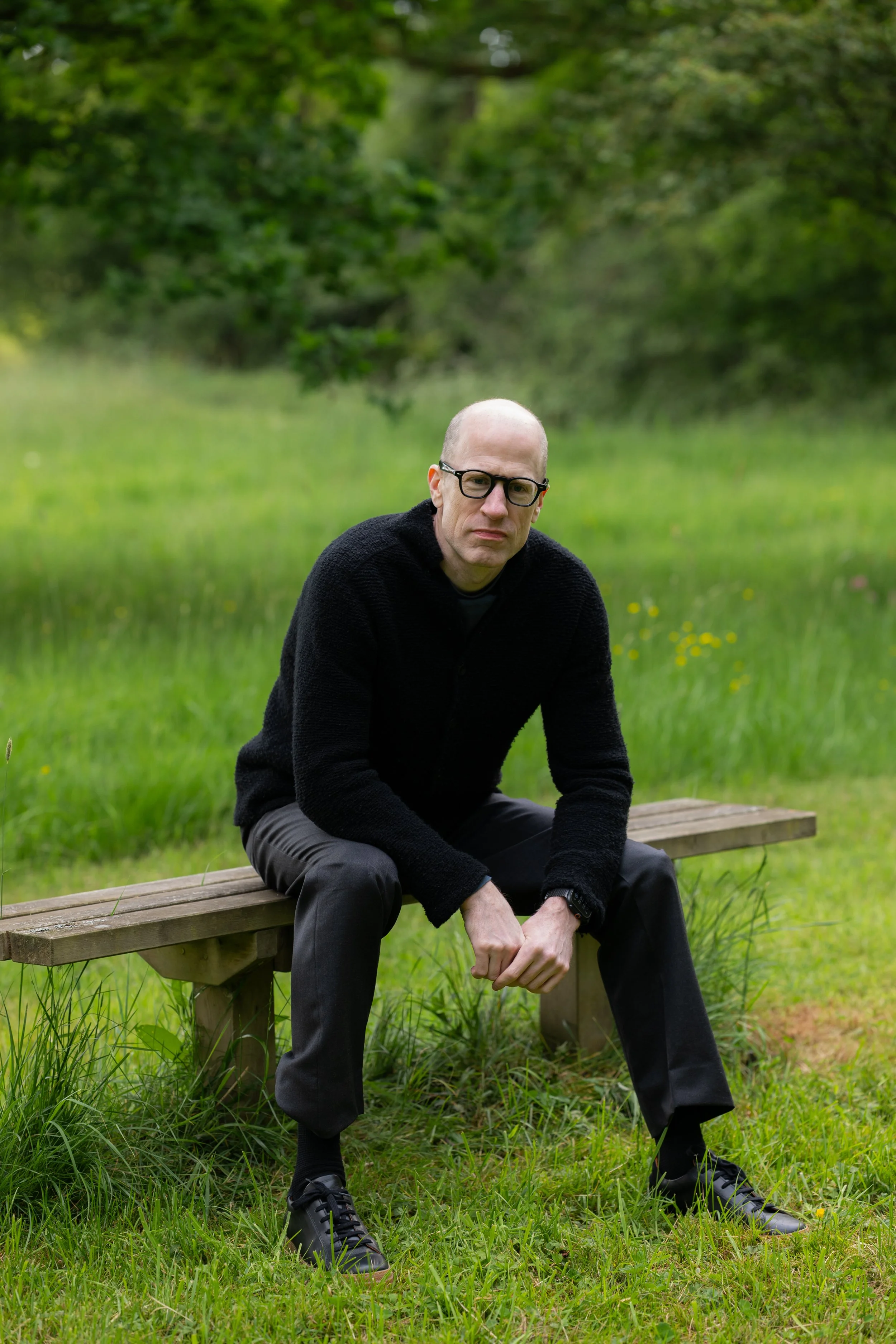
Nick Bostrom is a philosopher.
More or Less Wrong
Contents
Max Raskin: During the last industrial revolution, I think there weren't so many philosophical problems raised by the steam engine, for instance. Maybe certain technologies made it easier to study cosmology or something, but consciousness was certainly not in the news as much as it is today. That’s made you a bit of a rockstar. Do you feel like a rockstar? Do people recognize you on the street?
Nick Bostrom: Occasionally. I've never been a literal rockstar, so I don't know exactly what that’s like.
Certainly it is the case that a lot more attention is now being focused on these issues, AI especially. But also a bunch of other big picture questions for humanity, which I've been laboring over for a long time.
MR: So if you’re Tom Nagel writing about consciousness in 1974, there’s only so much news coming out that’s relevant. It’s a flood now. Do you stay abreast of the daily news?
NB: Well, it's a full-time job just to monitor the situation now. Developments are happening rapidly. And so the focus is shifting more to paying attention to these unfolding events. If one wants to make some contribution, there's maybe a brief window of opportunity between when the issue emerges and when it is settled one way or another.
MR: So how do you stay informed about what's going on? Are there any periodicals you read? Any blogs or Twitter accounts? What does your actual media consumption look like?
NB: It varies — in the AI space, Twitter is one place where people post papers, and then there are various blogs, etc.
MR: Is there anything that you have to read that you don't miss?
NB: The LessWrong blog, for instance, is one place where people are discussing stuff.
Separately, there is a vast and cavernous netherworld of Google Docs, privately circulated amongst various networks of people who are trying to figure these things out and are commenting on each other’s ideas.
MR: What are those ideas being discussed?
NB: All kinds of stuff. With AI, the different aspects of safety and governance and ethics and strategy and generally how to understand and navigate the challenges ahead.
MR: You said that now it's almost a full-time job monitoring the situation. Does that mean that you personally feel like you're more in consumption mode than in productive mode right now as a philosopher?
NB: I've always alternated between phases. Imagine a sponge, you can soak in and then you can squeeze out. At various points in time, there might be a specific product I'm working on — a paper or something that I'm trying to bring to completion and to output — and then I'm focused on that. But between papers or books, I'm in curiosity mode, where I sniff around, like I pick up and explore scent trails to see where they lead.
MR: Are you in curiosity mode right now?
NB: Right now, I'm in curiosity mode.
Deep Mind
MR: How do you protect your time right now? Or let me rephrase: How do you come up with ideas now…where you come up with most of your ideas? Is it in the shower? Is it on a walk?
NB: I think there's a distinct mode for me of actual deep thinking, which is separate from writing or reading or talking to people.
MR: Where is your deep-thinking space? Is it in an armchair?
NB: That's one good place. You could also be walking or pacing. It requires a very high level of concentration and it's not always possible to do it, not every day. The biological conditions have to be optimal.
MR: Do you have music on when that's happening?
NB: No, no, no, no, no, no. It should be distraction-free.
But even on a good day, if you manage to sustain that level of concentration for 45 minutes, it’s an achievement. And so what that means is that when opportunities for this kind of thinking occur, because they're rare, I try to not waste them on other things. Those minutes are sacrosanct.
MR: And when you're doing that, do you have a notepad by you?
NB: It’s useful to have a notepad at hand — pen and paper.
MR: Are you particular about the kind of pen and paper you use?
NB: It doesn't matter. I’m not writing paragraphs, just jotting down some keywords or phrases, drawing some lines, so I can retrace the steps later.
MR: How do you integrate AI into your life?
NB: I do use Claude and the other AI models in various ways and for different purposes. Some is the same as everybody else — if you have some random questions.
But also for work, they can be a preliminary critic if you want to bounce ideas. Sometimes it helps if you have something to interact with to help draw out your ideas from you. If it asks some questions or raises some objections, it might stimulate you to start thinking, so it can be useful in that regard. Later, when you're writing up, it can help find relevant literature or proofread.
MR: You’re an excellent writer.
NB: Oh, that's really kind.
Games
MR: Were there any writers who influenced you when you were younger? Not necessarily philosophers, but what did you read when you were growing up?
NB: Well, a fair amount of classical literature. There were some philosophers that I was reading back in those early years — Schopenhauer, for example, and Nietzsche. Both excellent writers.
MR: What language did you read them in?
NB: German.
MR: And what literature were you into?
NB: When I was a kid, I wasn't into books or ideas or science or literature or philosophy or any of that. I associated such things with school, and I detested school.
But when I was about 15, I discovered that there was actually a world of learning very different from and outside the stuff we were talking about in the classroom. I then threw myself into an intense program of self-education.
MR: Was there a moment where you read one book and you were blown away?
NB: There was the first “serious” book I read. I went to the local library one afternoon just for no particular reason, and pulled out a book here and there, and took one with me home. It was an anthology of 19th-century philosophers. This volume opened the gates to the world of ideas for me.
MR: You famously didn't enjoy school when you were younger. What would you do in your free time instead?
NB: I would just be playing with friends — making up games or driving around on a bicycle or playing ball. Random kid stuff. But we would invent a lot of games.
MR: Do you remember any of the games you would invent?
NB: Yes, there were many of them. Almost every day would be a new game. Some more intellectual, some more physical.
MR: That's funny.
NB: And then we would compete in them.
MR: Was it cops-and-robbers-type stuff?
NB: I mean we also would play that, but all kinds of stuff. Presumably kids still do that now. You put down some rules and then you compete, and then you realize you need to change some rule to make it more fun and interesting and then you do that. That was the main activity. Sometimes with a side order of mischief.
MR: Did you read science fiction when you were younger?
NB: No.
MR: Do you like science fiction today?
NB: I haven't really been that into it. Many of my friends and colleagues are big science fiction aficionados, but for me not so much.
MR: People will be surprised that you did standup. Is that true?
NB: It is true that I did it, and it's also true that people are surprised when they hear I did it.
MR: Is there anything else that you do that people are surprised about? Any other hobbies or things like that that people are surprised about?
NB: That might be the most surprising one.
I guess some people might be surprised that for the first 15 years of my life I was completely uninterested in scholastics. I believe it was the school or our teachers. It was just boring. It was never challenging. And so I just formed this negative opinion of the whole idea of books, writing, learning, studying…anything school-related. And then I discovered I had just been missing out on the real stuff.
I Think, Therefore I Am Funny
MR: Do you still have some of that anti-intellectualism? Are your friends normies, or are your friends all smart people?
NB: I would not say that my friends are normies. It's a strange spot — I was running this Future of Humanity Institute at Oxford for many years and everybody there was very unusual, even by academic standards. A distillation of brilliant eccentrics and nerds of different flavors.
MR: Do you like being friends with eccentric people and that kind of person or are your friends like beer-drinking guys watching the game?
NB: The former, I would say. I don't have many of the beer-drinking kind.
MR: Who are some of the standup comedians that influenced you?
NB: It was variable. What's funny at one time is not necessarily what's funny later. It's context dependent.
MR: What language would you do your standup in?
NB: English.
MR: Do you remember your funniest bit?
NB: It worked in a particular situation, but it's not the kind of thing which you can easily transplant.
MR: But do you remember?
NB: I do remember bits of the routine. I wasn't doing it full-time or anything like that.
MR: It’s very interesting.
NB: It's a very immediate form of communication. You get instantaneous feedback, and there is no sugarcoating.
MR: Oh, sure. Standup comedy and horror movies are the purest aesthetic things to test because either someone laughs or they don't. They’re scared or they’re not.
NB: No ifs, ands, or buts, or political games. It just is what it is.
And it's very much in the moment. Quite different from doing a PhD or sitting and thinking about abstract ideas.
MR: But do you know the topic of what your funniest bit was?
NB: I think you had to be there is the truth of it.
MR: [Laughs very hard]. That's funny.
When you say something like that do you know you’re being funny? Do you think of yourself as a funny person?
NB: Perhaps unwittingly? I don't go around trying to be funny.
MR: But do you think you're funny?
NB: I think that there is an ability to step out of the normal thinking patterns and sometimes look at the situation from the outside. Or look at yourself as if from another person's point of view who is doing a caricature of you.
Omnidish
MR: What would you recommend to someone who has never been to Sweden?
NB: I'm not the best to ask because when I was living in Sweden, I wasn't really doing the touristy things. And food-wise, I have a peculiar diet that is not optimized for tourists.
MR: What is your diet?
NB: I only eat Omnidish, which is something I have invented. It's quite barbaric, but it's optimized for health. It contains all that you need.
MR: I'm guessing it doesn't contain chocolate and beer.
NB: You guessed right.
MR: What does it contain?
NB: It contains a lot of vegetables, for example.
MR: What’s the recipe? I’d like to share with my readers.
NB: Oh, well, the recipe has not yet been disclosed to the world. I have to save that.
MR: Is the base rice?
NB: No, rice has a high glycemic index.
MR: So what's the carb or the base?
NB: You're trying to draw it out of me.
MR: Or what's the flavor profile? You don’t have to give me the whole recipe.
NB: The flavor profile? Most people would probably say that the flavor profile is disgusting. But I have a theory here. I think your palate acclimatizes to the food you eat. So suppose you always went to three-star Michelin restaurants, then I think on an average day you would get about the same culinary pleasure from eating that food as I get from eating my Omnidish, because your expectation level would adjust.
MR: This is like the hedonic treadmill or Cervantes saying, “Hunger is the best sauce.”
NB: It is. And then I think also maybe the body can learn after a while that if a certain food is nutritious, you're going to like it.
MR: But is it Asian flavors? Is it Mexican?
NB: Flavor is not really a thing in Omnidish.
MR: Do you put any salt in it?
NB: There is a pinch of salt because you need electrolytes.
MR: So I’m assuming you want to live long?
NB: For health and longevity, mainly. Also to some extent, energy and wellness.
Bostrom, Hofstadter, Bach
MR: I want to ask you a couple deep questions, but don't answer them like I'm a smart person, answer them like I'm a stupid person.
Do you believe in an afterlife — a consciousness where you, Nick Bostrom, will be conscious after you die?
NB: It’s hard to tell, but I think it can be seriously entertained. Partly there are the traditional theological scenarios. And then on top of that, there is also, with the simulation argument, the possibility of simulation afterlife. So there are several different ways in which something like that could be the case.
MR: Did your simulation argument piece come out before The Matrix?
NB: No. The article came out in 2003 and a draft was published in 2001. I had been pondering on it for a bit before that. It wasn't inspired by The Matrix, and I don’t know whether I saw it when it came out. I certainly saw it at some point.
MR: Do you watch TV and movies?
NB: Not often. But there’s a lot of other content, like podcasts, or lectures and interviews on YouTube.
MR: Do you ever watch stupid stuff like top soccer goals?
NB: Yeah, but not much. If I'm tired maybe I would watch something random.
MR: And what will you watch when you're just vegging out?
NB: Well, that would depend again. Perhaps I will watch the final of the World Cup in soccer when that happens. Sometimes movies, but I think it must have been several months since the last one I saw.
MR: And then what about music? What kind of music do you listen to?
NB: Well, I think for me, there are three different modes of music listening. So the first is if I actually were to sit down and listen with attention, which I haven't done in a long time, then it’s classical music. Various composers. Bach was a favorite, which seems to be a family thing. My grandfather used to play Bach in churches on the organ. He was not an organist but just knew how to play it. My father also liked Bach very much.
MR: Do you have a symphony that you keep coming back to?
NB: Not specifically. I used to listen to a fair amount of classical music as a teenager, but in recent years or recent decades, not so much. So, that's one channel.
But then if I'm working out, it would be a very different kind of music.
MR: Do you work out every day?
NB: Not literally every day, but most days in some way or another.
MR: What do you listen to when you're working out?
NB: Trash.
MR: What kind of trashy thing?
NB: I don't want to go on the record.
MR: Are you embarrassed?
NB: Yes, the kind of music that I'm listening to while I’m exercising is embarrassing.
MR: Why? You think people are going to think you're not smart?
NB: Let’s just say it's not consistently highbrow.
MR: But I’m curious because you’re so smart. Are you worried that people are going to think you're less smart because of it? People might think you’re cooler because of it.
NB: Doubtful! It's not so much specific genres or specific artists. There are certain particular tracks that for some reason appear energizing, and that doesn't correlate very tightly with style, genre, or quality.
MR: What’s the third way of listening to music?
NB: The third mode would be occasional background music when doing certain kinds of work. There shouldn't be lyrics.
MR: Is that classical or jazz?
NB: That could be some classical, but it would mostly be some sort of electronic thing.
MR: Like Hans Zimmer?
NB: I'll give you one album —The Swimmer by Phil France.
MR: People are now going to listen to it and think that they can be like Nick Bostrom.
NB: Well, alright, that seems good then.
Difficult Questions, Made Easy
MR: Are you religious at all?
NB: That’s a difficult question.
MR: Let me rephrase: Do you have any set liturgical or dogmatic religious practice?
NB: I don't have liturgical practices.
MR: I know you’re going to give me a whatever answer, but do you believe in God?
NB: Well, that's an even harder question maybe. It might depend also on how one defines these terms.
MR: I know, I know, I know.
NB: Sorry, it's what you get when you talk to a philosopher.
MR: Do you just feel very lucky that what you’ve spent your career writing about is so in right now? It really is. Let me ask it this way: Does it lead you to think it’s more likely you’re in a simulation given how everything lined up really well for you, intellectually-wise?
NB: So there were two questions there. Let me try to say something on both. A lot of what I've written about is how things could go wrong and existential risks and stuff like that. So in some sense, it's sad that it still looks plausible. It would've been better if that had all turned out to be false and barking up the wrong tree because then the world would be safer.
The fact that now as we move closer with AI, there do really seem to be these big difficulties with alignment and so on, is an unfortunate vindication.
As for the second question, I think to some degree it increases the credence somebody should assign to the simulation hypothesis if they are in a slot that would be more likely to be disproportionately frequently simulated. I don't think it's a huge effect relative to what everybody has reason to believe.
You could take some even more extreme case, perhaps, if you were Donald Trump or Elon Musk. If you’re reflecting, you got to at some point wonder what are the chances that I would just happen to be Donald Trump or Elon Musk.
MR: There’s all this debate about the traditional anthropic principle vis-à-vis humans, but you’ve coined a real anthropic principle.
NB: It is. It’s also the same with the simulation argument. If you're the person who published it, it also creates some slightly higher salience. If you imagine simulating not everybody, but just some people.
MR: Does your gut say that I’m a real person sitting here asking you these questions?
NB: Yeah, it does. And in fact, even if this is a simulation, I still think that you and I are real in the sense that matters — that we would be having real experiences, our actions would matter, and so on. It's just that the nature of what that reality consists in would have the surprising property of being implemented in some computer built by an advanced civilization.
Easy Answers, Made Difficult
MR: What do you drink throughout the day?
NB: Water, coffee, and some green tea or matcha.
It’s hard to rationalize being interested in this. Though personally, I find if there's some person whose ideas I know or books I read, I'm often curious about their daily routine. What do they do after they wake up?
MR: I keep trying to get Nagel to do one of these — I tried twisting his arm over lunch, but he wouldn’t do it.
NB: Maybe he’s got dignity.
MR: I know. And he’s so interesting. He enjoys cigars. They have appeared in some of his articles.
When you wake up in the morning, what's the first thing you do?
NB: I make coffee and maybe take two minutes of morning sun.
MR: Morning sun?
NB: I'm tending nocturnal, meaning if no effort is made, my schedule drifts late. To counteract that, if first thing in the day you get bright light into your eyes, it supposedly anchors the circadian rhythm. I don't know if it actually works, but it's a low-cost intervention. Maybe some kettlebell swings, stretching, or jumps.
Then ideally take advantage of the fact that at that point the mind is uncluttered, and so do some focused thinking, if it's one of those days when that is possible, before opening the shop to the world and welcoming the deluge of incoming information.
MR: Was anyone a mentor to you in your life?
NB: Some of those dead people whose books I read as a teenager.
MR: What about your PhD advisor?
NB: Not really. I had two advisors for my PhD, each of whom imagined that the other was doing a lot of advising and supervising. For many, that would've been a bad situation. But I had my own projects and ideas that I was pursuing, so the arrangement suited me rather well.
Back when I was doing a master's in philosophy, I had another advisor. I would write some draft and then in the margin he would scribble “unclear”, “not clear”, “question mark”, or “explain”. I sort of suspect that he scattered those remarks completely at random, but the effect was that I had to rewrite. To me, the text seemed clear as the day — it says it right there exactly what I claim — but for some reason it's marked as unclear. So let's try to make it even clearer. That was a year or two of rewriting.
MR: Who was that?
NB: Peter Pagin. A Swedish philosopher, and a stickler for precision.
MR: How do you feel about AI making it so that your writing talent is no longer going to be a defining skill of yours?
NB: I think all human skills will be surpassed. Human capital is a rapidly depreciating asset.
MR: Do you think maybe you had the right idea as a child — making up games and playing them with your friends?
NB: Yes.
MR: That's where we're going back to?
NB: I think we might all be like children again. We could get help with making up the game, unless that’s an essential part of the fun. But the playing it seems we will have to do ourselves.