

Interview with Peter Coyote
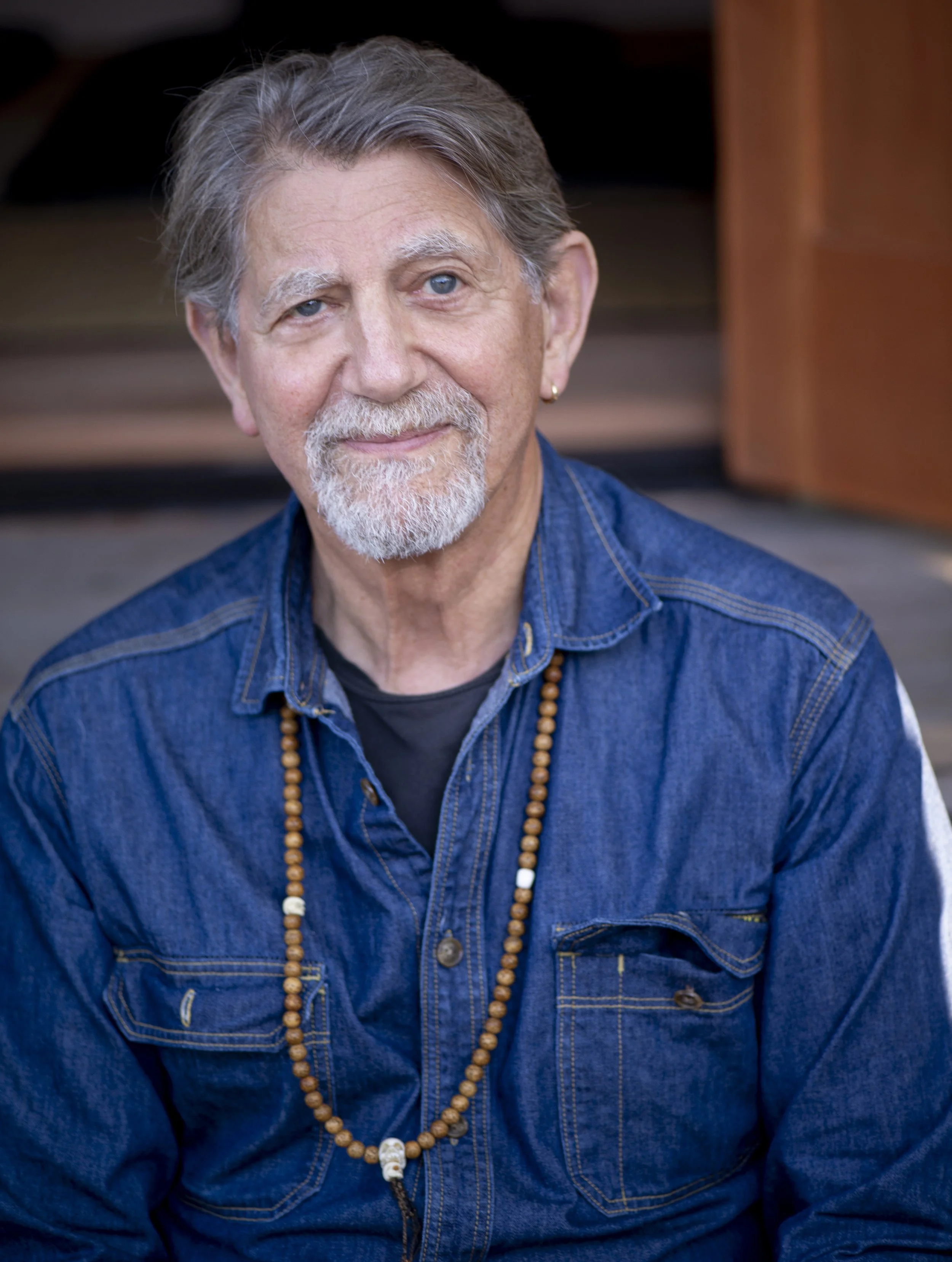
Peter Coyote is an actor, director, author, and narrator.
At the White House
Contents
Peter Coyote: Are you related to Marcus Raskin?
Max Raskin: We think so, but I’m not sure.
PC: The name struck a chord. I'm a fan of the family.
During the Cuban Missile Crisis, I was one of the organizers of a group of 14 students from Grinnell College who went to Washington on a three-day fast, protesting the resumption of nuclear testing and supporting Kennedy's peace race. We raised money — we bought two old flopper cars. The head of an insurance company in Des Moines gave us one brand new Chevy to drive and walkie-talkie radios for all the cars. The John Birch Society was following us, eating fried chicken and throwing the bones at us. The Birchers were following us on the sidewalk outside of the White House, ‘cause they knew we were fasting.
We got there and we got a photo above the fold on the New York Times. Kennedy saw it. He was flying to Arizona. He’d just been savaged by the John Birch Society, and he liked that we were supporting his peace race. He invited us into the White House. We were staying in a place called Gaunt House, which was a rooming house — a perfect name for fasters. Marcus Raskin came bursting in and said, "Do you know what this means? You're the first protestors that have ever been invited into the White House."
MR: You met with McGeorge Bundy, right?
PC: Yes. Marcus brought us over to McGeorge Bundy. And just as we walked in, Michael Horwatt, our friend we’d elected spokesman, clapped me on the back and said, "You take this one, Pete."
We kept the protest going in front of the White House for a year until February 1963, the first student demonstration of 25,000 students, which Tom Hayden called the beginning of the student peace movement.
And I wrote to Jamie Raskin, and I sent Jamie a published article about this.
MR: You mentioned the John Birchers following you — do you feel a kinship with people who are like you on the other side of the aisle more than you do with the establishment?
PC: In a certain way. I have respect for anyone who stands up for what they believe. That doesn’t mean that they (or I) can’t be an ass.
I'm also a Zen Buddhist priest and transmitted teacher. On the big picture, the big, big picture, there's one source of energy in the universe that has produced every supposedly separate object. People, insects, birds, mountain ranges, civilizations…
MR: …the John Birch Society.
PC: Absolutely. I may not like that I'm made of the same stuff as Donald Trump, but it's indisputable. And it means that he has absolutely equal standing to be who he is as I do. And I have no standing or superiority to protest that. But as a Buddhist, if I disagree, I have to do it in a way that doesn't create more dilemma. If I do it with anger, if I do it with wrath, if I do it with judgment, I'm simply mirroring what's being sent at me and not contributing to a solution or acting as a Buddha.
Magical People
MR: You have met everyone. From the Diggers to the Grateful Dead. Did you actually know the Grateful Dead?
PC: I knew all those guys.
MR: So of all the people you met in your life, who are some of the people that just stand out as being magical? You might say everyone is magical, but I’m curious if anyone stands out.
PC: So my Zen lineage was founded by a little Japanese man named Shunryū Suzuki. Everyone who came in contact with him had their life changed. He died before I came on the scene. I started Zen practice in '74. But he left an impression on people that actually changed their lives. And my teacher and his teachers all came from that lineage, and they affected my life enormously and positively.
I was very lucky insofar as my dad had a number of friends that became my mentors and surrogate parents. My dad was a really interesting, complicated guy. Terrible father. Brilliant guy. Haunted by being a Jew in the United States with barriers thrown up against him — before Jews were white people. He made millions and millions of dollars, and he made a mistake and he lost it all.
Maybe he was afraid I was gay or I was too poetic or something, and the world was going to eat me. And he thought it was his job to toughen me up. And it didn't go well and I never felt seen or understood by him, until the very last time I ever saw him alive, and that’s written in my book, Sleeping Where I Fall. But his best friend was a bebop jazz musician named Buddy Jones, who was Charlie Parker's roommate.
MR: Oh yeah.
PC: He was a person who completely changed my life.
MR: Wait, you met Bird?
PC: No, I did not meet Bird.
MR: Oh, Jones. I only know about him through Phil Schaap [one of my mentors].
PC: I also met Thelonious Monk, who has the same birthday as me. I went to Billie Holiday's last concert in Carnegie Hall. I knew Al Cohn and Zoot Sims and Urbie Green and Freddie Redd, and all these guys that my dad helped buy land.
MR: Who of them stuck in your head?
PC: Thelonious Monk, Charlie Parker.
MR: What music do you listen to today?
PC: Well, I listen to jazz. And the other big thing I listen to — because I'm an amateur guitar player — is singer-songwriter and country music. The creator didn’t give me the musical IQ to play jazz, like I wanted, but I can handle four chords playing lead. I'm a finger picker. And I try to play an hour a day. About five years ago I decided I wanted to try to understand lead and I've been stumbling through it and getting better — less clinkers.
I wrote an entire book called The Rainman's Third Cure about mentors and teachers like Nino Cerruti. He was an Italian count and we became so close that he called me his illegitimate son and he taught me how to move through the upper echelons of Europe. He just basically trained me, and he loved me and I loved him. An elegant designer who taught Armani, who used fashion to “fight the brutality of life.”
So it's not that everyone is all magical at all. My parents had friends who were highly evolved people. My dad was a big student of the Bill of Rights. He was a bookish guy who would come home with 25 volumes of Jefferson's letters. My mom's cousin, Irving Adler, was the first man fired from the New York City school system for being a communist. Twenty-eight years later, he sued them and won 28 years’ back pay. His son inherited Albert Einstein's chair at the Institute for Advanced Study at Princeton for life.
I had this really rich broth of secular Jewish intellectuals and political people. And most important, my mom had a crushing nervous breakdown when I was three. My sister was born 19 months after me. And my dad, he was a really tough guy. He was physically very dangerous. He was beating men half his age unconscious in his 60s. He had an uncontrollable temper. Went to MIT when he was 15.
MR: Have you ever been in a fight?
PC: Yes.
MR: When was the last time you were in a physical fight?
PC: Oh, maybe during the Haight-Ashbury period.
MR: In ‘68, ‘69?
PC: Yeah. I mean, I was in rough places. The Diggers were not peace, love, and good vibes. I was armed through most of the ‘60s.
MR: Are you armed? Do you stay armed today?
PC: Well, I don't carry a weapon, I don't have a concealed carry permit. But I was a marksman instructor. I got my first weapon at 10 years old — a .410 shotgun for my 10th birthday. For my 14th birthday, I got a .22 lever-action rifle, which I still have, which I probably killed 50 deer with when I was still hunting. For my 15th birthday, I got a single-action six-shooter revolver that I could wear on my hip and walk in the woods all day.
MR: Your dad got that for you?
PC: Yeah. We had a big farm about two hours north of Englewood, New Jersey, which was his favorite place and my favorite place, and was a big business. He made more money from the cattle he smuggled into the country than he did from stocks.
Anyway, so the manager of the farm was one such magical person. My dad sent me to work on the farm each summer at 10 years old. And the manager was my hero. He had been a game warden in Florida fighting egret hunters from New York to protect the egrets.
If my father got interested in something, he would go out and he'd buy everything brand new and the best of everything. That was his keynote…the best.
MR: Do you have those tendencies?
PC: No. I admired and was more influenced by that guy, Jim Clancy, who managed the farm. He lived in a tiny three- or four-room house with a big wood kitchen stove, but everything he had was really well taken care of, and nothing was showy or expensive. I liked that.
The great gifts my dad gave me were this guy Buddy Jones, the jazz musician who taught me about living improvisatorially. And Jim Clancy, whose most dreaded phrase for me was “boy work.” If he gave me a task to do, and he examined it and said, “boy work,” I was an abject failure. The farm guys who were never going to college, never going to get rich, taught me how to work at the same pace that you did everything, so that you could work forever. These were invaluable people. They were not all highly developed. They were not all obvious geniuses or anything. And I've had a lot of luck in my life making people my teachers.
Probably the most influential was Sue Howard, who I call my black mother. My mom had a crippling nervous breakdown when I was three. My dad’s sister sent her housekeeper to help us out. She was 19, gorgeous, brilliant. She was my source of safety in my house. The kitchen was always filled with black people — her friends, and my dad’s chauffeur, and I just drank these folks up. Best of all, they listened to me and took me seriously. I saw through being ‘white’ by 10 years old, and that’s been the greatest gift of my life.
Poets, Politicos, and Psychoanalysts
MR: Of all the influential people you interacted with — which of them had an impact on you?
PC: Well, Jerry Brown, the governor of California. I worked for Jerry Brown for eight years.
I ran a state agency for him, and it was one of the two big successes of his administration. He still comes to my house to argue with me. This is a guy who managed to raise taxes on people to save the public schools. He's a very odd man. He’s a Jesuit, and his life is dedicated to service. And what he did was extraordinary. You might not want to hang out with him all the time.
The poet Gary Snyder was probably the biggest influence in my adult life. Most people are unevenly developed. They have a talent. They put their energy into that talent, and they forget the other shit. Gary Snyder was the first unevenly developed person I think I'd ever met.
MR: Unevenly or evenly?
PC: He was evenly developed. Did I say unevenly?
MR: Yeah, you said unevenly.
PC: I'm 84.
MR: It's fine. I mean, you're cooking right now. You can just tell. I just lost a really important mentor who died at 88 — he was a psychoanalyst and sharp until the day he died.
PC: That's tough.
That happened to me. When I quit heroin, I was a single father. My daughter's mother had run away. I came out the other side of the counterculture — everything I'd put my faith in had changed. My dad had died millions below broke. We lost everything — all the houses, all the lands. There was no inheritance. And I had to change my life and care for my daughter.
And so I interviewed six psychiatrists, and I found one that I really wanted to be like. I talked him into giving me a sliding scale for payments. I worked with him for two years, and then he died. And I just started all over again. During that period, I also began living across the street from a Zen Buddhist monastery, and I began serious monastic practice. And the two disciplines — psychotherapy and Buddhism — kind of straightened me up in a couple of years.
Democratic Socialist of America
MR: Do you have moments where your Jewish roots come out and you just want matzo ball soup?
PC: All the time. I know more jokes about old Jews than anyone that you've ever met. And I have jars of gefilte fish in my house.
MR: Were you ever tempted to become Torah observant?
PC: No, and I'll tell you why. First of all, you have to remember, I was born in 1941. Jews were not white. They were not counted as white people until the '60s. I couldn't go to the country club a block from my house. My dad was as rich as anyone in our town. We couldn't get in. There were places we couldn't go. But we could go to the Jewish Community Center.
My dad was the president of the Jewish Community Center, and he was fired during the McCarthy period for refusing to pre-censor speakers. And I thought, fuck these guys. I would go down to the temple, and there would be these kids with no style, just loud, bragging about what kind of car their parents had, or the fur coat that mother had.
MR: So was it reform or conservative or something like that?
PC: It was probably reform. Anyway, I just didn't get it. It didn't feel native. It didn't feel anything. And I was watching adults breaking into tears in my living room under the pressures of the McCarthy period. I never saluted the flag because the government was lying about my relatives, saying they were spies and traitors. But they were labor organizers and schoolteachers and people just trying to get a good break for other people. Maybe in their 20s they were communists, but they certainly saw through Stalin and dropped that. But then they were called in and threatened that if they didn't name the names of everyone they knew, they wouldn't be employable.
MR: How would you label yourself politically today?
PC: Democratic socialist.
MR: Has that changed over the years?
PC: Yes. When I was young, I was really interested in anarchism. And not anarchy…you get the difference. I did a lot of stuff in Democratic politics. I just wrote a little book called Smothered by Riches.
Consumption
MR: You’re extremely productive — how do you keep track of what you want to do every day? Do you have a to-do list
PC: I do.
I have ADD. I always have. So did my sister. And I have to write everything down. Here’s my list from Sunday: voiceovers for John, make an appointment with my poetry editor, write a letter of recommendation for a Buddhist student, go over the manuscript of my new book, ordering enzymes for my digestion, and getting cat food.
MR: Wait, hold on a second. What kind of vitamins do you take every day?
PC: I take CoQ10.
MR: I take that.
PC: Well, I had a heart attack last May. I'm completely recovered, but I take CoQ10. I take something called Arctic oil — it's basically a kind of fish oil. I take a multivitamin. I take lots of magnesium because I get cramps.
MR: Do you exercise?
PC: Well, I have to spend 30 minutes a day, five days a week, on the elliptical, which helps me build new arteries and veins for my heart. And then I study Pilates. And then I have little weight exercises and things that I do because I'm losing muscle mass.
MR: What do you watch or listen to on the elliptical?
PC: I watch the news.
MR: What channel do you watch?
PC: I watch the BBC for news and I watch MSNBC for opinion. I have a friend, Andrew Weissmann, who's always on MSNBC with Nicolle Wallace in the afternoon. So I do my ellipticals around 1:00 to 1:30 in the afternoon.
MR: Is there anything that you read that is off the beaten path?
PC: Well, I'm on Substack.
MR: Are there people you enjoy hearing on Substack?
PC: Oh yeah. Tim Snyder is one such.
I wrote a piece called “They Can't Shoot You For Not Shopping,” pointing out that we are supporting our own oppression. Every time we go on Facebook, Instagram, every time we go on TikTok.
MR: Do you go on any social media?
PC: No, I canceled them all. I don't shop at Amazon. I don't shop at Whole Foods. I'm not upgrading my Apple phone or my computer. I'll go to something else. And I wrote them and told them.
Afterlife
MR: Do you believe in an afterlife?
PC: No. I believe there's only one life.
MR: So you don't believe in the immortality of the soul or anything like that?
PC: No. That's contrary to Buddhist teaching. The fundamental insight of the Buddha is that nothing stands alone with a completely separate identity. I’m not independent of oxygen, sunlight, or microbes in the soil that grow my food. You can take it as far as you want to go. So the idea that the soul is separate and isolated? That’s the hypnotic belief that the “self” is an entity with form. It’s really just awareness.
MR: When I was younger, I learned a lot about Buddhism but ended up becoming a more observant Jew.
PC: It's fine. The Dalai Lama says there's no reason to change your religion.
I mean, I love being a Jew. I consider myself Jewish. But there was nothing in the culture when I was growing up when I needed a spirituality.
MR: I think it would've been different nowadays because there's so much in Chassidic thought that might resonate with you, and there's more gefilte fish.
Free Associations
MR: Where do you live now?
PC: In between the towns of Sebastopol and Santa Rosa. I have a little farm with 40 fruit trees, my two dogs, my tiny desk, my office. I have paper everywhere. It's a meshugana thing.
MR: Do you floss?
PC: No. I use a water pick.
MR: What time do you wake up in the morning?
PC: About 5:30. I usually get up around 6:00.
MR: And so what do you do in bed from 5:30 to 6:00?
PC: Usually cuddle my dogs or think about how am I feeling. Am I strong? Am I weak? Am I whatever?
MR: Do you check your phone?
PC: Sometimes. My children tell me I'm a nightmare. I have to turn all the signals off in my phone. I want to be the one that determines when I watch it, not the phone telling me.
MR: What time do you go to bed at night?
PC: Well, I'd say lights off usually around 11:30. I read in bed for a half hour.
MR: What are you reading right now?
PC: Thomas Pynchon's new book. And a great book called The Immortality Key about the Eleusinian Mysteries where people took psychedelic drinks as the Eucharist, and that early Greek-speaking Christians did the same thing. The Eucharist had to compete with the Dionysian mysteries, and it wasn’t until about 400 AD that the priests banned women and all the pagan-crazy stuff which was so ancient and wiggy. And I'm reading a book on AI.
MR: Have you played around with ChatGPT?
PC: Yeah, I don't like ChatGPT. The two that I like are Perplexity, which gives me footnotes so that I can assess the sources, and Claude by Anthropic, which has an ethical construct built into it.
MR: We’re getting to the point where it can mimic and replace voices — how do you feel about that?
PC: Well, look, it's not the technology. It's what people are going to do with it. And the same greedy sons of bitches that don't want to pay — that call salaries attacks on profits — are going to try to replace actors and replace voiceover.
MR: But I guess forget about the profit aspect of it. Let's just say I got a hold of a machine that could replace your voice perfectly, and someone just could not tell the difference. Just forget about the profits and anything like that. How do you feel about that? Do you feel good or bad about that?
PC: Well, it’s taking bread out of my mouth. And so what would be the point of replacing me perfectly? You wouldn’t have to hire my peculiarities. We live in an unregulated capitalistic society, and without regulations it’s the wild west, so I have no optimistic predictions.
MR: So you think it's a not positive thing?
PC: No, of course it's not positive. It comes from people not wanting to share, wanting to take the lion's share. Look, you know what? Karl Marx never ran a government at all, but he certainly understood what capitalism was. And the first fundament of capital is that when I hire you, I don't pay you what you're worth.
MR: How do you feel about self-driving cars? Will you get into one of them?
PC: No. I used a computer that crashes, that fucks up, that I have to restart it. What are these guys? It's fucking crazy. They just want to get rid of labor.
MR: I want to ask you about diet.
PC: I have a funny allergy to a group of foods called FODMAPs, which are a kind of saccharide that ferments very quickly in the lower intestine and bloats it, and can tug on the vagus nerve and make my heartbeat skip. So I watch what I eat. I put an enzyme called FODZYME on certain foods that I love because you're not supposed to have beans, garlic, and onions, my favorite foods next to sausage.
MR: Do you snack during the day?
PC: I snack on cookies sometimes when I have tea and cookies.
MR: And what kind of tea do you have and what kind of cookies do you have?
PC: Well, I have English breakfast tea. I also have an espresso machine, and I start the day with cappuccino and a non-sugar stuff called monk fruit. But it's monk fruit without any of the additives. No allulose, no erythritol, which hurt my digestion. It's pure monk fruit and you need less than a thimbleful for a cup of tea or coffee. And there are these McVitie's digestive biscuits. They're English biscuits — half chocolate, half biscuits. When I need a little quick energy pickup, I grab one of them and a cup of tea.
MR: And do you take naps during the day?
PC: Sometimes.
MR: Will you do it for a half hour or like Churchill and do a full two hours?
PC: 20 minutes usually.
MR: Churchill would get into bed and sleep for two hours every day.
PC: Churchill also painted a mouse on a Rubens because he thought there was a problem with it.
MR: I never knew that. That's funny.
MR: Speaking of Churchill, do you drink?
PC: No.
MR: Nothing?
PC: No.
MR: Do you ever take any drugs?
PC: Every once in a while, every few years, I'll take some kind of medicine plant journey with a shaman woman I know if there's something I'm trying to root out and understand. But other than that, I don't take any alcohol. I don't take any marijuana. I don't take any drugs.
MR: What do you do right before bed?
PC: I brush my teeth and I water pick and then I get in bed with my dogs, if my wife's not with me. And even if she is, we all sleep together. And then I read for about a half hour.
Ken Burns
MR: Are you a fan of TV?
PC: Yes. At about 7:30 at night, I turn my brain off and I like to watch a good English series like Slow Horses.
MR: What is it about these British Masterpiece Theatre shows? I just don’t get it.
PC: I was an actor for a long time, and if I had been able to, I would've gone to Britain and studied at the Royal Academy of Dramatic Art or LAMDA [London Academy of Music and Dramatic Art]. They train the best actors in English for my money. And one of the things that they train them to do is to develop characters that will actually serve the story that's being told. They also train them to pay scrupulous attention to the text. It’s not like trying to be natural. It's not like trying to be attractive. You'll see the greatest actor taking a little role where he becomes a character, and it's the identity of that character that moves the story forward. Actors turn specific interior dials in their imaginations to generate certain feelings and postures. And one of the things that happened with The Actors Studio, which came up during the McCarthy period, was they scrubbed the politics and urged the actors to be true to their idiosyncrasies and feelings in the moment, but not necessarily to create characters.
MR: This was Lee Strasberg?
PC: Yeah, Lee Strasberg. Well, it came from the Jewish theater, Clifford Odets. But the Jews were all lefties. The Jews brought psychotherapy and socialism and communism and all those progressive ideas from Europe. What Strasberg did was cut the politics out of it and just urge people to go into their own nature and be authentic. And so people stopped developing characters. They began to develop themselves. But when you look at guys like Daniel Day-Lewis or Meryl Streep or actors that are character-based, that's where the art is. And the British are just fantastic about it.
MR: As a voice actor, is there a microphone that you particularly love?
PC: Well, in my house, I use this little microphone called a Dachman. It's a copy of an older microphone.
MR: Do you know what model it is?
PC: No idea.
MR: So you're not particular about it?
PC: No.
MR: Are you particular about anything, like the pens you use or your notepads?
PC: Oh yeah. I'm very particular. I use fountain pens. I have lots of them. Here's my red ink for editing.
MR: Is there anything else you are particular about?
PC: I'm particular about not reading anything before I get in the studio.
MR: Oh, wow. Really?
PC: Yeah. So I have a funny story about meeting Ken Burns, which I'll tell you. I was doing a series called The West from the young people who produced The Civil War for Ken Burns. He heard it and he liked what I was doing and he wanted to talk to me about narrating The National Parks.
So they arranged a meeting in my hotel room and Ken Burns came in…short, slight guy. And he's carrying nine scripts, and above that, maybe four or five yellow legal pads. There was a box of highlighters and a box of pencils and a box of DVDs.
I said, "What is all that?"
And he looked at me like I was an idiot. He said, "Well, these are the DVDs, so you can watch everything. These are the scripts, these are the highlighters to underline your lines, these are the pencils to take notes."
I said, "Oh no, man. I never read anything until I get in the studio." And the temperature of the room dropped about 12 degrees.
"That will never work,” he said. “You don't know how impeccable I am."
He said, “All right, I'll rent a studio for a month and we'll try it."
"No, you don't need a month,” I said. “We’ve got nine episodes. We'll do an episode and a half a day. Just rent it for a week."
And on day three, he jumped out of his chair. He said, "I'll never use anyone else."
MR: Why are you so good at it?
PC: Well, there are two things I can take credit for. By not reading in advance, I protect myself against knowing anything. So the language and the images strike me, and they automatically adjust my feelings.
MR: That’s cool.
PC: I don't have to manufacture anything so that I'm always authentic with what I'm reading. Physically, I have wide peripheral vision so I can see if there's a comma coming up to breathe or a period for a dismount.
My skill is really that I can read well, but also that I remain naked to the import of the script. I'm unprotected.
MR: Your voice is basically the soundtrack in our household. We have a Ken Burns documentary on all the time.
PC: Your poor wife.
MR: No, she loves it too, but she won’t watch the Vietnam War one because it’s too violent. But I’ll take a nap to it.
PC: I couldn't watch The U.S. and the Holocaust.
MR: But even in the Vietnam War — your tones are dulcet. They're mellifluous and fantastic.
PC: Tell your wife I'll do her answering machine on her phone.
MR: Really?
PC: Yeah.
MR: Will you do mine?
PC: Yeah, sure.
MR: Really?
PC: Yeah. It'll be fun.
MR: Today’s my birthday — this is the best birthday present.
Favorite Joke (and Documentary)
MR: Do you have a favorite documentary you did?
PC: Country Music.
MR: For someone who has never listened to a thing you've done or read any of your books, is there something you would point people to?
PC: My first two books. The first one's called Sleeping Where I Fall — it's a hard but fair review of the counterculture in the 1960s. And the second one is called The Rainman's Third Cure — it's how you get from there to understanding the need for wisdom and mentors.
MR: Amazing.
PC: So now because I like you so much, I'm going to tell you my favorite Jewish joke.
Moishe and Ruthie, they were married 60 years. They hated each other. One day Ruthie comes in, she goes [in a beautiful Yiddish accent], "Moishe, I'm done. I want a divorce."
He goes, "You're done? You got a divorce. We'll go see Milton, the lawyer. It's over. We'll call, we'll take a taxi, we'll see Milton."
She says, "I wouldn't ride in a taxi with you. We'll take two taxis."
"All right. Two taxis."
So he's following her taxi. She crosses an intersection. It gets hit by a bus. He jumps out, he says, "Quick, quick, take her to the hospital. Only Dr. Wolfe should see her. I'll deal with the police and the paperwork. I'll be right there. Just go, go."
So it takes him about 40 minutes. He runs over to the hospital. He runs up to the sixth floor. He's pacing back and forth in the hall. He looks, the door opens. A guy comes out in green scrubs and a mask. Takes the mask down, it's Dr. Wolfe. He goes running up. He says, "Dr. Wolfe, Dr. Wolfe, how is Ruthie?"
The doctor says, "Oh Moishe, I wouldn't kid you. It's not good. Her neck is broken back here [he points to the back of his neck] like this. She's paralyzed from there all the way down. I had to put a colostomy bag on her. It's a bad fit, but it's what I have, you know. You're going to have to chew her food for her because she just can't eat nothing. And you're going to have to rock her in the bed every 20 minutes, so she doesn't get bed sores. And she's completely incontinent."
He goes, "Oh my God. My God."
The doctor goes, "I'm fucking with you. She's dead."