

Interview with Philip Goldberg
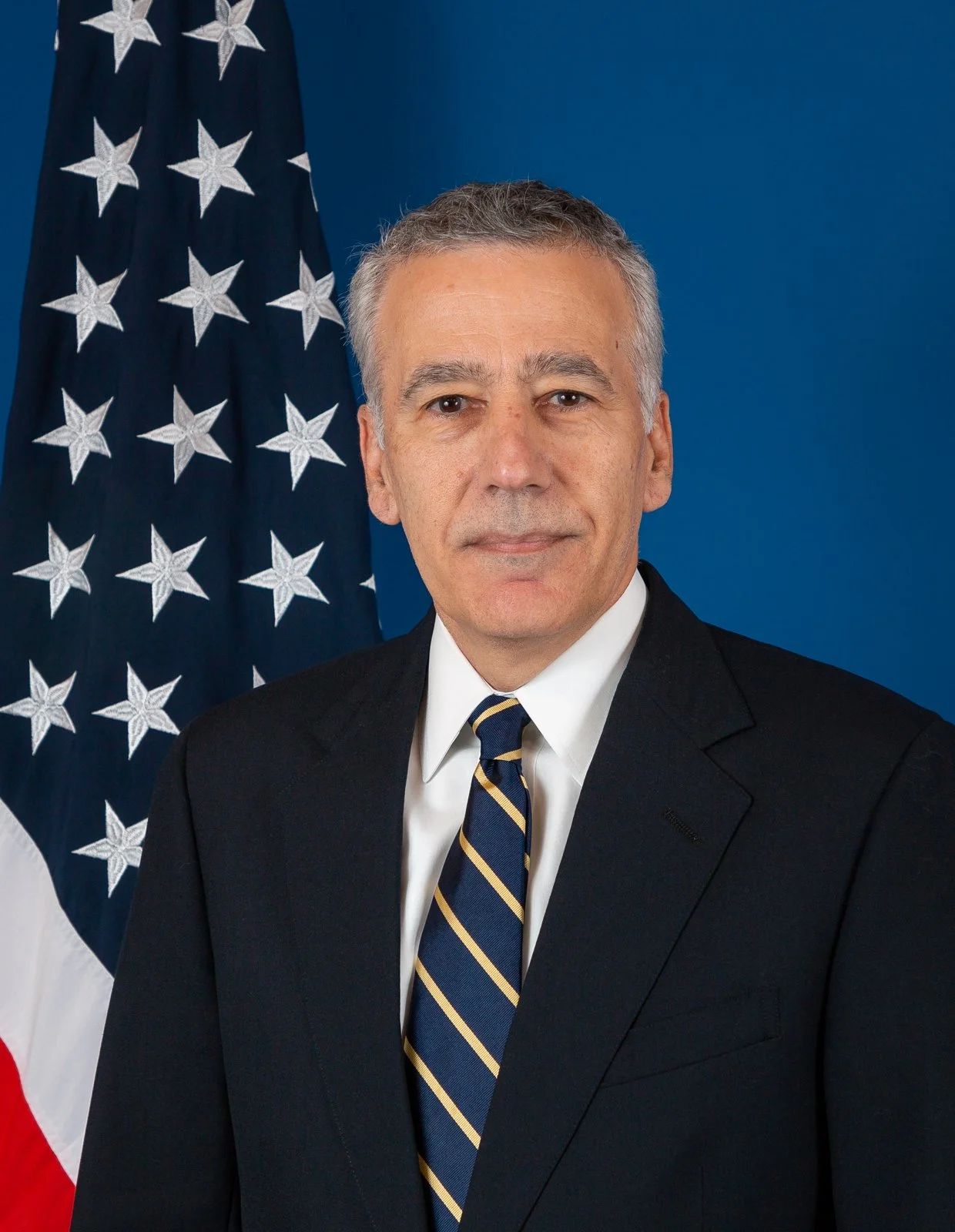
Philip Goldberg is a diplomat who served as U.S. ambassador to South Korea, the Philippines, Bolivia, and Colombia.
Ambassador School
Contents
Max Raskin: You’ve spent your career going from place to place to place. What's the way in which when you find out the next place you're going, you get up to speed as quickly as possible on that place? Are you watching Korean movies? Are you reading Wikipedia?
Philip Goldberg: So there's information both private and public that I would have access to and I would, of course, read a lot. For instance, histories of the place where I'm going. You usually have a lot of lead time before you take a position, so you have time to prepare. And yes, there were cultural ways to do that through movies and the arts and different ways to become fully informed about the place where you're going.
MR: Are you reading a lot of books? Are you listening to podcasts?
PG: Both. All of the above — as much as you can absorb, as much time as you have. Usually when you hear you’re going to another job in the Foreign Service, you’re already doing a job, and you can’t just drop what you’re doing.
MR: Was there a country that you just kept reading about and were most fascinated by?
PG: I don't think there was a place that was more fascinating than another…maybe there were a few that were less interesting. But when I first went to Colombia as a junior diplomat, I was of course fascinated with the first foreign country in which I was going to serve and live. And so I went whole hog. I was reading everything I could get my hands on, and at the same time I was brushing up on language. It was a full experience.
MR: When it comes to diplomacy, when you're in a foreign country, do you have a bubble of people that you can be yourself with? Or do things just constantly leak?
PG: No, things did not constantly leak. Once in a while, but my experience was that if something major was going to leak, it was going to leak from Washington, not from the field. People are very disciplined in the field. They don't talk to reporters. They don't really play the same game that is going on sometimes in Washington.
Found in Translation
MR: And what about language? How many languages do you speak fluently?
PG: I only speak Spanish very well. I speak some others, but more in the line of pleasantries than fluently.
MR: When you're in a South Korea, do you have someone just constantly with you who translates?
PG: So because Korean is a hard language, and the Korean diplomats and many government officials who studied in the U.S. or have to know English for their job, it makes it easier for us.
I did have an interpreter with me quite a bit. When I went to events, she would do the interpretation of my speech, sometimes simultaneously, sometimes consecutively. And then when I would talk to people afterwards, she'd be by my side and would interpret.
MR: Does anyone ever talk about you in front of you in a language you can’t understand?
PG: No.
MR: I would think that that would happen a lot.
PG: Well, I suppose yes. We do the same — where if you're in a meeting, you might do an aside with someone on your team.
MR: But it's never like, “Oh, the schmuck over here…”
PG: She would tell me if that were the case.
MR: And she never told you?
PG: No, I don't think it ever happened.
If it was Korea, they're very polite people. They're not going to do that in front of you. They may say it in private.
MR: When there’s a big meeting between Trump and Putin, one-on-one, they have interpreters, right?
PG: Right. Putin speaks some English and he speaks enough English that, for example, when they got into the car together in Alaska, he was able to say some things to Trump. So he speaks a little bit. Enough to have a basic kind of conversation, I understand.
But yes, generally speaking, in the conversations they've had that have been whittled down to one-on-one, it was with an interpreter on each side. And in fact, Trump famously asked for the notes that the interpreter took after she or he was taking the notes. Because usually what they do is they have a stenographer's ability to take notes, but he didn't want anyone to have the notes of the meeting.
MR: Does the interpreter ever write a book about that?
PG: Well, first of all, if I had a meeting like that in Spanish, I wouldn't need the interpreter. In Korea, it's not the nature of the relationship that we have with Korea that we would have such a meeting. Generally speaking, if I were going to see someone at the foreign ministry, they know English.
The Two Toughest Jobs in Bolivia
MR: When you're dealing with something like war, for instance when you were in Bosnia, what are pleasantries like between diplomats when the two countries are kinetically at war. Like Kissinger in Paris with the Vietnamese. Do you guys make pleasantries? Do you shake hands or something like that?
PG: Sure. I would think so. Even when you're not at war, but you don't have relations with a particular country.
When I was in Bolivia at events, in protocol terms, I was always next to the Cuban ambassador because we had presented credentials about the same time. He would shake my hand and I'd shake his. He once said to me, "Oh, you've got the toughest job in Bolivia." And I said, "No, you have the toughest job," because he was basically telling the government what to do. I was just being lambasted by the government. We didn't have any substantive discussions because I wasn't supposed to.
When I was in Bosnia, I was sent up to see Radovan Karadžić in Pale, currently in The Hague for war crimes. We were there to sound out what their position was on something at that particular moment. Did I shake hands? I don't even really remember, but yeah, I'm sure I did.
MR: Do foreign service officers have more in common with each other than they do with their host country? There’s a thing that makes someone want to be a foreign service diplomat — do you feel like you had more in common sometimes with the other diplomats than you did with the people back in your own country?
PG: Not than with the people in my own country, but there's a certain recognition of the job that your colleague on the other side is doing and what you do, and that we're doing the same job, basically. Especially when you have a friendly relationship with the other government, there's a recognition of that. And so it's a much smoother and easier discussion.
MR: I think I heard someone say once that accountants in New York and Shanghai have more in common with one another than they do with electricians in New York and Shanghai.
PG: It depends what you're discussing.
MR: For someone who wants to go into diplomacy, what book would you recommend they read?
PG: There are books that Bill Burns and Chris Hill, both senior diplomats, have written. Talleyrand did write memoirs, but I couldn't recommend them as a way to join the modern foreign service, which by the way, they're not hiring for these days — they are firing people. So it's not a profession one can necessarily join unless you are a political appointee at the moment.
MR: Last question about diplomacy: Is the language acquisition school at the State Department as good as people say it is?
PG: Yes.
MR: What is it?
PG: Let me give you Korea as an example.
You spend two years, usually the first year in Washington, full time, five days a week, eight hours a day in a classroom with a teacher, usually in a small class of three or four people if you're starting from the beginning. And then we had a Foreign Service Institute site, where you’d spend the second year in Korea. So you're not only going to school five days a week, eight hours a day, but you're also everyday living and going out to the store and trying to grapple with daily life in Korean. So that's the extent to which it goes. And the instructors are, at least from my experience, superb.
MR: Are people fluent at the other end of it?
PG: I don't know that they're fluent, but the goal at least is to get up to a working knowledge, which means that you can at least read newspapers, watch TV news, do things that pertain to your work.
The language instruction is heavily weighted towards very practical kinds of instruction that will give you the ability to do your job. So there may be vocabulary and some other aspects to it that might not be done at online courses.
Being Diplomatic
MR: Was there anything that you wouldn't eat when people would serve it to you?
PG: There are some things that I wouldn't — and wouldn’t drink — and it was very hard to mask. I'd go to these very, very poor communities in Bolivia — it was very warm and they would greet you with confetti and usually give you a little bowl of chicha, which is a corn-based alcoholic drink. And you didn't know where it had been, where it was brewed, so I would usually put it up to my lips, and as soon as I could see it was almost there, I put it down and I'd hand it to the person who was with me.
MR: Did you ever just swirl it around and spit it out?
PG: No, I didn't want to do that, because how are you going to spit it out in front of people?
MR: Yeah, I guess that's more diplomatic.
Was there anything else like that?
PG: There were a few other things like that. When I was in the Philippines, we went to a place where they were basically serving insects. There was a Chinese event at the consulate where they were serving sea slugs. I looked at them…I just couldn't. They had those round tables, and it was like the wheel of fortune…I just flicked it to the next one.
Brookline, Not Brooklyn
MR: I want to talk to you about Boston.
PG: Yes.
MR: You seem like you're from Brooklyn, but you're from Boston.
PG: Whaddya mean it seems like I'm from Brooklyn? I'm from Brookline.
MR: Exactly. It is odd that you're from Boston when you should be from Brooklyn.
PG: How is that? You have to explain that. I can't explain that.
MR: Your personality is more like the Brooklyn people I know than the Boston people I know.
PG: I trust you’re not referring to the indies there. What do they call them? The Gen-Z people.
MR: The hipsters.
PG: The hipsters. You're talking about old-time Jewish New Yorkers?
MR: Yeah, from Brooklyn.
PG: Why Brooklyn?
MR: Because that's where they were from. I mean, they were from Brooklyn, but it doesn't have to be Jewish. Also Italian or Irish like John.
PG: So let me tell you a story. I had a friend from New York whose mother was a complete Jewish New Yorker. But I'm talking about some years ago. So his mother, who's now passed away many years ago, went to Boston for something and found herself near where my parents lived. And she saw the people there that were basically in a Jewish neighborhood and at a restaurant. People were voluble and what she was used to and she said, “I didn’t know they had people here like that.”
So I think that's what you're confusing here, which is that you don't think that there are people who have that sensibility who are not from here.
MR: Correct. But is that right? Are there?
PG: Boston has a slightly different sensibility.
MR: What is different about Boston Jews?
PG: Not a lot that I've seen. But they grew up in different circumstances. While the areas they lived might've been even more concentrated with Jewish population, the overarching sense of the place was not. At the time when my parents grew up, the dominant group were Irish politicians in the city of Boston, and the Yankees — the Boston Brahmins. And those two groups actually dominated the culture.
But my point, if I have one, is that the people who grew up there, who went to and benefitted from the institutions there certainly took on a slightly different view of the place and the way you behaved and you presented yourself. So that means that here in New York, if you were of my parents' generation — my father was born in 1916, my mother in 1923 — so they went through the Depression — but their interaction with the larger community, such as it was, was different than in Boston. If you went to City College, because that was the place where striving young Jewish students and other ethnic groups too went, you have all kinds of Nobel Prize winners in science. The ethos of the place was different. Do you know Teddy White, the great political journalist who wrote the books about presidential campaigns?
MR: Sure, he wrote the great one about Kennedy’s campaign in ‘60.
PG: So Teddy White in his memoir, writes the first chapter about his experience growing up in this Jewish area, the same one where my mother and later father lived. Nat Hentoff wrote a book about the same and about his various experiences. Teddy White put it this way, he said that being a political reporter, he saw the differences between Jewish communities in different cities in the U.S. People in Cincinnati were more genteel than the people in Chicago. New York was different because New York was the only place where they built, in part, the culture of modern New York.
MR: You were a Boston “Abrahamin.”
John
PG: Yeah, that's about it.
MR: Where do you think you eat the most in New York?
PG: We get the same group of restaurants all the time. I usually eat with John [Sexton] a lot.
MR: And what's number one on the rotation?
PG: Well, it used to be Volare.
MR: But not anymore.
Have you been close with John for a long time?
PG: I don't know. Is 50 years a long time?
MR: What I meant was did you immediately become friends? Was it an immediate friendship or did it ebb and flow over time?
PG: Yes, it was immediate. My sister was alive, of course, and they had just gotten married and I lived with them for a period of time.
MR: Do you remember the first time you met John?
PG: He came to our summer place in Gloucester. He came with Lisa and met my parents for the first time. We played touch football on the beach with my friends from childhood and shot baskets out back. I then got to know him because I took time off from school and worked for his LSAT prep company.
MR: I'm also very close with my brother-in-law. I love him like a brother-in-law.
PG: Exactly.
You're not abiding by the famous Henny Youngman joke: I just got back from a pleasure trip — I took my mother-in-law to the airport.
2004 ALCS in Kosovo
MR: Baseball is your number one sport, right?
PG: Yes.
MR: How big of a fan are you? Let’s say on a scale of 1 to 10, 1 being I can't stand it, 10 being it's the only thing in life I care about, and it's the sublime pleasure of life. Where do you think you land?
PG: Well, I don't think that's quite the way I would put it, but I spend an inordinate amount of time watching baseball. I watch almost every game of the Boston Red Sox during the year.
MR: [After Game 3 of the 2025 World Series] Would you say Ohtani last night was one of the best World Series performances?
PG: It was one of the greatest games. I said to John, he would not have been watching were it not for me. He would've heard about it afterwards. And maybe in the modern era, you can look these things up and watch it afterward, but yes, it was one of the greatest games ever played.
MR: Were you at any of the playoff games in 2004 when the Red Sox beat the Yankees in seven?
PG: I was not because I was in Kosovo.
MR: That's too bad, right?
PG: It was terrible.
But let me tell you a story. So game four, the Red Sox had lost three games in a row to the Yankees — the third game, 19 to 8 at Fenway. So it's 3-0. I'm in Kosovo, and I'm getting up every night at 2:00 A.M. to watch these games. And game four comes, and it's 4 to 3 going into the eighth inning. So I said, Rivera is going to come in — this is over. I've got work to do tomorrow. This is just awful. It was really bad. So I try to sleep. It's about 4:30 in the morning and trying to get a couple hours sleep. I couldn't sleep. I tossed and turned. It was terrible.
MR: Because of the Red Sox?
PG: It was the Red Sox. I wouldn't have gotten up at 2:00 A.M. to watch anyone else. So I turn on the TV and they're still playing in extra innings. I didn't see the stolen base [by Dave Roberts] or the single by Bill Mueller. And so I watched, of course, the rest of the way exhilarated through the Big Papi home run. But I can assure you, I never went to sleep again. I never doubted again. Of course, don’t ever put me through that excruciating moment.
MR: So my wife was watching me watch the Wild Card game and she said she never heard me scream so loud at the TV when that blooper came down in the 4th.
I said, well, the Yankees haven’t been in the playoffs like this since 2004. And she said, well, weren't they in the World Series last year? And I said, yeah, but they weren't playing the Red Sox.
So tell me if this is a correct or incorrect statement: For a Yankees or Red Sox fan, you would rather win an exciting Wild Card or ALCS than win the World Series?
PG: No, I don't agree with that. If the Red Sox had gone on in 2004 and lost to the Cardinals in the World Series, it would not have been better than just having beaten the Yankees alone.
MR: See, I don't think that's right. I think that's not correct. I mean, for a Red Sox fan, maybe that's correct. But for a Yankees fan, this was a win. This season was a win because we could beat the Red Sox in October.
PG: Oh, I don't think if you asked Brian Cashman or Boone or anyone else would say that.
MR: Yeah, I don't ask them.
PG: Also, the rivalry is not what it once was.
MR: I agree. I think it's because the games are not long anymore, and it's not a real commitment to watch a game.
PG: Right.
MR: Would you consider yourself an American history buff?
PG: Somewhat.
MR: What are you a buff on?
PG: I am a political and news junkie. I am a junkie about what's going on in the world and every turn of events. And it probably is not productive as much as being a history buff.
MR: What does your news consumption look like in the morning? Are you on Twitter?
PG: When I was working and I would get up at 5:00 or 5:30 in the morning, I would always look to see what happened overnight in the U.S., but less so in Korea. I would wait and do the Korean news second because nothing had happened yet from the time I went to sleep, generally speaking.
In terms of news consumption, I would get all kinds of news digests from American papers, from Korean papers. I would also look at the websites of the New York Times, the Washington Post, the Wall Street Journal, and I'd get The Economist. So those were my go-to. In terms of daily, I would also get a news update a couple of times a week from my Korean staff, who would translate articles for me because I was interested in what editorial opinion was and what was going on in the Korean press.
MR: What about nowadays?
PG: Now I spend too much time with the TV news, quite frankly. I update with CNN. I look at Fox sometimes just to see what's going on there and the political slant on the same events that you would see on CNN or MSNBC. Those channels are almost meant for retirees.