
Interview with Richard Hanania
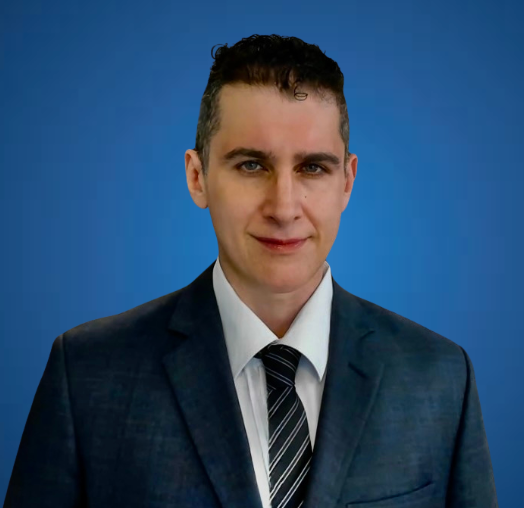
Richard Hanania is a writer.
Screens and Memes
Contents
Max Raskin: I want to start with tools of the trade. You spend a lot of time online — is it mostly on your phone, iPad, computer?
Richard Hanania: It depends on what I'm doing. When I'm writing an article, I'm usually on the laptop in the Substack dashboard. I'm also doing research as I'm writing articles, so I have a computer monitor, where I'll look at papers, I'll talk to ChatGPT. I'll look up stats and figures that I need. I'm doing that for a good portion of the day. That's my work-work, that's what I try to do before everything else.
When I'm taking care of kids, or in the afternoon after I'm done writing for the day, I’ll spend a lot of time reading books or articles on my phone, and I'll browse Twitter. And of course, I'll be browsing Twitter while I'm on the laptop too, and I'll be talking to people on Signal too, so I'll do that. But yeah, the laptop is the base when I'm writing, and then the phone, otherwise.
MR: Do you have any apps on your phone that the average person wouldn’t have heard of?
RH: That's a good question. I mean, I got ChatGPT, I got this weight loss thing where I have the scale that it tracks every single day. Substack.
MR: Do you draft your tweets or fire them off as you think of them?
RH: I just fire them off as I think. I proofread them obviously, and I look over them. But I don't draft them and then say, "Tomorrow, I'm going to release." I rarely, if ever, do that.
MR: Does ChatGPT help you with any of your tweets?
RH: No.
MR: Does ChatGPT help you with any of your writing?
RH: Yes, actually. I wrote an article a couple of weeks ago about how I use ChatGPT. It's very good for just getting basic facts, like dates, right. The bigger one is putting together data. I think it's probably increased my productivity maybe 33%. It maybe gives me another extra article a week. I mean, it's really an amazing tool.
MR: Are you married?
RH: Yeah.
MR: What’s your view of kids and screen time?
RH: I'm pretty convinced by Jonathan Haidt's work. I think that's probably right. Jean Twenge wrote a book called iGen, where she shows 1990, 2000. Everything that involves going outside and meeting people goes down — kids going to parties, kids drinking, kids driving, kids fighting. It all collapses, right? And what are they doing with their time? They're on their phones. So I don't think this is healthy.
MR: What's your screen time on your phone?
RH: Well it's probably high, but it's for my job.
MR: That’s what they all say.
RH: Daily average, four hours, 20 minutes.
MR: That's not insane. But you’re on your computer a lot.
RH: Yesterday I'm at six. So yesterday was a full day.
MR: Okay. I want to talk about exercise and diet. What do you eat?
RH: I try to minimize calories and maximize protein. I eat a lot of protein bars and I eat a lot of these protein donuts. I eat a lot of salmon, a lot of deli meat and cheese.
MR: Will you eat the same thing every day?
RH: Yeah, mostly. I'll get sick of stuff, but it's always protein bars. I eat a lot of ice cream. There's a protein ice cream that I really like.
MR: Why so much protein?
RH: I try to build muscle.
MR: What's your workout routine?
RH: So every six days I'll do chest, and I'll have a day where it's chest and triceps and shoulders, heavyweight lifting. And then one day where it's back and biceps. I'll do StairMaster for legs. I don't like legs, I do it intermittently. I just really, really hate doing it. Then I'll run every day. I have an Oura ring, so I try to get 600 active calories a day, and I do that by running from 30 to 40 minutes, or something like that.
MR: When you're working out, what do you listen to?
RH: For some reason, I can't pay attention really to podcasts. When I'm running, I'll just listen to pop music.
MR: What kind of music do you listen to?
RH: I listen to pop music, country music, and rap music from when I was younger. 1990s.
MR: What were your top songs last year?
RH: YouTube Red has a bunch of quick picks. It has “Summer of '69” by Bryan Adams. “All About You” by Tupac. “Air Force Ones” by Nelly. “Human” by The Killers. “Dr. Jones” by Aqua. “Light Glue” by Sean Paul. “Mighty D-Block” by Jadakiss. Do you know that song? “Carlene” by Phil Vassar.
MR: If I were to do the same thing with movies or TV, what would you rattle off? Do you rewatch shows?
RH: I did a Breaking Bad rewatch recently, which I did a podcast on. I want to do The Sopranos again, which is my favorite show of all time.
Hananiating
MR: Do you believe in God?
RH: No.
You know what I've decided? I wrote an article on Pascal's Wager, and I think I talked myself into saying I'm a Christian. I'll say there's some non-zero possibility that God exists, because I don't want him to burn me in hell, in case he exists.
But the probability is low.
MR: Do you believe in an afterlife?
RH: No.
MR: And when it comes to consciousness, are you a materialist?
RH: I do. I'm open to a possibility that it's not. I'm not one of those people who says the hard problem of consciousness is not a hard problem. I do think it's kind of spooky and scary, but I don’t know.
MR: When you go on Twitter, do you use the algorithm or do you look at who you follow?
RH: A combination of both. I go to “For You,” I see what everyone's talking about, and what's going viral. I'll sometimes just get so disgusted with it. It'll be 10 things on something that just annoys me and is really, really stupid. And so then I'll go to who I follow and I'm thinking, "Oh, these are all these people that I followed because they were smart, and I don't see them much." And then I'm pleasantly surprised that I usually get better content that way.
MR: People have used this term, "hananiating," have you heard this?
RH: No.
MR: I guess it's when you deliberately don’t cater to your audience.
RH: I haven't heard it. It's a mouthful.
MR: It looks like it’s from someone called Mary Harrington.
RH: That's interesting.
MR: Do you know who that is?
RH: I think she actually blocked me, which is funny.
MR: Do you have normal friends?
RH: No. All my friends are intellectuals, or people I've met through politics, or I talked a lot about politics with. Do I have any friends who are not like that? No.
My kids will see their little friends, and sometimes I'll see the parents.
MR: Do the parents of your kids’ friends have any idea who you are?
RH: I think they do. One of my kids' teachers was talking about my son, and she said, "He needs to come out of his shell, needs to talk to people." She's like, "Your work — you understand that in life it's important to be able to be outgoing, and talk to people." I guess she Googled me at some point. I got recognized at the gym once or twice.
When I tell people what I do, I say I'm a writer, and that probably piques their curiosity, and they probably want to see what it's about. But people don't come and try to debate me. It doesn't happen.
MR: If an alien were to look at your life in what ways is it different from your average American?
RH: He's not looking at my work?
MR: No, all he sees is you are sitting in front of a computer.
RH: He would think I was the boring-est guy in the world. He'd see me waking up, working, eating protein bars, going to the gym, and taking care of my kids and coming home. He would see that pretty much every day.
MR: How do you unplug from the machine?
RH: I really don't. I mean, the kids.
MR: Are you on your phone when you're with them?
RH: Yeah.
BFFs IRL
MR: Does anything anyone say online upset you?
RH: Not really. Maybe when someone I really respect gets the wrong idea.
The people who like me are the people who 15 years ago before I was a well-known person, I read them and I was big fans of them. So Tyler Cowen, Steven Pinker, Matthew Yglesias, these people who I really liked, they all became fans of my work. So that's telling me I'm doing something right. If those people hated me, I would rethink my life. Bryan Caplan, another one. And then, the people who I don't think too highly of intellectually, are often the ones who don't like me. So it's like 95, 99% of the time.
Now I'll say, once in a while, there will be somebody who I really respect, who thinks I've behaved obnoxiously, or I've behaved wrong on Twitter. And in that case, I'll take a step back and I'll think about it, and say, "Hm, maybe I should do something else."
MR: Did you meet any of your heroes online?
RH: A lot of them. I mean, Bryan Caplan, we're good friends. Steven Pinker, we had a podcast together recently. We have an email relationship. So yeah, it happens.
MR: Is there anyone whose work you don't like, who you want to be friends with?
RH: So I met Jack Posobiec, and I've attacked him and he's said some stuff about me on Twitter. But he was a really nice guy, and a really cool guy. We’re not friends and we don't stay in touch or anything, but he was a cool guy. Some of these MAGA people are actually kind of cool. I wrote an article about MAGA women versus women who are Democrats, not that long ago. That was based on my observations in DC, and I do think they're kind of cool.
MR: Vice President Vance called you a friend, right?
RH: In a few interviews, yeah.
MR: What's that like?
RH: What's that like? I don't know.
MR: Are you friends with Curtis Yarvin?
RH: I've known Curtis, we've hung out a few times. I think he doesn't like me anymore. When he came on Twitter, I would dunk on him a lot and he'd dunk on me. And we haven't talked much recently. So I don't know if we're friends or not.
If I saw Curtis, I wouldn't be mad at him. I'd talk to him.
MR: Do you consider yourself a normal guy?
RH: I don't, no. I consider myself an unusual guy. I spend all day tweeting and disagreeing with people, and I think I have a high capacity for work, and a lot of pride in my work. I care a lot about truth and getting to the bottom of things, and I'm not so in touch with peoples’ feelings, or trying to kiss up to the right people. Yeah, I think I'm an unusual guy.
The Rich Corpus
MR: For my readers who have never heard of you, what's the thing that either first comes to mind that you're most proud of, or that is most representative of your work?
RH: There’s a few things. The Origins of Woke I think was very important.
I recently had a long article on neoliberalism. I had one on the trade relationship with China. Some of that stuff I really like. Those articles don't always get the most attention, sometimes they do.
And then there's a lot of sex and culture stuff. The Sydney Sweeney article became a cultural phenomenon; I'm actually on her Wikipedia page, which is pretty funny. So I got a couple of articles like that.
MR: Is the Sydney Sweeney piece the most viral thing that you've done?
RH: My most read article is something called “Why is Everything Liberal?” It’s a very dated piece, but it was the first thing that got attention.
MR: Do you have any tips for going viral?
RH: It depends on what you're trying to do. I think that a lot of people probably are too conventional. I just have an antenna for where I disagree with people who are kind of similar to me. I'll push on those things.
MR: I'm really good at that, too.
RH: The things that seem to go viral, at least on Twitter, seems to be effort posts that are brief, but catch something people know subconsciously. Like “Sydney Sweeney is anti-woke.” But they needed to write 20 think pieces to figure it out because people knew there was something there.
But then there are pieces where your audience is a bunch of conservatives who care about inner city crime and you'll have this long post about some guy who punched a woman 10 times and kept getting out of jail. And you would say, "These liberals, what are they doing!" That's going to go viral. But I think the quality of that is bad. Even when it's good, or gets at something, the market is oversaturated.
I think what's underserved in the market is people trying to challenge their own side or giving a different perspective.
MR: Do you consider yourself a writer?
RH: Yes, of course. Why wouldn't I be?
MR: I mean as opposed to a sociologist or something else.
RH: I'm a writer. My work is influenced by ethics and political science, which I have a background in. I have a legal background.
MR: But you love to sit down and write?
RH: I do. I really do.
MR: ChatGPT is good at mimicking people — if you were to give it a basic idea and ask it to write in the style of Richard Hanania it would do a good job.
RH: I've tried it, and maybe it's just because I know Richard Hanania better than others, but I didn't think I could outsource my writing to ChatGPT.
MR: Let’s just postulate that it could write as well as you. How would that make you feel?
RH: So I've written about this, too. It's possible, right? You could give it the corpus of my knowledge, and it could know exactly what I'm going to say. At some point it could have my exact values and way of thinking, but it could read all the news in the world, and all the academic papers.
Then it would just know better. It would just be better. Why would you read me, in that case, instead of ChatGPT, which has my values, but could read a lot more and know a lot more? I'm not worried about it career-wise because I think people do care about the relationship with the person.
MR: That's why my interviews are so important.
RH: Well, it's good. It's a unique thing. I'm enjoying this. Yes, I think that's right. People want to know someone like them has experienced something, and is reacting to the news. This election went one way, or somebody did something. Being outraged, in the way you're outraged.
MR: But what if ChatGPT can mimic that connection for the reader? If you could have something that could perfectly imitate you and your novel insights, would you sit and play basketball or something all day? Would you have a desire to keep doing what you’re doing even if a machine could do it better?
RH: I want to say yes, I want to keep doing it. But I think I shouldn't, because it doesn't make sense. It would seem like foolish pride at that point. People play chess, and the computers can beat the best human players now. And people care about being better than the other humans.
But if ChatGPT is going to produce what I would've produced anyway? At that point, what would I do? I don't know. I don't know. Try to make some real money, I guess.
Mario Kart and La Nausée
MR: Do you have any hobbies?
RH: I play video games with the kids. I work a lot, and then again, I’m with kids. It's just hard to find much time for them.
MR: But are you into anything like basketball or scotch?
RH: So this stuff I've had to cut out. I was a big sports fan. I haven't been in years. I mean, since my kids were born, it's just too much to keep up with. I was into video games. I got the Nintendo Switch 2. Haven't played.
MR: What's the video game you think you've spent the most time in your life on?
RH: The Mario games. I play a lot of Mario Kart. I played a lot of Splatoon. The Donkey Kong games.
MR: What about when you were younger? Did you play civ builders?
RH: I played shooters. Like Doom and Call of Duty. When I got older, they started to make me nauseous. I actually want to go back to that. I've gotten some anti-nausea medication I want to try. But I used to love these first person shooters.
MR: That’s a little weird to take anti-nausea medication so that you can play video games.
RH: I haven't tried it to see if it works, but I want to see.
MR: Don't do that. It's nature's way of saying not to play video games. It's like when people start to lose their hair — that's nature's way of saying, "You're not supposed to be going to the club every night." Just, age gracefully. Gracefully.
RH: I think we have different philosophical positions on this.
MR: Yeah.
My Kind of Town
MR: Do you live in Chicago?
RH: No, I live in Los Angeles now, but I'm from the Southwest Suburbs. [of Chicago].
MR: Do you feel Midwestern?
RH: Yes. When I go back to Chicago, which I do every few years or so, it just feels like home. It just feels like what a city should look like. It's very different from LA. Everything's on a grid. Everything is flat. There's a black neighborhood, there's a Hispanic neighborhood, and there's Arabic writing in all these places. There's a big downtown with big skyscrapers that is the center of everything. And there's these ghettos. This is a city. This has everything that cities are supposed to have.
MR: And how do you feel about New York?
RH: I haven't spent a lot of time in New York. It's too crowded for me. Manhattan — it's fun to visit.
MR: When you go to Chicago, is there anything you eat that is a must have?
RH: Oh, the deep-dish pizza. Giordano's. That's just really good stuff.
MR: What do you get when you're there?
RH: I get the deep-dish pizza with sausage and pepperoni, usually.
Oh, and there is this place that's called New China Express, which I posted a picture of. It's my favorite meal. It is the greasiest food imaginable. I get the chow mein, sweet and sour orange chicken. Usually they're small balls, when you get sweet and sour chicken. These ones are huge. And they're just really fried, and it's really sweet. I had that for the first time in 10 years recently when I went back to Chicago. That's my food. That's what I love.
MR: And I saw, your parents are Palestinian?
RH: My dad is Palestinian, and my mom is Jordanian.
MR: Did they make Arabic food growing up or were they deracinated?
RH: My mom cooked Arabic food. I ate Arabic food regularly.
MR: And what's your Arabic go-to?
RH: There's something called fasolia, which is green beans, rice, red tomato sauce, and lamb. There's something called mulukhiyah, which is, rice, lamb, spinach.
MR: Do you speak Arabic?
RH: Decently. Not great.
MR: Can you understand?
RH: Yeah, I can understand most things as long as it's not too technical or complicated.
MR: You were brought up Christian?
RH: Mm-hmm.My dad is Greek Orthodox, and my mom was Catholic.
MR: Do you floss?
RH: Not as much as I should, but every few days, I try to remind myself to floss. Sometimes I'll eat meat or something and it gets stuck and it'll drive me crazy.
MR: But you're not…
RH: …not religious about it? No. I should be better about it.
MR: Do you collect anything?
RH: Sports cards when I was a kid. Basketball, baseball, football cards. Not much anymore.
MR: Do you snack during the day?
RH: Oh yeah.
MR: What do you snack on?
RH: I'll have the protein bars, a frozen banana.
MR: Peanut butter, or no?
RH: No, just the bananas. There’re these chocolate-covered coconut almonds from Trader Joe's. I'll snack on those a little bit. There’re some kinds of tortilla chips that I'll snack on. I'll eat oranges.
MR: What do you drink during the day?
RH: A lot of Diet Pepsi. So in the morning I'll drink with caffeine, and throughout the rest of the day I'll drink Diet Pepsi without caffeine. Every time at a restaurant I'll get Diet Coke or Diet Pepsi, depending on what they have.
Fellow Travailers?
MR: Do you ever get worried about your safety because of what you write online?
RH: Well, the first time, but I'm immune to it now. I think maybe the first controversy I had was The Downs Syndrome tweet. Do you know about this?
MR: No.
RH: So I had this Downs syndrome tweet where I said, "Okay, they're going to ban abortion in Texas — they're going to have five times as much Downs syndrome than other states," or something. I wasn't that famous at the time. This got to Fox News. Kristi Noem was governor of South Dakota at the time and calls me evil. So it's on Breitbart. I would get phone calls like, "Watch your back, we're coming after you," stuff like that. A lot of DMs. That was the worst…the only time multiple people actually called me, when they found my phone number. It was a little bit weird, but not that much. I was like, "Oh, this is unpleasant."
Since then, I get death threats pretty regularly. I was dunking on Matt Walsh, who's like, "I'm going to be killed soon." And I'm like, "Death threats, I get them too.” And he's like, "You're not as important as me." I'm like, "Yeah, probably I don't get as many as you," but it's pretty regular.
MR: All these people are online so much — do you feel a kinship with someone like a Nick Fuentes? Because your life probably looks a lot like his.
RH: Both from Chicago, both kind of outcasts, in a way. Yeah, I get it. I kind of feel more kinship with these very online weird people than the politicos, who are just very good at climbing the ladder.
MR: There’s this idea that a rich doctor in New York has more in common with a rich doctor in China than he does with a plumber in New York. Do you feel like you have more in common with a Candace Owens than someone who more closely has your political beliefs but isn’t online at all?
RH: No, no. I react very strongly to what Candace Owens is doing and it’s deeply offensive. It's like you're an artist of some kind, and someone is doing counterfeit art. I take a lot of time to try to do my research and try to get facts right. And I consider the people who just go out there and make stuff up…I have more contempt for them than just about anyone else in the world. Of course, they're not as bad as serial killers or something, but to me emotionally, they are, I think the most, the furthest apart.
MR: But if you were to take a video of you and them, they're sitting at the computer typing and so are you.
RH: Yeah, probably. In that case, sure, but that doesn't make me like them more because I think they're engaging in the same kind of process that I am. But they're doing fundamentally something different there.
MR: You could have a big conference and have a lot to talk about? "Oh, I get death threats too. Oh, I haven’t been to a party in a week, either."
RH: Yeah, I don't know. I guess we could talk like that. I don't know if it would be that interesting.
MR: I think it'd be interesting to see.
RH: You get death threats, too? Like, wow.
MR: Well it’s interesting. “How you deal with getting death threats?”
“Do you talk about your family in your work?”
“What’s it like to have your kids’ teacher find out you have very different views from the mainstream?”
RH: Look, probably compared to just some average, boring person who I have nothing in common with? Yeah, maybe.
MR: I think that's interesting.
RH: But I would rather talk to an obscure person who's intellectually curious and smart and who reads books, who has a different life than me, than one of those people. But yeah, I can see.
MR: Do you have a lot of tabs open on your browser?
RH: Oh, yeah. All the time. And then once in a while, I just have to nuke the whole thing and start over.
MR: That's not good. It shows a chaotic mind.
RH: Yes.
MR: Do you have a to-do list every day?
RH: Not one that I write. Basically, I want to work on at least one article a day.
MR: Do you read blogs? Substacks? Twitter?
RH: All of the above.
MR: How do you consume information?
RH: I read the Substacks daily. I go through the things I subscribe to.
MR: How many do you pay for?
RH: Probably 10, but I read a lot more.
MR: Do you read Drudge?
RH: I used to, but not now.
MR: Everyone has a news website they just go to. Which is yours?
RH: It's probably the New York Times or The Economist.
Free Associations
MR: Can we do a speed free association round where I say something, and you say whatever comes to your mind first?
RH: Okay.
MR: The Grateful Dead.
RH: Boomer.
MR: Jazz.
RH: Sophisticated black people art.
MR: Dr. Dre.
RH: Snoop Dogg.
MR: West Coast or East Coast rap?
RH: West Coast.
MR: Kanye.
RH: Fuentes.
MR: Tucker Carlson.
RH: Fuentes.
MR: Nick Fuentes.
RH: Funny.
MR: Bob Dylan or Leonard Cohen.
RH: I honestly barely know who either of them are.
MR: Really?
RH: Yeah. I mean, I know who Bob Dylan is, I know a few of his songs. But I don't think I've listened to a full song of his.
MR: Where do you get your clothing from?
RH: Usually Macy's or Nordstrom.
MR: Do you wear the same thing every day?
RH: Yeah. I'll wear these jeans shorts and some kind of a hoodie or some workout shirt.
MR: What's the last album you listened to, front to back?
RH: Probably Tupac, All Eyes On Me.
MR: Eliezer Yudkowsky.
RH: Autodidact. Autistic, I think.
MR: What do you think about all those rationality people? The Less Wrong, Overcoming Bias crowd.
RH: I am favorably inclined to them. I think people will say, "Oh, they go so far, and they say we should kill all the humans to save the shrimp," or something like that. But most humans are so far from rationality, that I'm not worried about these little weird people in this one corridor. We need to move more in their direction, and they need to move towards everyone else.
MR: I forgot the next question I was going to ask.
RH: Robin Hanson?
MR: Robin Hanson! How did you know?
RH: Because you said Overcoming Bias — that's the name of his Substack.
RH: A fun person to listen to his speculations about where we're going.
MR: Polymarket.
RH: I was really into Polymarket, but I've been a little bit disappointed with the gambling thing and where it's going. There was this rash of stuff about prediction markets that came out of the rationalist community. I would go to Manifest, this conference they would have in DC, which was put on by the Manifold people, and I'd meet the Polymarket guys, or the Kalshi guys. But Kalshi and Polymarket’s their marketing seems to be more like trying to just scam and invest all your money?
MR: I wrote a paper back a while ago now about prediction markets and smart contracts.
RH: I might have read it, at some point. I was into this literature, at some point.
MR: Tyler Cowen.
RH: Genius.
MR: Austrian economics.
RH: Great introduction to economics.
MR: Murray Rothbard.
RH: Insane, but a fun read.
MR: Philosopher.
RH: Nietzsche.
MR: What do you think about analytic philosophy?
RH: I'm the analytic, over the continental side.
MR: Is AI going to kill us all?
RH: Probably not.