

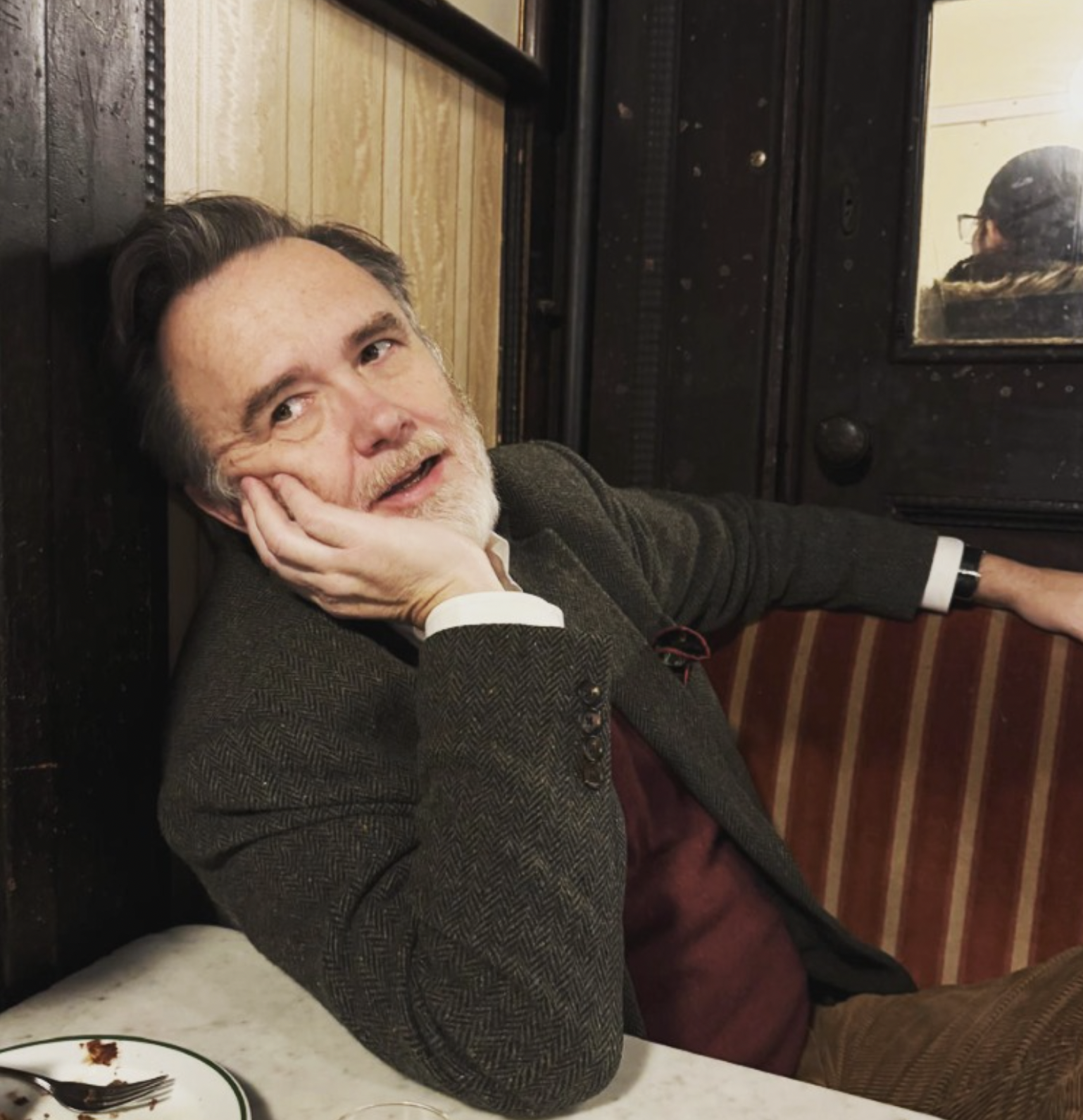
Rod Dreher is a writer.
Readin’, Writin’, and Listenin’
Contents
Max Raskin: I want to start with the manner in which you consume information, because you write a lot and you must just take in a huge amount of news and information. What does your media consumption look like?
Rod Dreher: I'm basically a tea strainer with a garden hose of tea going through me all the time. I read everything that I can. I'm on the internet all the time.
MR: Are you on your phone? Are you on a computer?
RD: It's on my laptop. When I wake up in the morning, the first thing I do when I get online is look at the [New York] Times to see what the official story is. Then I make the rounds of different magazines, The Free Press, et cetera. I check Twitter, and then I just go from there. I write my newsletter every morning, and I don't know what I'm going to write in most cases until I wake up and see what people are talking about.
But I also read a lot of books, and in my newsletter, I write about my reaction to the books I'm reading. And I think this is actually a fault: I'm reading constantly, and I live in my head, in the sense that I find it really difficult to get off the couch, put the book or the laptop down, and go do things with my body.
MR: Do you exercise?
RD: No, I don't.
MR: Do you do anything physical?
RD: I walk to get coffee. But when I lived in Budapest, I was out in the city all the time. It was a beautiful city to walk around in. I loved being out, and for a while there I was walking six miles a day up and down the Danube. But back in Alabama, there's nowhere to walk. America is a car country—you have to have a car to get anywhere. So my doctor said, "Listen, you've got to at least get on the treadmill."
So you made me feel bad now. Slothfulness is my besetting sin. When we finish this, I'm going to go get on the treadmill, watch Mad Men and walk for an hour.
MR: Do you listen to podcasts, or is reading the primary way you get information?
RD: Reading, and since I moved back to the U.S., audiobooks, because I have to drive a lot.
MR: What speed do you listen to them at?
RD: Normal.
MR: Interesting.
RD: Audiobooks are a new thing for me, because I didn't really need them when I wasn’t sitting still for a while. But I actually like long road trips. I have to go seven hours by car to go visit my mother in Louisiana, and there's nothing to do but focus on the text. When I'm reading a book, I have the temptation everybody does: "Well, let's check my email now. Let's check Twitter now." But I think my favorite way to consume information is audiobook simply because it is focused attention for a long time.
A Confederacy of Dunces
MR: When you read a physical book, do you underline? Do you write marginalia?
RD: Oh, yeah. You don't want to borrow a physical book from me, because it's all marked up. And one thing I learned when I was living overseas, I had to really depend on my Kindle, because you couldn't buy the books I needed for my research, or for pleasure, over there. Kindle has this fantastic feature where you can highlight passages and send those notes to yourself in a PDF file. That was golden for researching my books, because I could just turn to the PDF file and there's the material you need and it's formatted for the footnotes.
MR: If your house was burning down and you could save one book, what's the first book that pops into your head?
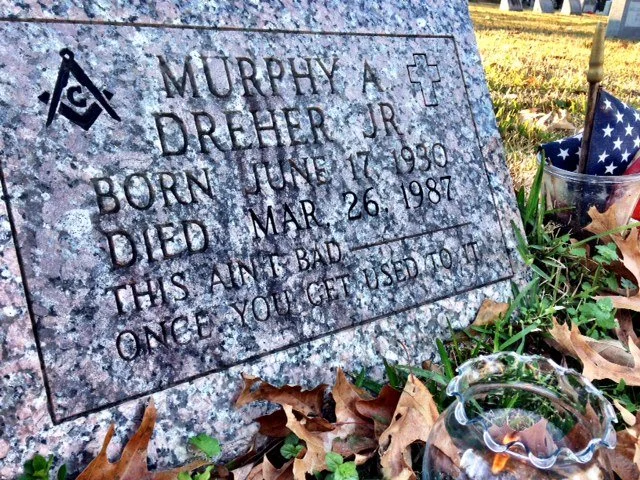
RD: Not counting the Bible—no, it wouldn't be the Bible, because you can easily replace that. I would say my first edition of A Confederacy of Dunces.
MR: That’s right, you’re a Walker Percy guy. He made that book happen. That was one of my favorite books growing up.
RD: My uncle was a total practical joker. He really got me. My own dad didn't get me, but his brother did. And he gave me for Christmas 1982 a first edition of A Confederacy of Dunces, which had recently come out. I remember the next day, Christmas Day, sitting in my bedroom reading that thing and laughing harder than I ever had in my life.
MR: How old were you?
RD: I was 15, and it was just glorious.
Kind of Blue
MR: What's the most marked-up of all your books?
RD: Oh, probably my Dante books.
I wrote a book called How Dante Can Save Your Life. The Divine Comedy—it's three books, actually—really, really did change my life. When I moved back to my hometown in Louisiana in late 2011, after my sister died, my wife and I really thought we were going to be able to help my family down there, but they ended up rejecting us for complicated Southern Gothic reasons. And I was sick. I had mononucleosis for four years because of the anxiety, said the rheumatologist. Therapy wasn't helping at all, but one day I just started reading Dante.
I remember I was in a bookstore in Baton Rouge. I was sick every day, and there on the top shelf in the poetry section was the Divine Comedy. I remember thinking, I always wished I had read that, but I missed it in college. I was sure I couldn't understand it. I pulled it off the shelf just to look at it. The first lines: "In the middle of the journey of our life, I came to myself in a dark wood, for I had lost the straight path." And I thought, "That's me. I'm 46 years old. I'm stuck. I thought I was coming back home to complete the journey of my life, to live among my people, and now I am in a dark wood."
To make a long story short, I ended up buying the Divine Comedy, and I read it, I don't know, kind of the way a Talmudist would study scripture. I didn't read it as a literary exercise. I studied it. I got lots of books about Dante to figure out what the symbolism was about, what the context was.
MR: Do you speak Italian?
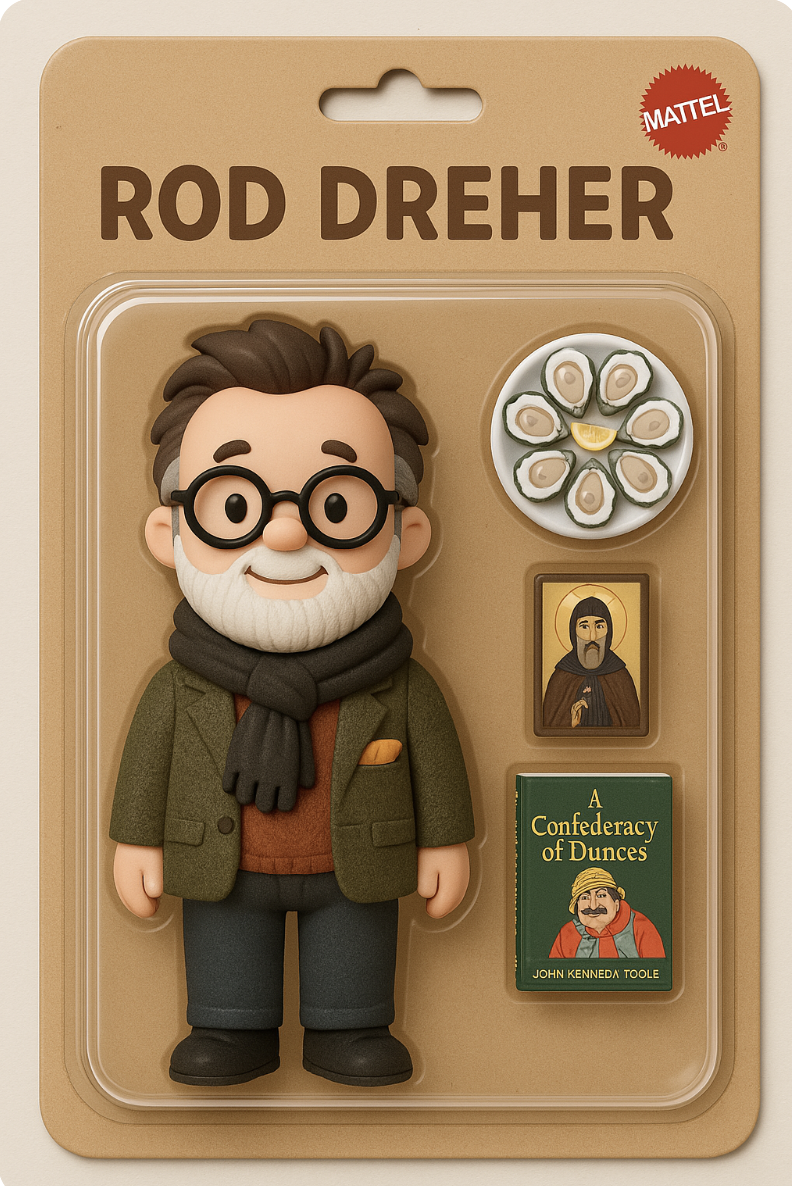
RD: Oh, no, no, no. I read it in translation. It took me a long time to finish all three books, but by the end of the journey, I was healed. It healed me because in the characters in the Commedia, not least the pilgrim Dante, I could see myself, and I could see the errors I had made in my life that made me so vulnerable to all of the problems within my own family. It was life-changing.
I was in therapy at the time, and it didn't seem to be doing any good.
MR: What kind of therapy was it?
RD: Oh, just talk therapy, the usual.
MR: Did you ever do psychoanalysis?
RD: No, no, no. But much later, when I was in Budapest after my divorce, I went to see a therapist for EMDR, because I had a PTSD reaction to the divorce. I didn't know what it was, but a psychiatrist friend said, "That's PTSD." So the therapist tried EMDR with me, and it was incredible. It's a therapy that was developed to treat trauma, and now they use it not just on soldiers and first responders but on ordinary people. I did it for maybe five months, and it was fantastic. And I loved being able to brag to people that I had a Viennese psychotherapist.
MR: You're a really good texter. You're both extremely prompt and your texts are fun to read. Is texting a primary source of getting information? Do people send you lots of stuff and you consume it from there?
RD: They do send me a fair amount of stuff, usually putting me onto essays I need to read, books I need to read, things like that. But also, because I know a lot of different people in different areas of life, and with their permission, I will sometimes incorporate their insights into the things I write, never identifying them. That's really, really helpful. I give my card out to people when I meet them, and you never know who you're going to hear from and what they're seeing.
MR: Do you floss?
RD: I just started again. I used to do it all the time, and then I got divorced, and I fell out of so many good habits. But recently I started to do it again, and I'm not really sure why, other than I don't want to be an old man whose teeth fall out of his head.
MR: What about music? You don't write all that much about it.
RD: That's because I don't listen to it as much as I used to. Now when I listen to music, it's classical, classic jazz—especially 1950s jazz—or sacred music.
MR: What 1950s jazz?
RD: Miles Davis, John Coltrane, Bill Evans.
When I was living in Baton Rouge, I found out that Bill Evans is buried there. A federal judge who was a neighbor and friend of mine, and a pianist, went with me one Sunday afternoon to find Bill Evans's grave. We brought a Jambox with us and listened to his "Peace Piece."
MR: Funnily enough, I happened to be listening to that last night.
RD: Oh, wonderful. My judge friend was Catholic, I'm Orthodox, and we prayed for his soul. It was a neat moment.
MR: My friend Steve Silberman, who died a few years ago, wrote an amazing essay about Evans and the song “Nardis.”
What's the first song or album that comes to your head right now?
RD: Miles Davis, Kind of Blue.
It's my first jazz album. A friend gave it to me in college, and I could not believe jazz was so good. To my mind, jazz was Dixieland. I was like, "This is unreal. This is so good." And I have to say, when I was living in Europe, I got into the habit of listening to a lot of Arvo Pärt on those cold, dark winter days. Do you know who he is?
MR: No.
RD: He's an Estonian contemporary composer. He's quite old now, but he's a modern classical composer and a composer of sacred music. It's unbelievably good, and you should try it this winter. It's very wintry, but it's magical.
MR: I'll definitely listen. What would you recommend I start with?
RD: I use Spotify, so just go to "Best of Arvo Pärt."
It's amazing stuff. Normally I don't like modern classical music, but there's something about him. He turns out to be a very serious Orthodox Christian believer, and you can tell it's not just music for him. It's a form of prayer.
Dear Old South Land
MR: Did you know Shelby Foote?
RD: No, no. I wish I had. I didn't even know Walker Percy, but I remember once when I was at LSU in the mid-'80s, I was sitting in front of the student union one day between class, and I just noticed out of the corner of my eye these people walking very slowly nearby. I looked up, and there's Walker Percy escorting a very, very old Eudora Welty into the student union. I wanted to bow down, but I didn't dare run up to them.
MR: Oh, I totally would have. I would've been so shameless. Welty lived a long time.
RD: Yeah. Percy died in 1990. I was working as a young journalist in Baton Rouge then—that was my first job out of college—and I remember telling myself in the newsroom, "I could do a story on Walker Percy," because a lot of Percys are from West Feliciana Parish—counties are called parishes in Louisiana—and he set some of his fiction there. His last novel, The Thanatos Syndrome, was set in my hometown, and the nuclear power plant they built there, where I worked in the summers between semesters, figures in the plot. I said, "That's kind of cool. I need to go meet him," and then one day he's dead. Gosh, that's one of the big regrets I have as a writer, never taking advantage of the chance to meet and talk to Walker Percy.
MR: Do you feel like you're a part of that lineage of Faulkner, Percy, Foote?
RD: Well, not really. I think it would be vain to claim I was…
MR: But are you more a part of that than, I don't know, Chekhov and Dostoevsky?
RD: Oh, yeah. But I would say Flannery O'Connor is my go-to for Southern literature. I discovered her when I went off for my last two years of high school to this new boarding school they opened in Louisiana [the Louisiana School for Math, Science, and the Arts], a state boarding school for gifted kids, just for juniors and seniors. And in my first English class there, we were introduced to Flannery O'Connor, and that was the first time I realized that you could make real literature out of the lives of my people. Her short stories were set in 1950s Georgia, and 1970s small-town Louisiana isn't that different from 1950s small-town Georgia. It was just captivating to me.
Even more than Walker Percy, whose stories are set more in the "New South" than Flannery O'Connor's, there's something about O'Connor that really just pierces my heart.

MR: You write a lot about food. What's the best thing to eat in Budapest, and what's the best thing to eat in Louisiana?
RD: In Budapest, I would say—it's boring to put it this way—chicken paprikash. It's just chicken in a cream sauce that's heavily laden with paprika. Hungarian paprika is out of this world. For us in America, you get it out of the can from the store, and it's like red pencil shavings. Over there, it's something different. In fact, the last time I was in Europe, I got several packets of real Hungarian smoked paprika in Budapest. I have some in my kitchen here in Alabama, where I'm talking to you from, and I took some to this Cajun chef who's just a fantastic chef here in North Alabama. I said, "You have got to try this in your jambalaya and your gumbo, because it adds such a level of flavor."
In Louisiana, you've got to go for gumbo or jambalaya, which are basically the same thing. Jambalaya is just gumbo in paella form. It's native to the state. Gumbo usually has okra in it, which came over with the slaves.
MR: Do you have a place that you go that you think is the best?
RD: In Louisiana?
MR: Yeah.
RD: Not really. When I go to New Orleans, I usually rely on my lawyer friend there.
MR: That sounds like Hunter S. Thompson meets A Confederacy of Dunces: "My lawyer tells me where to get my jambalaya."
RD: Well, this lawyer is a total foodie and a native New Orleanian, and you need your own native guide to take you to the places the tourists haven't discovered yet. But here in Alabama, I recently discovered this Cajun restaurant. It's got this great New Orleans name: Hey Bébé Where Yat? That's New Orleans slang for "Hello, my dear. How are you?"
Chef Joe is a short, stubby Sicilian from New Orleans with the thickest New Orleans accent. Somehow, he ended up in North Alabama, started a food truck, and then finally it turned into a restaurant. I'm telling you, this jambalaya of his is the platonic ideal of jambalaya. I have never had jambalaya or any Louisiana food outside the state of Louisiana that was anything close.
When I got married, we moved to New York City. We were living in Manhattan from '98 to mid-'99, and then swam across the East River to spawn in Brooklyn. I was so excited about Cobble Hill, our Brooklyn neighborhood, because there was a Cajun restaurant near our apartment. So we go there, my wife and I, for lunch, and I'm just thrilled. The waitress comes over, and she's talking to us in this real yatty accent—a yat is working-class white New Orleans, from the other side of the river. Finally, I asked her, "So what part of New Orleans are you from?" She goes, "I'm from Sheepshead Bay."
I realized that it really is true what Walker Percy says in the foreword to A Confederacy of Dunces. He talks about how the white working-class New Orleans accent is so much like the outer-borough accent in New York City. Linguists have theorized that it's because both are port cities, and both had this huge influx of Irish and Italian immigrants at more or less the same time. It's uncanny.
But we never went back to the restaurant, because their gumbo included—I hate to tell you this—diced carrots. It's like, "What the hell?"
MR: They call it mirepoix?
RD: Yeah, but you don't put carrots in a gumbo.
MR: Do you listen to zydeco?
RD: Sometimes. It's so good. When I moved back to Louisiana, my friend—he became my best friend there—took me to the zydeco breakfast at Café des Amis in Breaux Bridge, a little Cajun town outside of Lafayette. People would line up there at 5 in the morning. They open the door at 6, everybody orders breakfast, and it's very convivial. Then, after you finish breakfast, they push the tables back, the zydeco band takes a tiny little stage, and everybody starts dancing and drinking. I'm talking old people, young people, white people, black people—it didn't matter. I remember around 9 a.m., my friend rolls over to the bar, where I'm on my third beer of the morning, and says, "It's nine in the morning. You've been drinking and dancing for three hours. Welcome home."
The AI Option
MR: Oh, that's great. I want to talk about writing for a second. What does the physical act of writing look like for you? Are you just typing? Do you ever write anything by hand?
RD: Oh, man. I've never had good handwriting, and once laptops came in, it declined even more. I'm always, always typing. In fact, my kids used to look at my laptops and see that some of the keys were worn down. You couldn't even see the letters on them, because I'm writing all the time.
MR: When you sit down, what's your unit of writing? Is it an hour? Is it 500 words? Is it until you stop? What's the most common unit of a Rod Dreher writing session?
RD: I just write till I stop.
MR: Is it an hour, 30 minutes, two hours?
RD: With the Substack, it usually takes me three or four hours, because I'm not only writing it, I'm also researching as I write, because I want it to be correct.
MR: Do you have an editor?
RD: No.
MR: Do you use AI to edit or research?
RD: To research, yeah, and that really helps. The last book I wrote, Weimar America, is coming out next year. I wrote it in about three and a half months, which was a record for me. The reason I could write it so quickly was not only that I read fast and consumed a lot of histories, but more than anything, that I was able to use Grok for my research. Before, it might take me, I don't know, an hour to track down a fact or a quote with Google. With Grok, bam, it's right there. Of course, you have to check it to make sure it's correct.
MR: This is a huge, ridiculous question, but there are all these studies and all this data that is really compelling: If you train one of these LLMs on someone's writing, and there's a big enough corpus—and with your work, there's a big enough corpus—and you ask it to write something about a topic, people can't tell the difference between the human and the AI, and, to the extent they can, they prefer the AI mimicking someone's voice. How does that make you feel?
RD: It makes me feel horrible. It makes me feel almost apocalyptic, and I'm not exaggerating.
MR: First of all, do you buy the premise?
RD: I don't know. I wouldn't have two years ago, but I'll tell you why it sounds more plausible now. I am haunted—haunted—by this interview that appeared on the New York Times website earlier this year. It was just a dialogue between a 66-year-old, twice-divorced woman and her adult son. The son says to his mom, "Mom, I'm worried that you're losing touch with reality," because Mom has an AI boyfriend named Max. They go back and forth, and the mom says basically, "Look, I know he's fake, but he makes me feel happy, and if he makes me feel good and I'm not hurting anybody, why do you care?"
It just stops me cold. You want to say, "Because he's not real, Mom." But the fact that this woman, an ordinary woman, can choose something she knows is false over the messiness and friction of reality, because it gives her a good feeling—that's terrifying to me.
MR: I guess my question is different. You know the famous joke: Romeo and Juliet wasn't written by William Shakespeare; it was written by a different guy with the same name. If you were to find out that Walker Percy's novels were written by six people working together, and there was actually no Walker Percy, would that bum you out?
RD: It would, and that's a really deep question. Look, why do we go to museums? We've seen, or could see, the same images of famous paintings online or in a book. We go because, even if we have no particular theological point of view, there's something sacramental about a painting or a work of art or a book made by a real person. We sense, even if we can't theorize it, that there's some transmission going on from the realm of the ideal into the actual, and it has come down through this artist, and he has put it on canvas or—
MR: But what if, double-blind, you can't tell the difference? If I were to give you actual George Eliot and AI George Eliot, and you just couldn't tell the difference—I'm actually doing this test with lots of people—does that bum you out?
RD: Yeah, it would, actually. Even though there may be no apparent difference at all in the words that we could detect as readers, I like to think that I am somehow communing with the artist.
MR: You're saying in some kind of nonphysical, spiritual way?
RD: Yeah, some kind of spiritual way. Last fall, I was on my daily walk around Budapest, listening to Anna Karenina. I remember exactly where I was standing when Anna throws herself in front of the train. It was a cold, late-autumn night, I was standing at the Oktogon, and the whole world stopped. I remember thinking, Tolstoy did this. He gave me this moment. If Anna Karenina had been written by AI, would the feeling be the same?
MR: But what if there's no disclosure and you don't know? It's obviously not the same thing, but take Tom Clancy. I don't think Tom Clancy wrote his own books. Is that right?
RD: I think that's right.
MR: People love those books. Should there be a legal or moral requirement to say that Clancy didn't write it, that AI or a group of people did?
RD: I want there not to have to be disclosures, because the writer has enough integrity to write it himself.
Praise and Petition
MR: I want to talk about religion now. If an alien who didn't speak any language just saw you, how could they tell that you're religious? What are the things you do that look religious?
RD: Oh, that's interesting. Well, I don't wear a kippah, like some people I know. Just from the outside, I wear a cross around my neck and a St. Benedict medal.
MR: What kind of cross do you have?
RD: It's a small cross made of some sort of bronze alloy that I bought in the Old City of Jerusalem in 2022. It had been excavated at Bethany, just outside Jerusalem. I had an archaeologist friend with me, and he said it's from between the third and fifth centuries. It's Byzantine.
MR: Do you pray every day?
RD: Oh, yeah, I pray.
MR: Where do you pray? What does that look like for you?
RD: I pray in the morning and at night before bed, and usually spontaneously throughout the day.
MR: When you pray before bed, is it a set liturgy?
RD: It's both spontaneous and set.
MR: Are you standing? Are you sitting? What does it look like?
RD: It depends. Sometimes I do the proper thing and stand before my icons and pray. Other times, I'm lying in bed and pray. For me, prayer is both formal and informal—informal in the sense that I'll be lying on the couch and maybe hear from a friend that they're going through a crisis, and I'll just stop everything and have a discourse with God. When I pray, it's not just petition. I'm often praising God and always asking God to help me be a better man.
I was just in Jerusalem for a conference, and I went to the Church of the Holy Sepulcher in the Old City, which is the holiest church in Christianity. I was praying there for a while in front of the altar they built on the top of Golgotha, the hill where Jesus was crucified. I prayed for a lot of different people who I know who are suffering, but one of the things I prayed is that God would take away everything within me that keeps me away from doing his will, that he would show me what he wants me to do with my life and give me the wisdom to see it and the courage to do it.
MR: Did you write about that?
RD: I think I must have, on my Substack. I have no unblogged thoughts.
MR: Is there anything too sensitive for you to write about?
RD: Yeah, I never write about my divorce.
MR: Is there anything else you won't write about, where you say, "You know what, that's mine"?
RD: If I had a sex life, I wouldn't write about that. But no. I'm a really confessional writer, but when I write about my own life and my own thoughts, I'm not trying to dramatize myself. I'm always trying to illustrate a larger point.
MR: This is a little bit like the Walker Percy point in "The Loss of the Creature": How much of your life is spent experiencing your life versus being like, "Oh, that joke I just laughed at? That’d be a good column.”
RD: Oh, man, that's a great question, and I can't ever turn it off. When I was married, my wife and I had a little system worked out. We would go to a party or a social gathering, and she would always notice when I was writing in my head—when I wasn't really present but writing—and she would come over to me and say, "Stop it, Thurber." She had read somewhere, in The New Yorker, that James Thurber's wife would do that to him.
Signals
MR: When you get an idea, where does it go? Do you use your phone to write down ideas?
RD: I'll send myself a note to self on Signal.
MR: Can you look at your phone and tell me what your last three notes to yourself were, if you feel like sharing them?
RD: Sure, let's see. This is so fun—these are great questions.
The last three:
Sunday, October 4: "Birmingham Parking D." That's from the airport.
The next one is Poe—not Edgar Allan Poe, but a web designer.
And the last one was from this past Sunday: I was at dinner with some people from church, and they said, "Did you ever hear of that book Salvation on Sand Mountain?" I said, "Yeah, I heard about that book." It was about this guy who embedded himself with a snake-handling church on Sand Mountain, Alabama, and kind of went native. And they said, "Well, that guy's name is Dennis Covington, and he and his wife were super-liberal Baptists who had an open marriage, and they wrote about it in a book called Cleaving." Shut up! The snake-handling guy had an open marriage? He was a swinger? So I said, "I've got to check that out," and I wrote down the name of the book they wrote about their open marriage.
I am such a sucker for low culture. One of the reasons I'm so drawn to Ignatius Reilly, the protagonist of A Confederacy of Dunces, is that I'm so much like him in many ways. You remember how he would go sit at the Prytania Theatre and hate-watch movies?
MR: Yeah.
RD: I'm kind of that way.
MR: So you're binge-watching Mad Men right now? What was the last show you binge-watched before that?
RD: The new season of Fauda.
MR: You used to be a movie critic. What's the first movie that comes to your head right now?
RD: Tarkovsky's Nostalghia.
Toward the end of the movie, there's a dream sequence in which the writer, Andrei, is walking through the ruins of an old church somewhere in the Italian countryside. It's a dream, right? You hear the voice of St. Catherine of Siena speak to God and say, "Will you please talk to him? Look how lost he is." And you hear the voice of God say, "If I did, would he be able to hear me?" And then St. Catherine says, "Well, show yourself to him. He's so lost." God says, "I show myself to him every day, but he can't see me." I thought, Damn, that's me. I'm so lost in my head and my own nostalgia for the happiness I've lost that I'm not living in the real world. I'm not seeing the many blessings and the beauty.
Free Associations
MR: Last set of questions. I want to do a Freudian speed round, a free-association round. I'm going to say either a word or a phrase, and you just say the first thing that pops into your head. There’s no wrong answers. It's literally just the first thing that pops into your head.
RD: Fun, let's go.
MR: A U.S. state.
RD: Louisiana.
MR: Writer.
RD: Walker Percy, because we were talking about him. Let me try that again—
MR: There can't be a wrong answer. If it popped into your head first, then that's the right answer. It shows how your brain works.
RD: Okay.
MR: It shows your brain focuses on the recent. New York Times.
RD: Ross Douthat.
MR: Movie.
RD: Godfather.
MR: I or II?
RD: Both. I see Godfather I and II as one.
MR: What's your favorite war movie?
RD: Saving Private Ryan.
MR: Do you have a favorite comedian?
RD: No.
MR: Do you watch standup?
RD: Not really.
MR: Do you think aliens are demons or aliens?
RD: Demons. If I could go back to the comedy thing, I would say Larry David. My older son, who lives in Europe, and I used to joke that we're gentile Larry Davids.
MR: Theologian.
RD: There's an Orthodox theologian named Dumitru Stăniloae. He's a 20th-century Romanian. He's a formal theologian, but in real terms, I would say my favorite theologian is Dostoevsky.
MR: Junk food.
RD: Oh, Sonic. Super Sonic, number two, no cheese, no onions.
MR: What's your drink?
RD: In summer, Grey Goose and soda with lemon. In winter, a Manhattan with Luxardo cherries.
MR: What about tobacco? Do you smoke?
RD: No.
MR: No pipe, no cigar, nothing?
RD: No. I wish I could smoke cigars, because all my friends do it and it looks fun, but it just smells so awful.
MR: Do you play an instrument?
RD: No.
MR: If you had to play an instrument, what would it be?
RD: Piano, so I could be Bill Evans.