

Interview with Judge Roy Altman
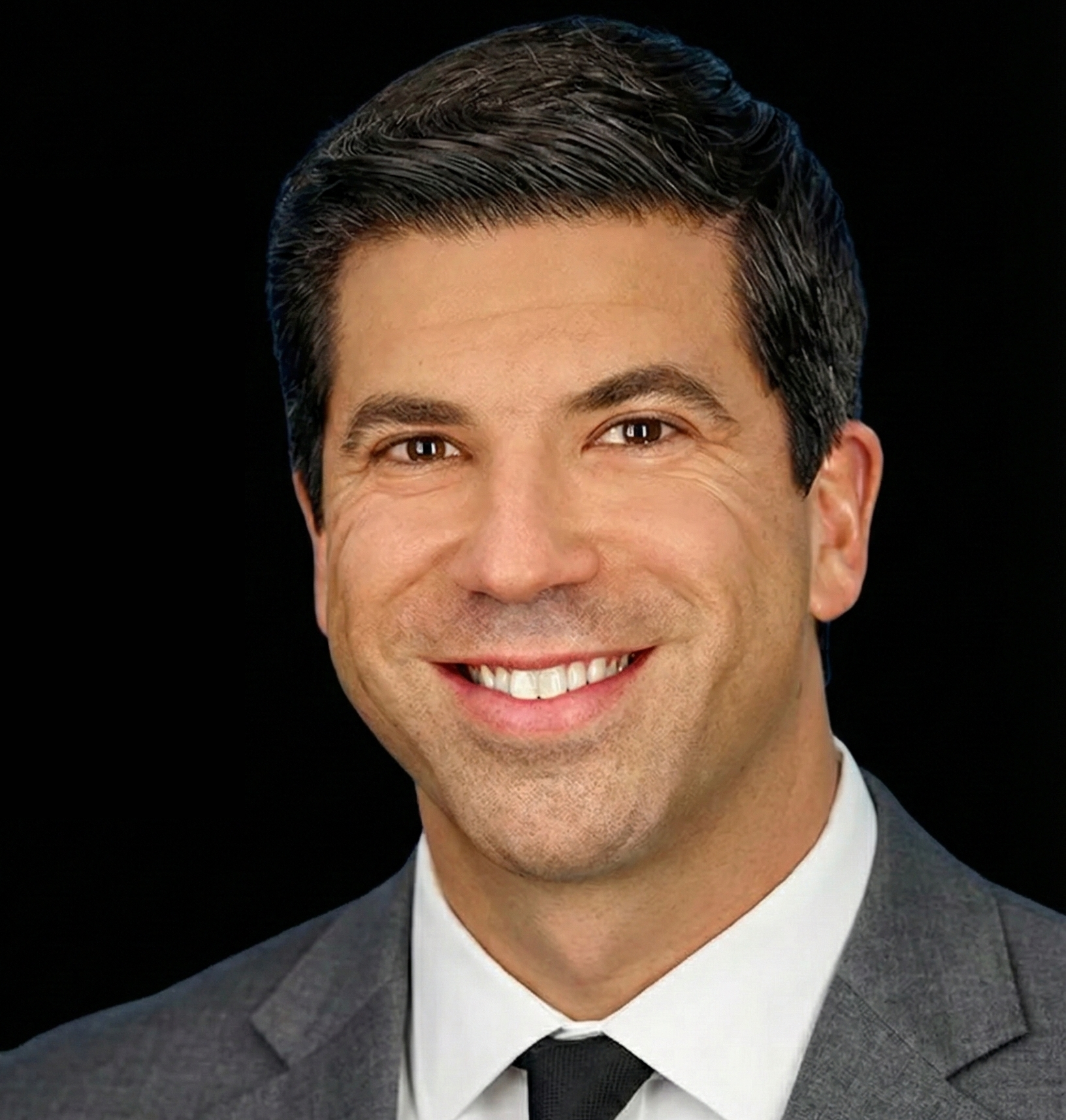
Roy Altman is a federal judge and the author of Israel on Trial.
South Florida and the Orchid Olympics
Contents
Max Raskin: I want to start by talking about Florida. For people who have never been to Miami, what would you say they can’t miss?
Roy Altman: So we have a tour that I take people on when they're here from out of town that involves things you would never actually go visit in Florida. Most people go to Miami Beach or Coconut Grove and those places are awesome and I totally recommend them, but there's a whole other part of Florida that's amazing that people generally don't go see. And that is very, very far south Dade County.
What we do is we take people to a tropical fruit stand called Robert Is Here in Homestead, right on the border of the Everglades. It’s this amazing guy — he looks like a cross between Hemingway and Santa Claus, and he's always wearing overalls. He mans the desk at this humongous, incredible tropical fruit stand. You stand in this long line to get these smoothies — he puts in every kind of fruit you can imagine, and then a hundred fruits you've never heard of — and you’re like, "It's the greatest smoothie I've ever had in my whole life…how is this possible?"
MR: So you don't have a standing order there?
RA: No, I just go and I make things up every time we go. Sometimes you put coffee and cacao nibs and some kind of Venezuelan fruit no one's ever heard of. If you go around back, they just spray it with vanilla ice cream right before they shake. It's so good.
They also sell every variety of honey — like avocado honey. They have a huge petting zoo in the back. It's a very eclectic place and they've got taco stands and coffee stands. It's amazing.
MR: What’s next on the tour?
RA: So we take a bunch of food that we pack up and we go to the Anhinga Trail, named after the bird, which is a walking trail in the Everglades where the alligators actually are hanging out on the path with you as you pass them. That sounds insane, but they just kind of lie there and tan in the sun. If you get too close to them, they might jump back into the water. And then these anhingas swoop in and catch these gars, which are long, thin fish that swim around in the Everglades. These humongous eagles are lurking. It's like an unbelievable smorgasbord of very real fauna that you would think you could only ever see in a zoo, like two, three feet away from you. And you get that for as long as you like on this hike.
You picnic out there, you eat the remainder of your food from Robert Is Here. And then you take your stuff and go down to R. F. Orchids, which is this guy named Robert Fuchs who is like the Michael Phelps of Orchids. I met him because I was going to my honeymoon with my wife in South Africa, and this guy was sitting in front. He's like a Tom Selleck with a white mustache, sitting in front of me with a fisherman shirt, and every single human being on the plane was going up to him to shake his hand and get his autograph like he's Michael Jordan. So I said to my wife, "I got to go see if I recognize this guy." I had no idea who he was.
So I went up to him and I said, "Hey, we're on a 16-hour flight together. How come everyone on this plane wants your autograph and I have no idea who you are?" He’s very modest, but he's like, "My name is Robert Fuchs. We're all on our way to the Olympics of Orchids, which happen every four years in Johannesburg.”
And he goes, "Have you ever heard of Michael Phelps?"
“Yeah."
"You know how he's got the most gold medals of anybody?"
"Yeah."
He goes, "I've won more gold medals in these Orchid Olympics than anyone in history."
So he gave me his card and I totally forgot about him. We did three weeks in Africa. We come back and I followed up with him. It turns out he set the record at that Johannesburg Olympics for the most orchid gold medals of all time. And now every time we leave the Everglades, we take people to his orchid farms. By the way, he has these huge natural spring pools with alligators swimming in them. He takes you on a tour of very, very rare orchids.
MR: Is that the Nicolas Cage movie?
RA: Adaptation.
So that's exactly the idea. You generally have to pay some weird crocodile skin guide to take you into the middle of Cypress Bay to get these orchids, but he has them all lying around in his shop. And the point is that at the very end of the tour, he pulls out this amazing alcoholic bottle. Don't ask me what's in it. It's a clear liquid. It might be some kind of moonshine. And at the very bottom of the bottle is a dead scorpion. And then you pass it around your group and everybody swigs until the bottle is empty. This is a Miami tour. Okay?
MR: This is not like a Collins Ave.
RA: This is not your Miami Beach tour.
Venezuela
MR: I wanted to ask about Venezuela. Do you have any memories of Venezuela?
RA: I have a lot of memories of Venezuela.
MR: When was the last time you were there?
RA: The last time I was there was 2004 for the setting of the stone for my grandfather, Izu, who had passed away in 2003. But in 2003, I went because my grandfather was dying of cancer.
I was at Columbia and my father said, "You got to go back. This is the last chance that we'll have to see him because he's at the end."
So Hugo Chavez was the dictator of Venezuela starting in 1998. And the Constitution of Venezuela said that you could run for one five-year term as president. Well, in 2003, I mean, he's not going to abide by that. He's a self-respecting autocrat.
He petitions the supreme court to be able to run again, and they look at the constitution and they say, "Hey, it's one five-year term. You can't run again." He then packs the supreme court with a bunch of his buddies, as any self-respecting dictator would do, which is why that's dangerous. And then he petitions for rehearing, reconsideration, which we judges generally don't like. But in that case, now with all his new buddies, they look at the constitution and they say, "I don't know how we got it so wrong the last time, but not only can you run again, you can run as many times as you like until the day that you die," which by the way, is exactly what he did. A day or two after that a million Venezuelans take to the streets to protest this decision by the supreme court.
Now, I should tell you, when we say a million Venezuelans, we probably mean like a hundred thousand, but it was a lot of people.
I arrived in Venezuela the day after that decision, just by happenstance, and I was there the day of the protests. It was the last day with my grandfather before we flew back. My father was in the apartment dealing with somebody who was handling his affairs. And my grandfather said, "Take me out onto the balcony to play chess," because he had taught me to play chess as a kid.
MR: Do you play chess now?
RA: I love chess, yeah. I play with my kids. I'm trying to get them to be good, better than me.
So my grandfather took me onto the balcony, and we started playing chess. Now, he weighed like 85 pounds. This thing was eating away at him. He was very pale, very weak.
MR: Where was he from originally?
RA: From the Kingdom of Romania, but when he was 10, he moved to Prague. That's a whole other story.
But the point is I would have to move the pieces for him. And he said to me, "Your father tells me that you want to go to law school."
So I said, "Yeah, I do."
"Where do you want to go to law school?"
"Well, I want to go to Yale just because it's the best school, but I don't know if I'm going to get in."
“What kind of lawyer do you want to be?"
"I really don't know. I'm not even in law school yet."
And then he reached his very bony finger out at the crowd, which was protesting on the big avenue below, and he said:
"Always remember this is what happens to a country when the good people don't serve it." And then he started to cough. I got a napkin and brought him inside.
The next day, my father and I flew home, and a week or two later, my dad called and said Izu had passed away. That was the last time I ever had a conversation with my grandfather. And I really think it informed every decision I've made in my life since.
Family
MR: Where’s your grandmother from?
RA: My grandmother was from Paris, and she killed a Nazi who was trying to rape her. I don't know if you want to hear that story.
MR: Woah. Did you ever think about writing a memoir or something like that?
RA: I wrote a book in college or law school about the family's experiences. And I then tinkered with it when I was in private practice and thought about maybe trying to make it into a real work. But then the nomination started and I got very busy with that.
MR: So your dad’s dad is from?
RA: Romania.
MR: Your dad's mom is from?
RA: Paris.
MR: Your mom's mom is from?
RA: Lithuania.
MR: And your mom's dad is from?
RA: Poland.
MR: Wow.
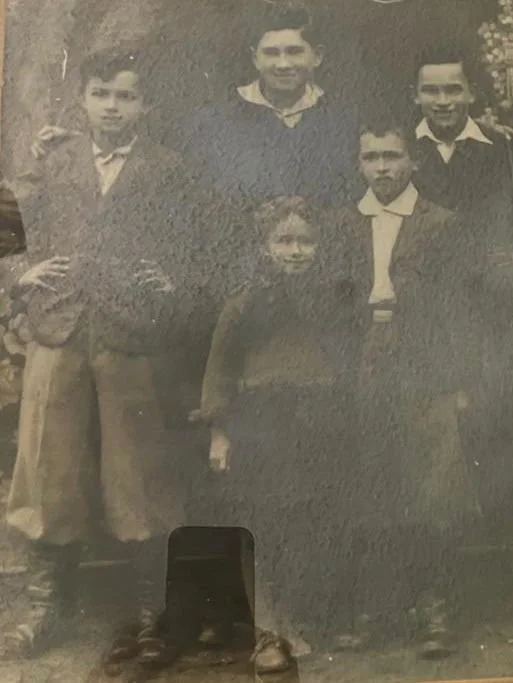
RA: He was married and had five kids. He got the visa from his town to come to America, but ended up in Mexico, to work, to make enough money to bring the whole family over. Once the letters stopped coming, he knew what had happened. They were all sent to Auschwitz. His wife and five children, my mother's half brothers and sisters, were killed in the gas chambers at Auschwitz. And then he remarried in Mexico, a Mexican woman of Lithuanian descent and had four more children. And my mother is the youngest of the nine, the youngest of those four.
MR: Are both of your parents still alive?
RA: Yes — they live here in Miami. My dad and I coach a baseball team together.
MR: What’s your favorite sport?
RA: Baseball.
MR: Favorite team?
RA: The Yankees.
MR: That's interesting, no?
RA: Well, remember, I didn't have a baseball team here when I was growing up because the Marlins didn't come until 1993. And the Yankees played spring training in Fort Lauderdale.
My dad grew up as a Yankees fan in Venezuela, so when he came here and I grew up, we would have season tickets to spring training to watch the Yankees.
MR: Who's your favorite baseball player of all time?
RA: Derek Jeter.
MR: I was at his last game.
RA: He's just an amazing athlete. Although Aaron Judge is also amazing.
MR: Did you ever meet Jeter?
RA: Never met him. My wife met him because he always goes to the Starbucks in Coconut Grove. And my wife went during COVID and Jeter was wearing a COVID mask and she was like, "Hey, I know you're wearing a mask, but can we take a picture together?" And they went and she took a picture with Derek Jeter. She's like, "Look, I just want to get a little closer because my husband is really, really going to love this photo." And he agreed and they took a little picture together and it's family lore that my wife met him but I didn't.
Get Action
MR: I see you're drinking water. Do you drink water throughout the day?
RA: All day. Water and coffee all day long.
MR: How much coffee do you drink a day?
RA: So my coffee drinking habits are very particular. If the weather is above, say, 65 degrees, I can't drink hot coffee. So I make cold brew at home every night, which is the remnants of the hot coffee my wife and I made the morning before. And then we store it at night, turn it into cold brew, and then put it on ice in the morning. And then I usually drink two big cups of that throughout the day.
MR: Are you particular about what kind of beans?
RA: I have a huge drawer filled with beans from all over the world. The more eclectic the bean, the better. Rwandan beans and Ethiopian beans, I just think are very pungent and strong, and I really like them.
MR: Do you have any habits that you're pretty particular about?
RA: Every habit.
MR: Do you use a certain kind of pen or do you eat a certain kind of nut every day? Are you a creature of habit?
RA: Yes and yes. I have certain kinds of pens that I like, which are the grippy pens, and I have a thousand of them.
MR: Which grippy pen? Which ones?
RA: These [shows pen].
MR: What are they called?
RA: I don't know what they're called.
MR: You’re like Teddy Roosevelt. He always had his fist clenched — he said “get action.” You have a baseball in your hand.
RA: I have the baseball always in my hand.
MR: Why?
RA: I just always have a baseball in my hand. I'm constantly in a slider grip.
MR: Did you play baseball?
RA: I pitched in college. The slider was my best pitch. And I constantly hold the slider grip and I'm constantly flipping the ball in the slider grip while testimony is taking place in trial.
MR: Do people see it?
RA: Oh, of course. And the jurors love it. Sometimes if the jurors get bored, I'll look up at the juror and maybe I'll even throw the ball at one of the jurors. The juror will catch it. Everybody will laugh, throw it back to me, and then now everybody's entertained and back to the trial. It's a way of getting everybody into it.
MR: That's very cool.
Snacks and Salads
MR: What do you snack on during the day?
RA: I don't really snack that much other than blueberries, but I eat pine nuts and olives basically at every meal.
MR: What kind of olives?
RA: These green grilled olives that I get at Trader Joe's.
MR: I have this ongoing joke with a friend about how expensive pine nuts are.
RA: They're so expensive.
MR: Why are pine nuts so expensive?
RA: They're absurdly expensive. But here's the cheat code to this — if you go to Trader Joe's, they sell them in big bags and they're actually not that bad.
MR: How do you eat them?
RA: Well, I put them on salad.
Every lunch is the same. I have a giant trough and it gets filled with many, many different ingredients that we call a salad. Here’s how big the trough is — I had a lunch where 30 or 40 lawyers came and we ordered them all sandwiches. I was in the kitchen getting water and I heard one of my law clerks screaming from the kitchen. I came in and some of the lawyers thought that the trough of salad was a communal trough because it was so big and they were all picking at it with their spoons, picking it onto their plate. And my law clerks were like, "That's the judge's salad."
MR: Big salad. What kind of salad is it?
RA: It's usually a base like spinach or arugula, and then it always has olives, pine nuts, boiled eggs, maybe some grilled chicken or blackened salmon, and then hearts of palm, some spicy Calabrian chili, olive oil, and lemon juice.
By the way, this is every single day.
MR: Do you use an instant pot to boil your eggs?
RA: No.
MR: It's fantastic. We just got one and it's just changed our lives.
RA: That's amazing. I boil them in water and that's the end of it.
MR: No, but it's so much quicker with the instant pot. You can do it in two minutes.
RA: Send me a link and I'll get it.
MR: I like soft-boiled eggs and it makes them perfect.
RA: Soft-boiled eggs are like LeBron James to a hard-boiled egg being like a JV kid, don't you agree?
MR: Yes.
Don’t Judge?
MR: How many of those water bottles do you drink every day?
RA: Probably four. They’re each 32 ounces.
MR: Do you work out every day?
RA: Every day.
MR: What do you do?
RA: Well, Mondays and Tuesdays, I play tennis with my wife, and that doesn't get skipped no matter what. That's religion. And then Wednesdays and Thursdays, I lift with a trainer. And then Fridays, I either work out with a trainer or do a Pilates type or HIIT type exercise class with my wife.
MR: You clerked for Judge Marcus, right?
RA: Yes.
MR: He was a court of appeals judge. Who taught you how to be a district court judge and do fun things like with the baseball?
RA: That is a great question. First, you learn from being in court all the time. I was a federal prosecutor, and I was a civil trial lawyer. So I did it on both sides of the house, and I was in federal court almost every day for many years. I was in front of dozens of different federal judges. You pick what you think are the best qualities of each and try to emulate those and avoid the others.
The second part is you’ve got to have your own voice and your own style and you’ve got to be authentic. And so in the end, you’ve got to do things that make you feel comfortable. You’ve got to make people around you comfortable.
Look, the jurors don't understand the patent instructions or the antitrust instructions all that well. But when you get 12 Americans into a jury box, magic happens. These 12 people are incredibly good at a number of things, most important of which is discerning authenticity and its opposite, inauthenticity.
I always say to young lawyers and to judges, it's really important to find your own voice because that delta between the person you're trying to be and the person you really are comes out immediately in front of 12 discerning Americans in a jury box. They will suss it out and they won't trust you.
If you want them to trust you, you’ve got to be yourself, and baseball and food is me. I eat on the bench because I'm always eating. I'll eat apples on the bench. I'll pop in pistachios, blueberries, pine nuts…very expensive pine nuts.
MR: Do you eat anything that's not healthy?
RA: I don't really eat that unhealthy. If I'm out to dinner with friends on a Saturday night, I think we'll have dessert. But I'm generally pretty healthy.
MR: You're very productive and that has to involve organization. How do you keep track of your own to-do list?
RA: I have a list that I keep every single day. You want to see it? It’s handwritten.
MR: Yeah. Can you tell me some of the things that are on there?
RA: It’s stuff dealing with the book. I've got to record the audiobook. I've got to call the publisher about some book orders, etc. There’s also personal stuff. I coach two kids’ baseball teams and a basketball team, so there are emails that need to be sent to the parents, uniforms that need to be ordered, team snacks that need to be assigned for each game. And then there’s a whole range of miscellaneous things: reimbursement requests for travel, financial disclosures, calls to the accountant, cards for loved ones whose birthdays are coming up, social dinners we need to schedule, upcoming speeches or podcasts I need to set or prepare for. Lots of things like that. I also chair a bunch of court committees. One on jury instructions, one on pro se litigation, one that puts on our biannual conference. So there are a bunch of committee-related tasks.
MR: What about writing opinions?
RA: That doesn't go on the to-do list.
MR: When you need to focus, how do you focus?
RA: So the to-do list has to do with things that are not work. If it's work, that all comes in a shared drive that the law clerks put in that I see on a daily basis and I am obsessive with clearing it out, reading, editing, sending it back to the law clerks, or if it's ready to go, signing and publishing. Nothing gets signed and published unless we've printed it out and read it out loud first.
MR: You need a physical printed copy?
RA: We have a physical printed copy that the law clerk reads. I used to read them out loud to the law clerk because when I was a lawyer, I used to read them out loud to myself. And that's really important because we want to be writing in a mellifluous way…the way we speak. Again, to be authentic, to connect with the audience, I think it's really important not to write in a stilted way or in an inauthentic way. We don't use “therefore” and “wherefore” and “accordingly” and things like that. Every word has to have its own cadence and its own place relative to the number of syllables in the sentence and all of that.
MR: Is there a judge that you think influenced your writing?
RA: I think I've read a lot of judges. I also think I've read just a lot in my life. I always tell people who say they want to be good writers, not to just limit themselves to the kind of writing they're doing. I think it's really important to do a lot of legal writing and reading if you want to be a good legal writer, but I think it's more important just to read a lot of good writing. Whether that's novels or nonfiction, it doesn't matter. You should be constantly reading if you want to get better at writing whatever kind of writing you're doing.
MR: Do you use ChatGPT at all or any of the LLMs?
RA: Never. I've never once used them. I'm a real troglodyte.
MR: It's like saying you didn't use the internet.
RA: Well, I'll tell you, I got a call from a magazine editor who wanted me to do a review of a book on the history of the Israeli Supreme Court. I was going away on vacation, so I said, "Sure, I'll just read the book on vacation and write the review on vacation." It was like ordering the market fish without asking what the market price is. I said yes before I knew how many pages the book was.
I went onto Amazon and it was an 800-page book about the history of the Israeli Supreme Court. So I had to cram this thing in a week or two. I read every single day of my vacation — including the entire plane rides — and then wrote this review. When it was published, I told a friend: "Can you believe I had to read this 800-page book in a week or two?" He goes, "Roy, are you crazy? You should have just run it through ChatGPT and it would give you a draft and then you just edit it from there." I was horrified.
MR: This is like the Woody Allen joke that he sped-read War and Peace in 20 minutes. It has something to do about Russia.
Iron Man
MR: When you sit down to write, do you turn your phone off?
RA: I do not look at my phone. I have to get into a room with the door closed and I'm just very, very focused. I usually have a cup of coffee there with ice — no food, and I just plow away. I have my email closed. The best writing takes place on planes because on planes, I don't pay the $18 for the shaky Wi-Fi. I just write, write, write the entire flight. No one talks to me. No hearings. No lawyers. No interruptions.
MR: What is something that you have not accomplished that you want? You are a totally type-A get it done person. What is something you have not done that you would like to do?
RA: Watch my kids play at Yankee Stadium. We'll see if that happens.
MR: Do you want to write a treatise on property law? Learn an instrument? Is there anything that is lurking in the shadows of things that you want to accomplish?
RA: Not any of the things you mentioned.
MR: Do you want to run a marathon? I'm sure you've done it, right?
RA: I haven't run a marathon. I don't really have an interest in running a marathon. I could be persuaded to do an Iron Man.