

Interview with Sebastian Junger
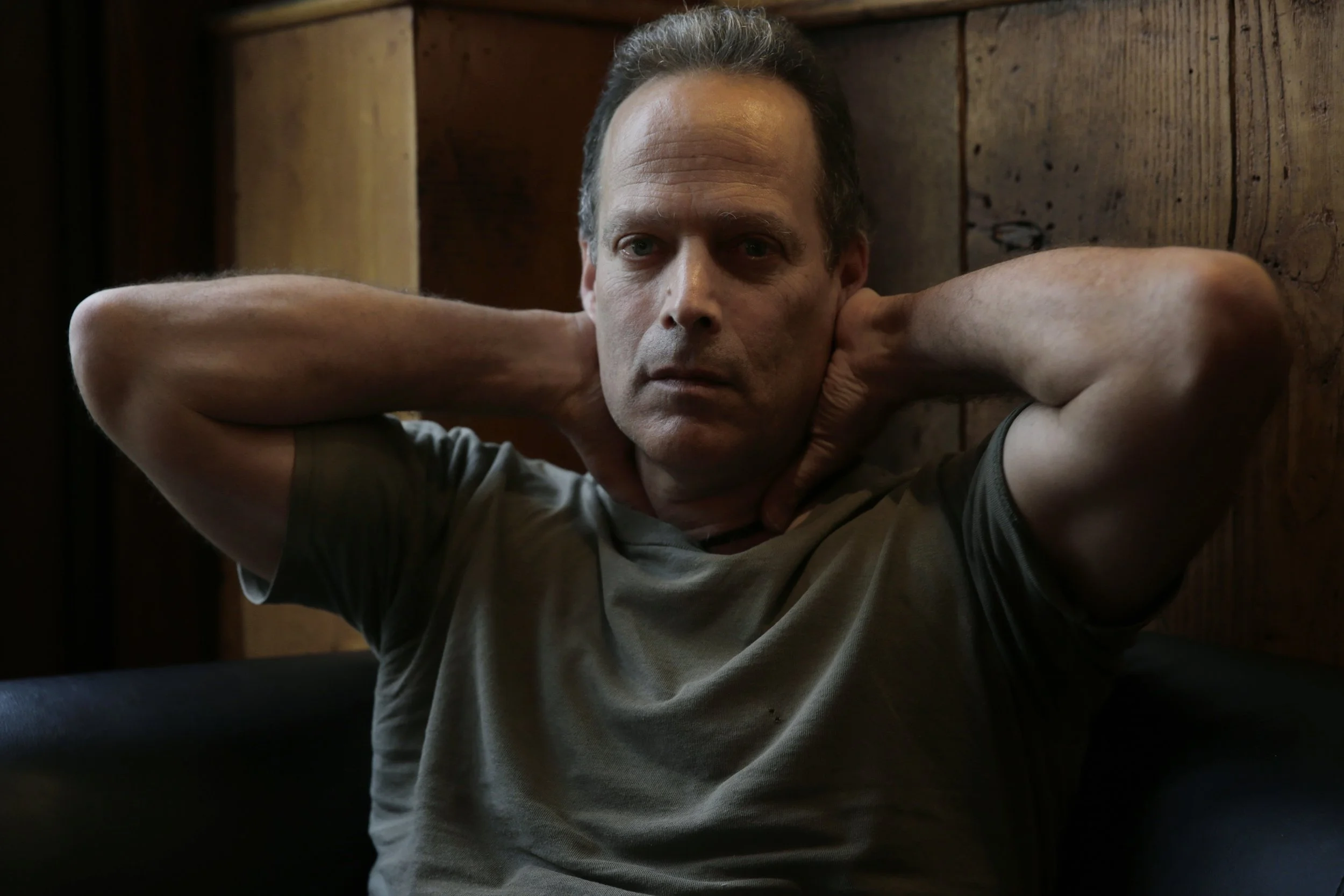
Sebastian Junger is an American writer.
Clint Eastwood and Cormac McCarthy
Contents
Max Raskin: You're cool, right? People think of you as cool.
Sebastian Junger: Okay. Keep going. Now you got me interested.
MR: So just stipulate that you're cool.
SJ: I actually don't think so, but maybe being uncool the way that I am is cool.
MR: I'm not endorsing, I'm just reporting. Okay?
SJ: Okay. Well, that's good to hear. I wish I'd had it in high school, but I'll take it now.
MR: So my question is — when you were younger, was there anyone who you thought was cool who you styled yourself after? Whether in writing habits or drinking or anything like that?
SJ: When I was 12, I tried my best to imitate Clint Eastwood. But that was such a failure. I never tried that stunt again, so no.
In the way that I lead my life and present myself and think about myself or want others to think about me, there's absolutely zero affiliation or emulation of anyone else.
MR: So people talk about Hemingway, but I could easily see some of these guys like Tom Wolfe or Hunter Thompson. Were they influences on you?
SJ: You mean their persona or their actual writing style?
MR: I guess maybe both.
SJ: Certainly not their personas or their personal lives, right? Zero.
Every writer is a sort of conglomeration of writers that they’ve read and admired, patched together in a sort of unique way that ends up being individual. So I think you can probably tease out the literary influences that I had as I was reading and learning writing. There’s Hemingway in there. I wouldn't say Faulkner particularly. Let's say a little bit of Cormac McCarthy, a little bit of Peter Matthiessen.
MR: When you were younger, were you obsessed with any particular author or was it more grab-bag?
SJ: The only author I've read everything of is probably Cormac McCarthy.
Some authors have just produced too much work and too much of it is mediocre to plow your way through. I'll put a book down pretty quickly if it doesn't do something for me, including if it's an author I admire.
How to Write About War
MR: So you participate in the world and also write about it.
SJ: Well, I'm a reporter and reporters report on the world. My work took me overseas because for a while I was fond of stories that happened overseas, particularly in conflict zones. And so I wasn't a traveler who was participating in the world; I was over there to cover a story, like the diamond trade in Sierra Leone or what have you.
I gave up war reporting and foreign reporting after a couple of things happened — after my buddy, Tim Hetherington, was killed in Libya. He was a colleague and a brilliant journalist, photographer — I made the film Restrepo with him. Then I got married and I had two little girls who are now nine and six. I wouldn't go near a war zone right now. I mean, I wouldn't cross Houston Street against the stoplight.
MR: Not in this weather…
SJ: Yeah.
MR: Do you enjoy the act of the journalism more or the act of writing more?
SJ: The information gathering is very intense, depending on what kind of information you're after. And then there's the beautiful assembling of words that I've always absolutely loved. So they're so intertwined. They're each so dependent on the other that I don't even break them apart in my mind. When I'm reporting, I'm writing. I have a notebook. Here it is [shows notebook]. These are my field notebooks and I'm writing continually, including whole passages that might well wind up in the article that I'm doing. So the two things go together.
MR: Are you particular about what kind of notebooks you use?
SJ: Not necessarily — I just found one that I like, and I've used it for about 20 years. An Ampad Gold Fibre Retro Writing Pad — 80 sheets 5x8”, medium-ruled.
MR: Are you particular about what kind of pen or pencil you use?
SJ: Pencils are good if you're in a rainy environment because graphite will always write on paper, even if it's wet. But whatever pens I can steal from the hotel desk when I check in.
MR: But you don’t need a particular pen?
SJ: No, no, no. And if I ever get that precious about myself, take me out back and shoot me.
MR: How do you keep notes about your recording? Do you use a recorder?
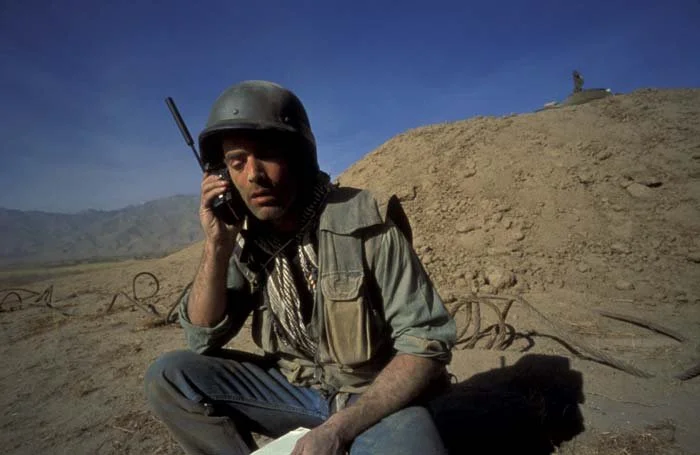
SJ: I started working with a microcassette recorder back before there were digital recorders way back 30 years ago or so. If it was an interview where I was interested in the quality of the language, the way the person spoke, the way they phrase things, which is one of the things that makes an article or a book interesting to read, I would use the tape recorder and take cursory notes. It’s very hard to keep up with human speech in all its nuance and texture while you're writing with a pen, right? It's almost impossible to do it.
But if I'm just talking to someone trying to get information about something, like how big the bridge is or how many tons of steel were used, then I'll just write it down in a notebook because I don't need the way they're talking.
MR: How do you actually write when you sit down?
SJ: Well, the first long form thing I ever wrote was my thesis in college. I was an anthropology major, and I did field work on the Navajo Reservation and I wrote an 80-, 90-page thesis longhand in a spiral notebook. So I was on the running team — I was a pretty good track and cross-country runner — I gave the notebook to a younger guy on the team who charged me two bucks a page to type it. And that's when I handed it in to my professor and I got honors. After that, eventually I bought a manual typewriter and I took that overseas. My first war was Sarajevo, Bosnia in 1993. I took a manual typewriter and would fax my articles from that.
MR: Do you remember what kind of typewriter it was?
SJ: No, I don’t, but it was a lightweight travel typewriter. I bought it in Zagreb, Croatia before going into Sarajevo. I'd heard there was no electricity in Sarajevo and so I knew I wanted something compact and light that was manual.
Eventually I think my first laptop was a Toshiba laptop, which weighed roughly 40 pounds and used floppy disks that could store like 50 pages at a time. It was really primitive.
Now I just compose on a laptop like almost everyone else on the planet except Cormac McCarthy who used an electric typewriter.
MR: Were you friends with him?
SJ: No — I wish I'd known him, but I never met him.
MR: Do you have any gear that was very important to you throughout your time reporting from war zones?
SJ: I took some basic medical stuff. Eventually I got a trauma bandage and a tourniquet.
MR: Did you ever have to use it?
SJ: No. Thank God. I've known people who had to.
Bored of War
MR: Other than almost dying at home, what was the most danger you ever felt in any of your reporting?
SJ: You can feel you’re in a lot of danger and be all freaked out while you're actually not in that much danger. The times I've been in a lot of danger, I didn't really know it. I got blown up once by a roadside bomb. I had a bullet hit a couple of inches from my forehead, but it missed. So was I in danger? No, I wasn't in danger…it missed me.
Probably the worst moments for me, where I knew it was going very badly and I had time to think it might not turn out well was in the fall of 2000. I was in Badakhshan in northern Afghanistan — it was a year before 9/11 — and I was with the Northern Alliance with Ahmad Shah Massoud and they were outgunned. The Taliban had all the toys. They had an air force, they had tanks, they had artillery, all the stuff we didn't have to deal with as American forces. The Taliban had all that stuff. And we were on this hilltop position, and we were just getting hammered by Katyusha rockets. And there was nothing we could do except curl up in the fetal position in the trench and wait for them to run out of rockets.
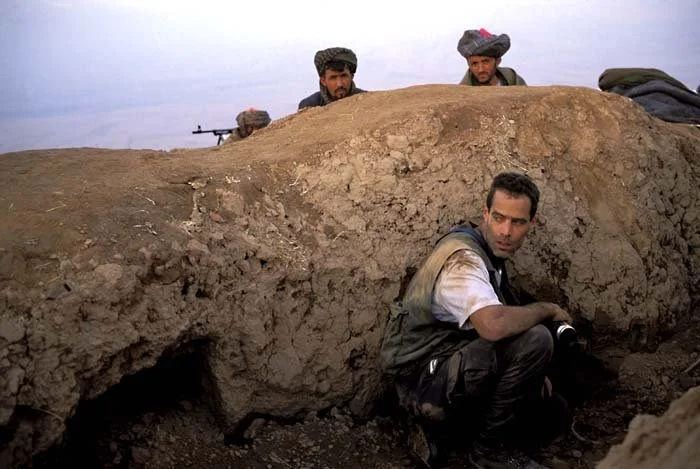
And I don't think I got close to getting killed, but I definitely got extremely scared.
I was in a couple of situations where I thought I might be executed. The civil wars in West Africa are very paranoid, drug-soaked affairs with child soldiers. Very, very crazy. There were a couple of times where I really thought, "Oh, this is it.”
MR: Is it like that movie Lord of War with Nicolas Cage?
SJ: I didn't see that movie.
MR: When you have to hang out with other dads when your kids are at birthday parties, do you share these stories? Or do you keep your mouth shut?
SJ: I'm pretty good at keeping my mouth shut. That's my favorite thing to do, actually. I don't really talk about stuff because some of it is unpleasant and I don't really want to think about it. Some of it is quite personal. The people that I'm close to already know all that stuff.
If I'm just meeting someone at a dinner party, I'll give the bare bones about it. My great hope in those situations is that they won't figure out my name, and they won't ask me about my work personally. But eventually someone inevitably figures out what my name is and then I'm having a personal conversation, which I usually don't want to have.
MR: What do people ask you about the most? The Perfect Storm? Restrepo?
SJ: The Perfect Storm gets brought up. “What did you think of the movie?” is a pretty typical question.
MR: What did you think about the movie? Actually, no, I’m not going to ask that.
SJ: Did you ever think you were going to get killed? I mean, some of the things that belong to a legitimate interview like this sometimes aren't great questions at a dinner table or in a playground. But they're natural. They're understandable questions, right?
MR: What do you do for excitement in New York City now? Do you like excitement?
SJ: I don't seek excitement. I never have, I don't think.
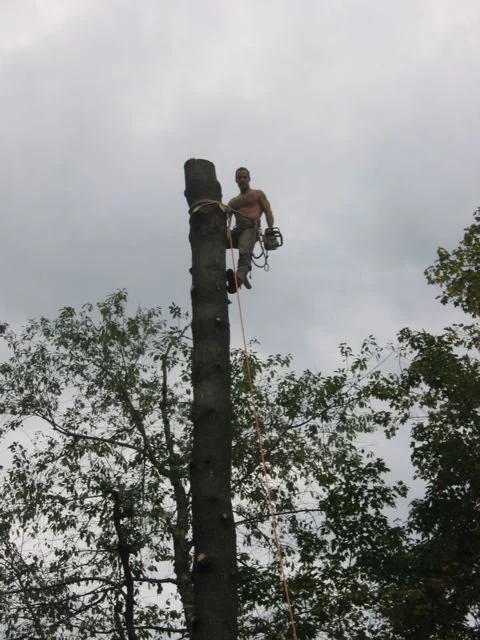
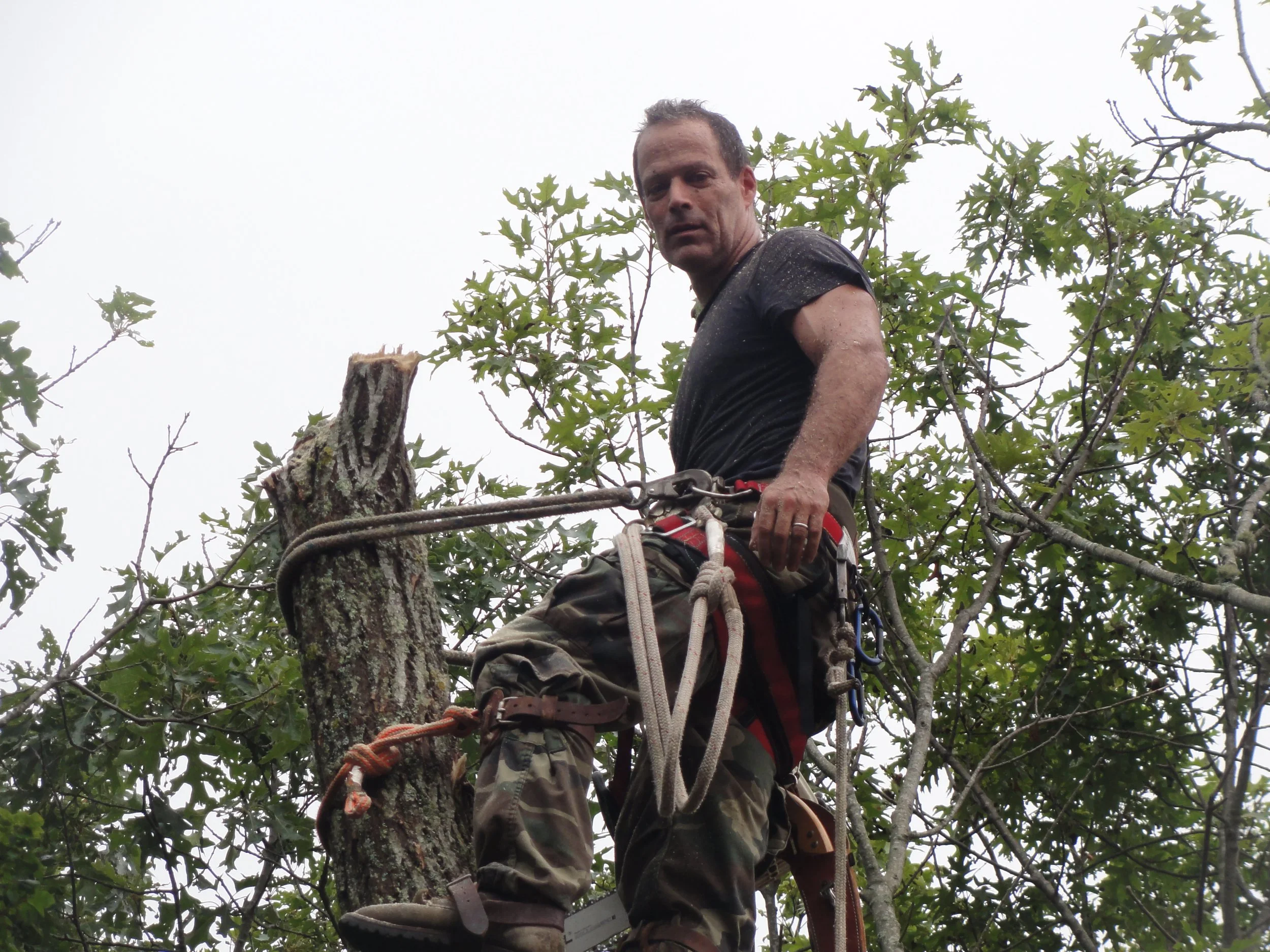
The things that I did that were exciting and dangerous were all work. I was working. I was a journalist, and before I was a journalist, I was a high climber for tree companies. I did the aerial work for tree companies — 80, 90 feet in the air with a chainsaw on a rope. That's dangerous and exciting.
MR: It seems like once you had your daughters, you have no particular interest in going back out there.
SJ: Zero interest. Absolutely none.
MR: How do you turn that off? How do you go from being on the tops of trees and in Liberia to just walking down Houston Street?
SJ: Well, I still do tree work once in a while for friends because it's expensive and I still have all my gear, but I'm super careful. The thing about tree work is there's zero random risk. It's just physics. If you get killed doing tree work, you made your front cut wrong when you were topping a pine tree and the top came back on you and killed you. You screwed up. It's all physics. It's all knowable. War is random, so is driving, so are a lot of things. So I just take no random risk that I don't have to take.
As I Lay Not Dying
MR: It’s ironic you almost died because your artery just randomly burst.
SJ: The pancreatic artery, yes.
MR: That just happened at your house, right?
SJ: Yes — I was in Massachusetts during COVID and we own a pretty remote property in the woods at the end of a dead-end dirt road. It's an old house from 1820 and there's no cell phone coverage there. The landlines go out when it rains because they're old, so it's a very remote, beautiful, beautiful place. And in one moment I was talking to my wife and literally mid-sentence I felt the pain in my abdomen and I was like, "What is that? Geez, that really hurts." I stood up to try to work it out.
I thought it was just a digestive thing and I almost fell over. I didn't know, but I'd had an aneurysm — a ballooning of the artery wall in my pancreatic artery that had been growing probably for decades — and it had chosen that moment to rupture. I was losing a pint of blood into my own abdomen every 10 or 15 minutes.
You can lose about five pints of blood before you die, and we lived an hour from the hospital…so I literally was a human hourglass. I barely made it. I barely made it to the hospital alive. I had no idea I was dying and neither did the ambulance crew, but I got there with probably 10 minutes to spare.
The first of a series of doctors was trying to get a large-gauge needle into my jugular to transfuse me, and while he was working on my neck, a black pit opened up underneath me.
I should stop here and say I'm a complete atheist. Like an absolute unredeemable atheist. My father's a physicist and an atheist.
And so a black pit opened up underneath me and I started to get pulled into it. And I sensed that if I go into the black pit, I'm not coming back. I got very scared and my dead father appeared above me and said, "You don't have to fight it. You can come with me. I'll take care of you." And I turned to the doctor. I mean, I looked up at him. I said, "Doc, you got to hurry. I'm going." And I didn't know I was dying, but I knew something very serious. If my dead father was there offering me his hand, something very serious was going on.
MR: The story is unbelievable. Was it hard to write?
SJ: It was emotionally hard. I had a huge amount of trauma from this. It took me two years to even begin writing it because it was extremely upsetting to almost die and way more upsetting than anything that could happen in a war.
MR: You said you are a super-duper atheist — at the end of the day do you think what you experience was just neurons firing and chemicals releasing? Or do you think there was something else going on?
SJ: That’s the big question. Near-death experiences are very common. I did a lot of research, of course, because I'm a journalist — and you can explain a lot of it through neurological processes, neurochemistry. A lot of these weird hallucinations and visions that dying people have —but not everything — there's a certain component that lacks rational explanation. And so that led me to the realm of quantum physics. Quantum physics is a great mystery and things happen at the quantum level that make no sense, that appear to contradict everything we understand about reality and consciousness and time and death and everything else. But the conversation about God, which is what the word atheism applies to, and the conversation about a post-death continuation of the individual — they're totally separate conversations.
God has nothing to do with it. You could have a universe with no God, where at the quantum level there is a continuity after death of the individual. Or you could have a God that created the universe and he was like, "You know what? When you die, that's it. There's no afterlife. Sorry." I mean, they're not necessarily connected, although people keep hoping they are.
MR: Since writing the book, has your thinking on it changed at all or is what's in the book pretty much what you believe now?
SJ: No, it hasn't changed at all. When I wrote the book, I realized that there's a certain ambiguity, a contradiction in quantum physics that might allow for a post-death continuation of the individual that we're incapable of comprehending. But my thinking about God has not changed at all.
MR: But in the book you definitely don't take a position one way or the other on whether there is a personal consciousness after death.
SJ: Well, the only thing I could take a firm personal position on is something that I can prove. And no one can prove that there's a post-death consciousness. So I present the possibilities and reasons.
MR: But there isn't anything new that's made you lean one way or the other? Did anyone write you afterwards with interesting ideas?
SJ: There's some very mysterious puzzling stories, including what happened to me, that make me an atheist with questions.
MR: Interesting.
SJ: I'm definitely not an atheist with answers or a religious person with answers or anything like that. If someone says they claim to know the ultimate truth about God and the universe and the afterlife, they are either lying to you or to themselves. They cannot empirically and absolutely know any of that for certain. All they can do is have conjecture.
Daily Life
MR: Do you floss?
SJ: No.
MR: Do you have a morning routine?
SJ: It's unbelievably boring.
So the family sleeps together in a sort of big pile on the floor. My wife and I extract ourselves around 6:00 in the morning and sit on the couch. We live in a tiny apartment — it's 500 square feet in the Lower East Side. So we extract ourselves and we read the morning news and chat and drink coffee and then get the girls up and walk them to school. They go to public school a few blocks away and then I'm off and running.
MR: Do you exercise every day?
SJ: I try to. I box and I run.
MR: How long have you been boxing?
SJ: Probably about 10, 11 years.
MR: Did you ever do jiu-jitsu or any other martial art?
SJ: No.
MR: I bet you'd like jiu-jitsu a lot.
SJ: I'm sure I would love it.
MR: Where do you think is the place in New York where you've eaten the most?
SJ: At home.
MR: Are you a creature of habit when it comes to eating?
SJ: When I was single, I would just…I don't even remember eating when I was single. I eat whatever. We cook for the kids. And it's not like we have spaghetti every night.
MR: Certain people who I've interviewed, they need to have a bowl of almonds when they write, or they always drink a black cup of coffee at 6:00 in the morning.
SJ: No, I try to steer away from mental illness. I try not to have habits that are that intense.
MR: What about travel gear? Do you have a place where you get your clothes or your bags?
SJ: This is pathetic, but every couple of years my wife makes me buy a pair of pants and a couple of shirts, but I just have no interest in clothes. I'm still wearing shirts I bought 20 years ago.
MR: But when you traveled, you didn't care what kind of bag you had?
SJ: I've had a good bag for 20 years. Wisport.
MR: What's in it right now?
SJ: Well, we just came back from a trip, so there's a tent in it. I bought the tent because my girls are scared of spiders and I want to go camping with them. But generally, I've spent a lot of time in the outdoors, in the mountains. And I never had a tent. I always had a tarp and a sleeping bag and minimum gear and maybe a camping stove with white gas.
MR: Do you have a pocketknife you carry around everywhere or something like that?
SJ: I got a rigid knife that I keep with me when I'm in the woods.
MR: Where do you like hiking in the New York area?
SJ: We have a car here in the Lower East Side. Parking's pretty easy and so we just get in the car, drive up to upstate New York. Bear Mountain is just 45 minutes away. You can see the skyline from there. I go everywhere upstate — within three hours, you can be pretty close to wilderness.
MR: Do you watch a lot of TV or movies?
SJ: We don't have a TV. Once in a while I watch a movie. TV. It always seemed like it was taking life away from me. I just don't like it.
MR: If someone were to drop in your apartment later today, what are they most likely to see you doing?
SJ: I try to keep the girls from fighting. They're nine and six and they take a lot of time and a lot of love. And so most of my energy goes into that.
Sometimes I work at night. There's only one room in the apartment that has a door on it, and so I share this tiny little office. We have a couple of bunks that the girls aren't using yet, so I sort of share this room with the girls. And at night, I'll sometimes work in here if I don't get my work done during the day.
MR: You could probably afford a bigger apartment. Why such a small apartment?
SJ: Well, my wife's lived here for 20-some years. It's her home and it's a wonderful neighborhood. We have a really good deal on the rent. It's sort of a handshake deal with somebody.
American Mammals
MR: But there's no philosophical reason why you're living in a small apartment?
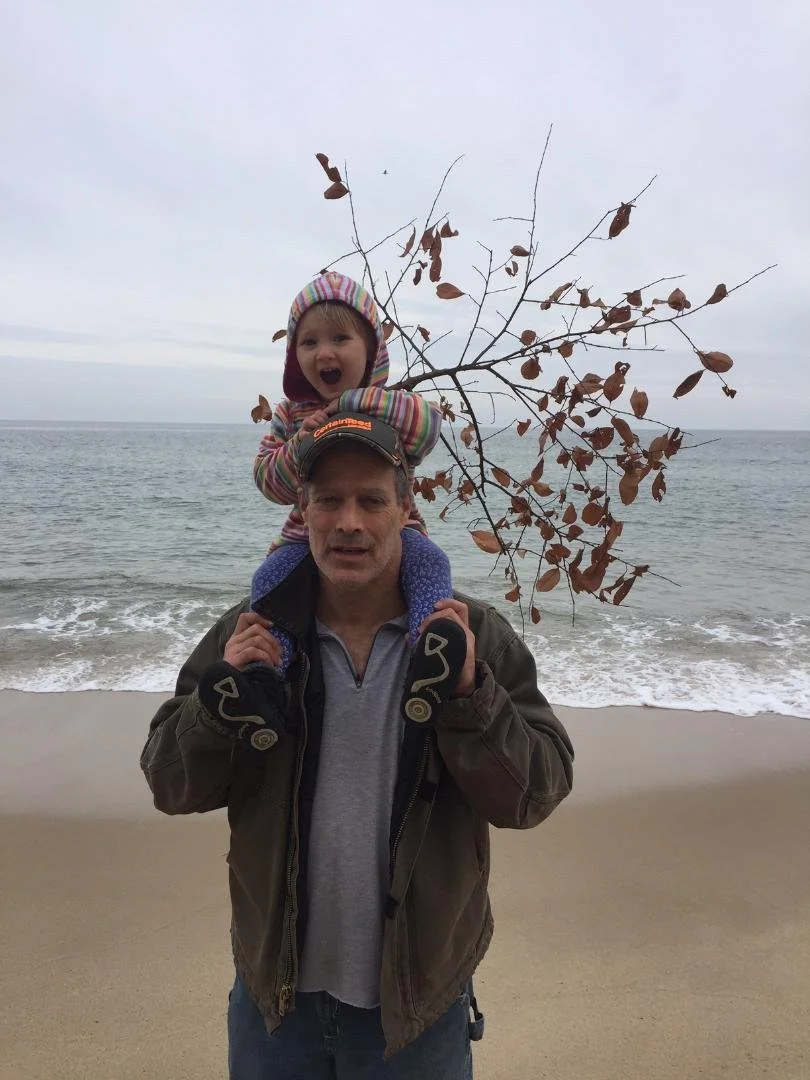
SJ: Very recently in Western society, there's the idea that every child needs their own room and that they're better off having their own room. That has never been something that humans have ever, ever, ever done until about 50 years ago. And that kind of isolation, in my opinion, is extremely bad for young primates, which is what children are. They really need closeness. And so sometimes it gets a little much. Sometimes you need some space and that's all good, but the downside of being able to self-isolate is, I think, pretty catastrophic. It’s only a very affluent society that could afford to do that and so we're just not doing it. And as a result, our girls have very, very healthy, strong attachment to each other and to their parents and I think it's partly because we live in a small space.
MR: Do you have any other off-the-beaten track parenting or life behavior?
SJ: I believe in science, which is why we co-sleep because Americans are the only mammals that don’t sleep with their young. Every other primate does for really, really good reasons. And so we do that.
We don't have a baby stroller, partly because we live three stories up in a brick tenement building and it's just a pain to carry something that heavy. We carry our kids, like primates have always done forever and humans have always done. There's a great website called Evolutionary Parenting that explains how to parent in an evolutionary-consistent way in modern society. It's a wonderful site.
MR: Do you know Jonathan Haidt?
SJ: Of course.
MR: He’s big on Free-Range Kids.
SJ: So certainly no phones or iPads for my girls. They get a little bit of time on the laptop to watch some child programming. That's it. Of course I vaccinate my kids. Like I said, I believe in science.
MR: What TV do you let them watch? Do they watch Bluey?
SJ: Yeah, they watch Bluey and I don't even remember the names. It's all pretty innocent stuff. We’re navigating video games now because it's one of the ways that young children connect — by playing together online. So you have to thread the needle because you don't want them to be completely excluded from a group activity. On the other hand, the video games are completely addictive.
Loisaida
MR: Why do you live in New York?
SJ: Because the neighborhood we live in, it's like a village.
MR: You seem like the kind of guy who should live in a village.
SJ: Well, New York has a lot to offer. And frankly, right now in America, political divisions are pretty tough. I know many of the villages in rural communities where it's really pretty hardcore conservative thought and then there’s hardcore liberal thought. I don't want either of it.
MR: How do you describe yourself politically? Do you put a label on yourself politically?
SJ: No.
I believe in anything that advances the cause of human dignity. And sometimes the left is great at that and sometimes the right's great at that.
MR: But you're not a partisan?
SJ: Certainly not. I'm registered independent. I think the left is wrong less often than the right, but that's about all they got going for them. I think the left can be totalitarian in its own ghastly way. But the Democrats right now seem to be more invested in a fair democratic process than the Republicans. I hope that turns around soon.
MR: Do you think you will live in New York City for a long time?
SJ: I think we'll live in and out of here. The whole world is in New York.
MR: I'm surprised that you like New York as much as you do. I figured you were going to say, "I'm here because my wife's here, but I would love to live wherever else."
SJ: Look, you can spend three months in Kashmir and send your kids to school in Kashmir and then come back. Or in Africa. We just came back from Central America a couple of days ago.
MR: You still like traveling?
SJ: Yes.
But let me just say something about the neighborhood. The thing I like about the Lower East Side is that it’s largely Spanish speaking, even among the teenagers. It's mixed income, it's mixed race, it's mixed everything, and it's extremely cohesive and close. I grew up in a sort of ghastly, affluent suburb of Boston. And by ghastly, I mean inhuman. There were almost no human connections between the neighbors. It was appalling and all perfectly nice people, but sorry, that's not a community. And this is a community and I adore it for that.
MR: Someone who's never been there…what would you recommend they go do or eat?
SJ: I would just walk around. There’s a nice cafe called Pause on Clinton Street. There's a million places. I don't know. I got kids. It's not like I go out and do stuff.