

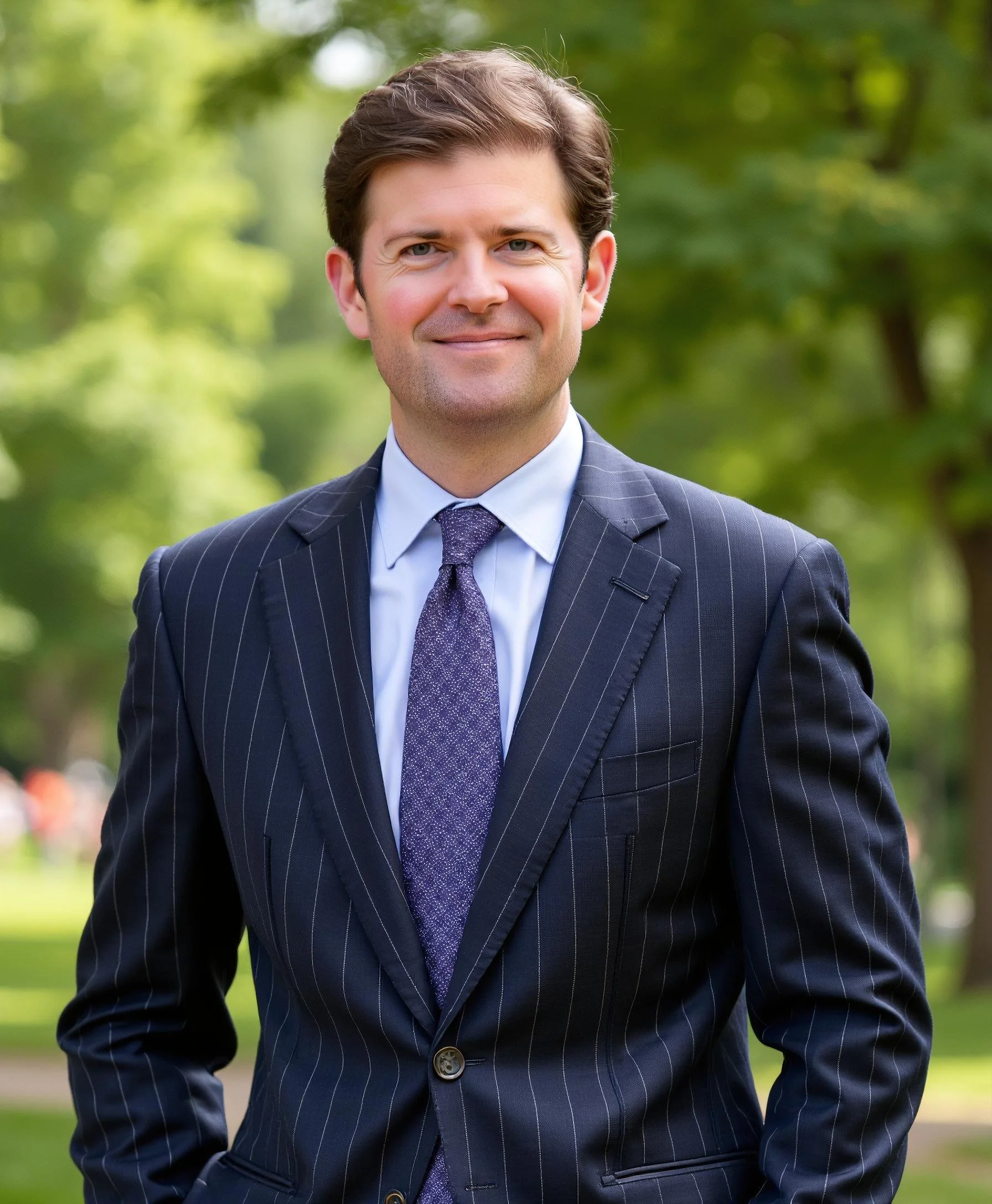
Tyler Hassen is a businessman, a former member of the Department of Government Efficiency, and the author of Inside DOGE.
DOGE Days of Summer
Contents
Max Raskin: I want to start with your move to DC. Had you ever lived there before?
Tyler Hassen: I had never lived in DC. Never.
MR: I don't know if you feel comfortable sharing this, but what neighborhood did you live in?
TH: I lived in CityCenter, and I used to eat all my dinners on the second floor of Del Frisco's, where no one would notice me.
MR: Are you a creature of habit? Do you order the same thing over and over again there?
TH: Yeah, pretty much. I got a steak, and then when I thought my cholesterol might be getting too high, I switched to fish. And I would bet on basketball with all the bartenders, who had no idea who I was, so that was cool.
MR: Was there a culture shock moving to DC?
TH: Not really, because all I did was sleep, go to Del Frisco's, take Ubers to the Department of the Interior, and then walk over to meetings with Elon and Steve Davis and everyone. So my life was quite simple. In fact, I didn't eat one meal in my apartment the entire time I was there. I had a Casper mattress on the floor, and I just had wine glasses to unwind.
MR: How long were you there in total?
TH: I was there from January 8 until the end of July, and then I stayed on as a special government employee, going back and forth from home because I hadn't seen my family in so long.
MR: In normal life, no one thinks about leaking. And also no one thinks about who's at this party — maybe a little bit — but in DC, the two endemic features, at least to me, are leaking — the idea that someone cares what you say at a party — and, because it's a one-industry town, where you stand in the pecking order. Do you think that's right?
TH: It's tough for me to say, because for the first six months, until Elon basically left Washington, I had no social life whatsoever. I'm not exaggerating. I'd get calls at 11:00 or 12:00 at night. Some of our meetings went past midnight, and I was in for an 8:30 meeting every morning with the Department of Interior leadership team. DOGE called it a deployment, and that's basically what I lived. When friends would come into town and invite me to black-tie events and things like that, I said, "Guys, sorry, I'm here to work."
MR: What about the leaking?
TH: The leaking was there all the time. People would point me to Reddit boards that were not very friendly about what I was doing, of course, so I knew there was leaking happening. There were certain things that E&E News and Politico especially would have that I know came out of one of my meetings, but we were just careful about what we were doing. And with FOIA, the Freedom of Information Act, I just handed over my phone and let the IT people take my computer and everything, so I didn't have to actually email anyone. I just got used to it all.
MR: Do you think of yourself as a tech guy or a business guy?
TH: Not tech at all. I had barely ever even used AI prior to coming to DC.
MR: Do you have any apps that people might not have heard of that you think are great?
TH: Yeah, I just started using Cloaked. It eliminates your online presence. I found when I got to DC that I had all these reporters calling me on my cell phone and emailing me, and I was wondering how they got my personal cell phone number. It seemed really easy to get. So with this book, a Cloaked subscription is one of the things I've used. A friend of a friend founded it, so that helps too.
Marathons and Scotch
MR: I want to talk about marathons. How many have you run?
TH: I've run five, and the deal I have with my wife is that they need to be in cool places or she doesn't want to deal with me training. So my last ones — and she's come to all of them — have been Berlin, Paris, and London.
And the next one I'm running, in March, is Rome.
MR: Do you listen to music when you run?
TH: Yes, until my AirPods run out.
MR: What's your VO2 max?
TH: Oh God, it was in the low 50s — like 53, 54. Now it's in the mid-40s. So every once in a while, when I feel like I'm getting out of shape, I just plan a marathon, and then I know I'll have the structure to get back in shape.
MR: What's the best marathon you've run?
TH: I ran Chicago when I was single and had just met my now-wife, so I was in the best shape of my life, of course. I ran 26.2 miles at an 8:37 pace.
MR: Wow, that's great.
TH: At 33, so it wasn't easy.
MR: You're into cigars, right?
TH: Oh, yeah. That's funny. I lived in Dubai when I was 27, for about two and a half years, and I lived in a hotel that had a nightclub and a cigar bar. After work, I would go down there because I didn't know anybody. It was kind of like moving to DC — I just had two suitcases and showed up. I would day-trade stocks, have a Scotch, smoke Cohibas, and people-watch, which was a lot of fun, because the people in Dubai are from all walks of life, as you can imagine.
MR: What do you eat in Dubai?
TH: Everything. We had a Ruth's Chris. It's very cosmopolitan. I lived there in 2010, so it's changed a lot in the last 16 years or so, but it was incredible. It felt like you were on vacation all the time, and we were building out a company from scratch, so I spent a lot of time on planes. It was a nice hub if you're going all around the world, and a cool experience, but not a place you want to live full-time. At least that was my experience.
MR: What about your suits?
TH: I grew up in Manhattan, and my father had been going to a place called Paul Stuart, on 45th and Madison, since the '70s. So I get all my suits from Paul Stuart, and I still go back there for sport coats and everything.
MR: Those are nice. I mean, that's so expensive. Was it always so expensive?
TH: It's always been kind of expensive, but I'm not much of a shopper. I'll shop once a year, and when I do, it's a lot of damage.
MR: If your house is burning down, what are you saving?
TH: Oh my gosh. Probably photo scrapbooks — things from my life that I've documented.
MR: Do you collect anything?
TH: Yeah, I collect all sorts of stuff. One of the more interesting things I've collected is hotel key cards. I've got, I don't know, 350 hotel key cards from 50 countries — places like Iraq, Libya before Gaddafi fell, and Nigeria. I keep telling my wife that for my birthday one year, I want to put them all up on a big display, and she keeps saying, "There's no way that's going anywhere in our house."
MR: For her birthday, you should just throw them out.
TH: Yeah, right, exactly. But there have been some really cool places. I kept them from our honeymoon, from work trips — just all different cool places all around the world.
MR: Do you golf?
TH: I try. I was a baseball player, so I never golfed growing up because it would screw up my swing. I tried to learn in my 20s and in my 30s, but I've always been moving and traveling and working, so I play two or three times a year. And I look at these guys who have played golf their whole lives, and my competitiveness comes back.
MR: Where did you play baseball?
TH: At Princeton.
MR: What position did you play?
TH: Well, I was a shortstop, but the shortstop was a great player who got drafted by the Red Sox, so I played third for a year. And then I realized the only people going to the games were the grandparents and the grandchildren. None of the actual students went — they were all at the lacrosse games. I retired after about a year, hung them up, and decided to focus on business.
MR: Were you good?
TH: I thought I was good. In high school, I was quite good. Growing up in New York, I played in Bronxville, and we had a lot of guys from the Bronx — Dominicans who were unbelievable players. Three or four from my team made the major leagues. I was one of the guys who was just scrappy, didn't strike out a lot, and played well enough to play Division I. That was an experience I'll never forget. We traveled all around the country with those guys. They were great.
New York State of Mind?
MR: You live in Texas now, right?
TH: Yes.
MR: When you go back to New York, what's something you've got to do?
TH: These days I have to take my wife shopping. She went to NYU and had been there since she was 18, and I dragged her out 18 years later to Texas to raise a family. So when we go back, it's her time to have fun.
MR: Is there a restaurant you need to go to?
TH: Not really. Growing up, we used to go to Dorrian's, but I'm about 20 years too old for that now.
MR: And you grew up on the Upper West Side? Upper East Side?
TH: Upper East Side, yeah.
MR: But your family isn't from there, right?
TH: My father grew up in the middle of nowhere in Ohio, without any money, and he ended up being very fortunate and getting into investment banking in the '70s. He was traveling all the time, and he wanted to teach me the value of a dollar. So instead of getting an allowance — we drank a lot of soda in our family — he would have me take these big black trash bags of cans, back when you used to get five cents to recycle them, and bring them down Park Avenue two blocks, turn left, and go to Gristedes. Then I'd get all the nickels and change them into dollars, and that was my allowance. That's how he would teach me to do it.
MR: If your dad's from Ohio, what did growing up look like? Were you part of the New York social scene? Did he not want you to be a part of that?
TH: My mother grew up in Fort Worth, Texas, which is where I was baptized, and my father grew up in farmland in Ohio. They just happened to meet in New York, and they didn't want me to be into the scene. So in sixth grade, they moved me to Connecticut, and then I went to boarding school, and then I didn't get back—
MR: Where'd you go to boarding school?
TH: Deerfield Academy.
After Deerfield, I went to college, and after college, I went to New York, but I was only there for two years before wanting to get back out. I went to London first, then Dubai. So I've lived in a lot of interesting places. New York always feels like home, but I haven't lived there for a while.
MR: It seems like you're constantly popping around from thing to thing. Like you said, sitting at the bar and watching people — how do you get acclimated to places and people so quickly?
TH: I think it's saying yes to things and being willing to meet new people from all around the world. One of my best friends in Dubai was an Australian of Sri Lankan descent, married to a Russian, and we would have incredible discussions about the ways of the world and what was going on. Another was Colombian, another was Brazilian. I think it's really just being willing to put yourself out there. And one of the reasons I ultimately joined DOGE is that I developed an unbelievable respect and love for our country by living abroad for so long. When you live abroad for seven years, you start to realize how great the US really is.
MR: You've spent a lot of time around high-powered people and rich people. How do you stay grounded?
Actually, let me ask it this way: Do you make your kids do anything like the Gristedes five-cent thing?
TH: My daughter knows more about fashion at five years old than anyone in the world, so she's more like her mother. We're not there yet, but I'm going to work on it, I can tell you that. But I think the people who keep me grounded are, one, my parents, and two, my friends. We build each other up, but at the same time, we don't—
MR: If you're Will Hunting, are your friends the townies or the credentialed people?
TH: I would like to say they're all very impressive people. Some of them have been super successful financially, but what I like to do is surround myself with people who don't like to tell everyone how successful they are.
MR: Do you have any just dumb, not-successful friends — just guys you're friends with?
TH: No, not really.
You kind of gravitate toward people. I was in the energy business, so I knew a lot of people in Houston, and when I brought my wife to Houston, one of the things I did was try to match her with people she would get along really well with.
And that's worked out incredibly. She's got as many friends here as I do now, if not more.
Parks and Regs
MR: Of all the places you've lived, where's your favorite?
TH: I would have to say Houston, which would probably surprise people.
MR: That's shocking.
TH: I find the people here so welcoming and so incredible. It's unbelievably humble.
MR: You live in The Woodlands?
TH: No, no, I live in Houston proper, just near the Houstonian, and it's actually in a gated area, which was good when I was in the middle of my DOGE time.
MR: Did you get a lot of death threats?
TH: I got very veiled threats at my house on postcards.
My wife would have to see them. One time my in-laws were in town, and she opened one and just started bawling, and I don't blame her. And then there were a few other times—
MR: Did you think it was going to be like that when you joined?
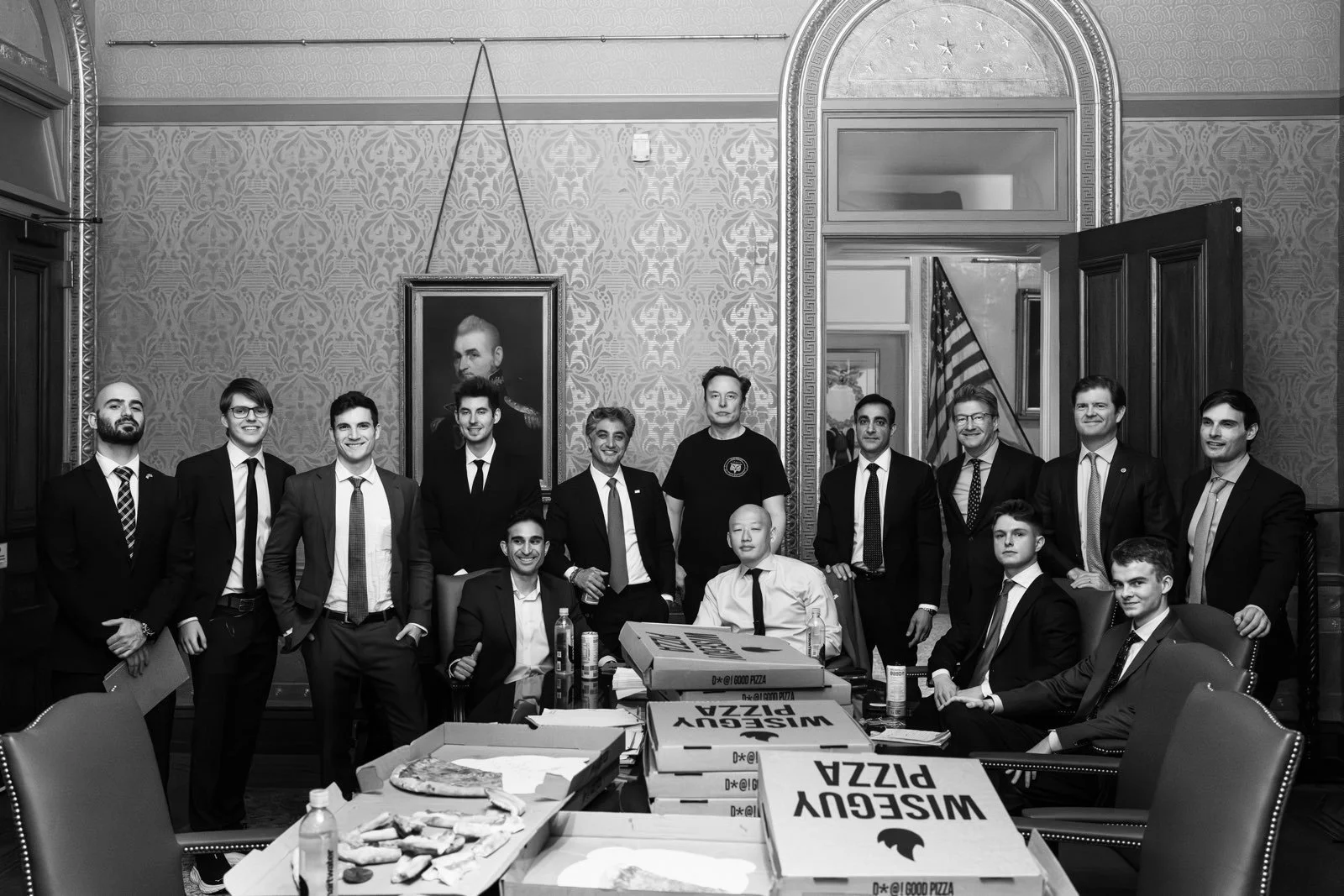
TH: No. What ended up happening is I was invited on the Bret Baier interview on Fox News's Special Report, and I'm told that ended up getting more than 40 million views across all platforms. It had a lot of the most important DOGE people, and I was there fortunately and made a few comments. Most of the commentary I got back was quite positive, but then I had a target on my back after that. And the most—
MR: What was the thing you said that — I'm going to watch it again, but what was the thing you said that you think triggered people?
TH: Well, I said I was doing it out of patriotism, and for some people that's, "Wow, great, you left your family and did it," and they agree with it. And then others thought all you're doing is ruining things with USAID — which I was not personally a part of, but our group was — or firing federal workers who don't deserve to be fired. So there were a lot of really, really negative comments. There was one Facebook group with a really negative post about me that had 75,000 likes and three and a half thousand comments. Everyone said, "Don't ever read the comments." One night I just said, "I'm going to read them." They were not the nicest.
MR: Is there one that sticks with you?
TH: Oh my God. They were just so horrible. They're all very similar — just about how I'm a terrible person and all—
MR: Were they making fun of where you're from, how you look? What did they pick on you for?
TH: Mostly just words that you wouldn't want to put in print. Every single form of it you could imagine.
MR: Do people tell you you look like Tucker Carlson?
TH: Not a lot about my looks, actually. That made me feel better. I thought that would be one of the first things they would go after. But look, it hardens you, and it made me more resolved. But the real reason I became a target, now that I think about it — it was after the Bret Baier interview, but it was when Secretary Burgum promoted me to be an assistant secretary in charge of policy, management and budget, and the news went out in all this media that I was now running the national parks, so DOGE was running the national parks. So any time anything negative happened in any national park, I was the guy. It was my fault.
MR: Do you love the national parks?
TH: Of course I do.
MR: Do you have a favorite national park?
TH: Yellowstone. I went there as a kid, and Cam Sholly, who's fantastic and who ran Yellowstone, I was talking to him weekly about mostly how to improve the park experience. What people didn't realize is that when we were working on the federal workforce stuff, we were focused on HR and IT professionals, of whom we had more than 4,000 across the entire Interior Department.
MR: What's a national park that people might not have heard of — a hidden gem?
TH: Wow, that's a great question. Let me show you this [shows puzzle set]. After all this happened, Secretary Burgum sent me a puzzle of the national parks.
MR: Oh, wow. Is there one that you want to visit that you've never been to?
TH: I want to go to a bunch of the ones in Alaska — like Denali, for example.
MR: I've been to Denali. Denali's fantastic. Do you hunt or fish?
TH: I've tried. Growing up in the city, I didn't have guns around, but I've gone bird hunting with my father-in-law. I've gone fishing a number of times. I've been fishing in Alaska, so I like to do that, but I was more of a team-sports person growing up.