

Interview with Gadi Taub
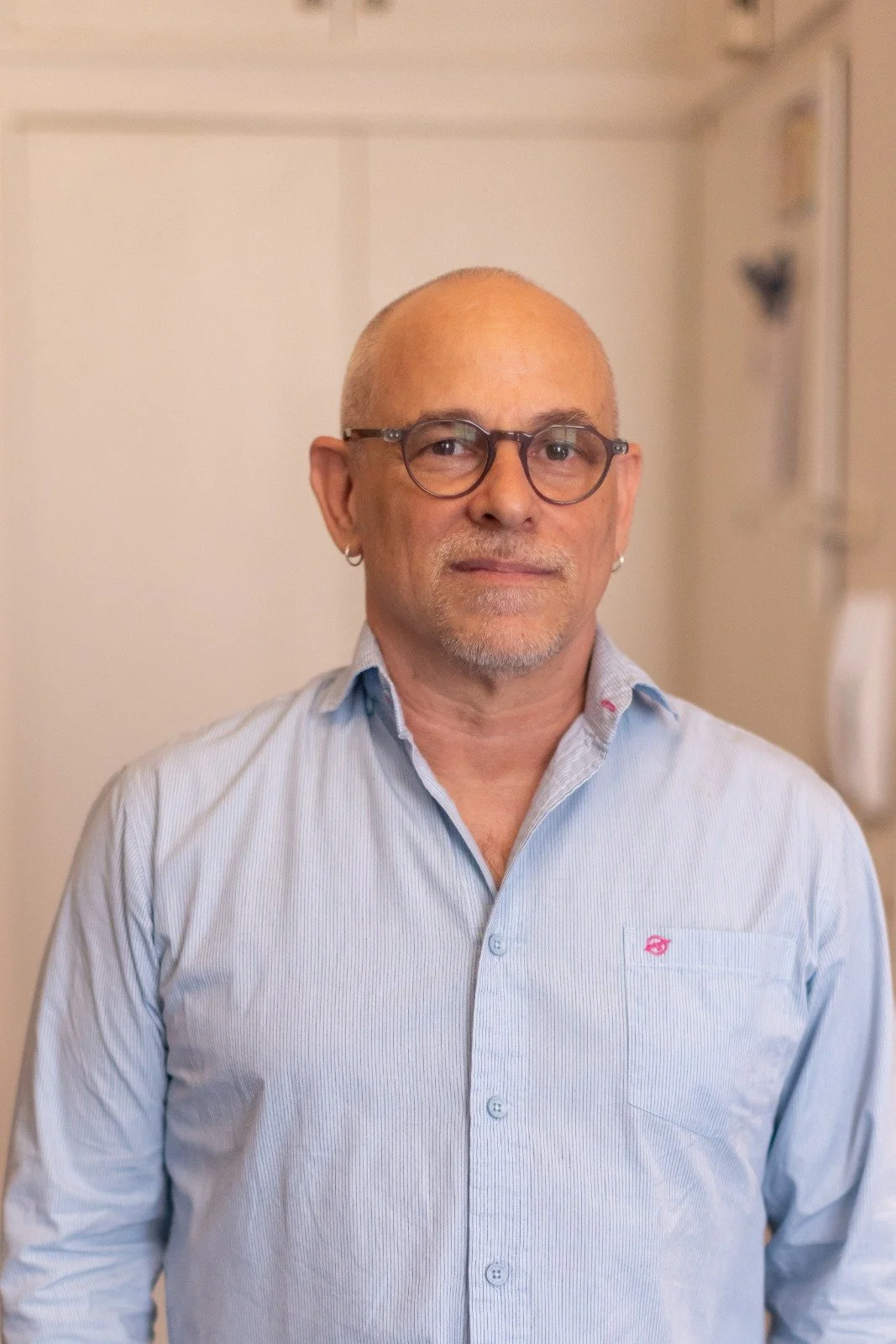
Gadi Taub is an Israeli writer and senior lecturer at the Hebrew University of Jerusalem.
Progressive Rock?
Contents
Max Raskin: When I think about you, I basically think of two dimensions. There's Israeliness, and there's intellectualism. Which one do you want to start with?
Gadi Taub: I don't see them separately, so you're welcome to lead.
MR: You described growing up in a salon culture. Who were some of the people that had the most profound impact on you or that stood out in your mind?
GT: Haim Gouri, who was the poet of the War of Independence and was a friend of my parents. I remember Dan Horowitz, the sociologist whose voice was very high-pitched. Me and my sister, we couldn't sleep when he was going on. There was always political talk.
MR: Did your parents let you participate?
GT: No, these were all heavy hitters and we were just children. Only in retrospect did I realize how serious it all was, especially after Begin’s electoral victory in 1977. A group of Jerusalem intellectuals formed what was called the 1977 Circle. It was an informal attempt of the second generation of the old Labor elite to understand what it was that went so wrong as to drive them out of power. These circles were born there, and sprouted among other places, in our living room.
My parents, as far as I can reconstruct in retrospect did not share the anti-democratic spirit, though they too were shocked by the fact that labor was ousted from power. My father was, back then, the head of the Israel Securities Authority and the Likud administration fired him. He refused to go to the private sector, saying he came here to help found a Jewish state, not to get rich. So he took a lesser job as CEO of the public publishing company, Mosad Bialik, responsible, among other things for the Hebrew Encyclopedia of the Bible. My father, an economist, believed that the health of the Jewish state depends also on nurturing the Jewish spirit.
While all this was happening, though, I just wanted to be a rock drummer, and was pestering my parents to buy me a drum kit. They only relented when I made this my demand for my Bar Mitzvah present. I sort of rebelled…I had shoulder-long hair, and was mostly into music all through high school. I hardly ever read books — unless they were sci-fi.
MR: What kind of band were you in?
GT: Rock band. It was called Time (Zman). I almost reached professional level. I once did a recording for some documentary on the only channel we had on television when my drum teacher couldn't do it. I thought I would be a musician.
MR: What kind of music did you listen to when you were younger?
GT: Prog rock.
MR: When you were 18, what was your favorite band?
GT: Oh, that's difficult. First of all, I had a knack for good lyrics, so I liked storytellers. I guess a trio of women singers that I was just fascinated with: Laurie Anderson, Kate Bush, and Joni Mitchell.
MR: But Joni Mitchell was not prog rock.
GT: The prog rock section of my record collection was not the women singer section. It was more Jethro Tull and Genesis.
MR: What's the first prog rock album that comes to your mind right now?
GT: Thick as a Brick, but of all the records that I’ve heard, the one I thought was the masterpiece was The Dreaming by Kate Bush. That's out of this world. I still think so.
MR: Do you listen to music when you exercise or are on your motorcycle?
GT: I don't. I don't listen to music that much anymore. I listen to music when I write.
MR: What kind of music do you listen to when you write?
GT: I have a special section for Brazilian music, Neoclassic Brazilian.
MR: Bossa nova?
GT: Mallu Magalhães. She is a genius. I listen to her a lot. I can even parrot some of the lyrics with only a vague idea of what they mean. One of my TV dramas was remade in Portuguese in Brazil.
MR: How do you spell Mallu Magalhães?
GT: Magalhães. Max, I'm dyslexic in Hebrew. You're trying Portuguese on me?
MR: What’s your favorite song?
GT: “Você Não Presta.” It’s just absolutely amazing.
MR: You listen to lyrical music when you write?
GT: Yeah, a lot of it. I loved storytellers and had I not been so deeply disappointed by Bruce Springsteen’s idiotic politics, I would've said I still love him. The funny thing is I never thought I would turn to American history as a career choice, but the clues were there: every single storyteller that I really loved turned out to be American.
MR: Early Springsteen — anything before 1980 — are these magical stories and then I think it just got to be so ham-fisted.
GT: No, I liked a lot until The Ghost of Tom Joad.
MR: Really?
GT: “Walk Like a Man” made a very deep impression on me, but then I saw him with Obama and he said that he'd leave the country if Trump wins, and then I said, "You just turned your back on everything you represent, you idiot."
But I have this love for American storytellers that was just always there. My first real literary love – I was 13 at the time – was Damon Runyon.
MR: Who's that?
Guy and Dolls
GT: Oh, Max. Guys and Dolls, are you serious?
MR: I don't know Damon Runyon, no.
GT: Oh my God, I so envy you. It's all just ahead of you, this great amazing journey.
Listen, Damon Runyon is in a way, the quintessential American writer. I've got it here in two languages. Oh, actually it’s by my bed, it’s not just here.
MR: What book should I read?
GT: Romance in the Roaring Forties.
He's the master of the short stories. This is how the first story begins:
Only a rank sucker will think of taking two peeks at Dave the Dude’s doll, because while Dave may stand for the first peek, figuring it is a mistake, it is a sure thing he will get sored up at the second peek, and Dave the Dude is certainly not a man to have sored up at you.
But this Waldo Winchester is one hundred per cent sucker, which is why he takes quite a number of peeks at Dave’s doll. And what is more, she takes quite a number of peeks right back at him. And there you are. When a guy and a doll get to taking peeks back and forth at each other, why, there you are indeed.
It's just a joyride, and it's also quintessentially American. A story called “The Idyll of Miss Sarah Brown,” which became the Broadway show, Guys and Dolls, is about a gambler. It's this gambler who's called The Sky and he's called The Sky – if I may quote from memory – because he bets so high. In fact, “he will bet everything he has, and no one can bet any higher than that.”
The stories are all written in the present tense. Which is also part of their being so quintessentially American. America is a forward-looking nation. You come to the New World, you shed your past, and at every moment the world is new.
And his sense of humor, his facility with colloquial English – priceless:
"Well, Rose," I say, "it is a nice long story, and full of romance and all this and that, and," I say, "of course I will never be ungentlemanly enough to call a lady a liar, but," I say, "if it is not a lie, it will do until a lie comes along."
MR: I love that.
Down and Out on Allenby Street
MR: When you sit down to write do you write by hand or on your phone or the computer?
GT: I learned how to type quite early for an Israeli. I learned Hebrew first and because right after the army I started writing professionally in some capacity or other. I first wrote short radio plays, which were detective riddles.
MR: What are “detective riddles”?
GT: It was for children’s radio. There’s this detective, Inspector Kaydar. He would always come to some crime scene and interview someone, and then from what that person said he would know who the perpetrator of the crime was. Often it would be like: "You're lying. And you’re under arrest." And then the listeners had to figure it out what the lie was.
MR: Like Colombo.
GT: Yeah, but not as good and much shorter.
MR: What are the pieces of your work that immediately come to mind that either you're most proud of or you think are most indicative of who you are?
GT: Well, in terms of prose, it comes from very naïve children's stories. I had a big bestseller that turned into a steady seller, Things I Keep to Myself. It also had a best-selling sequel, Things I Keep from Yael.
It's these musings of a rather introverted thoughtful child, who is also in love with this pretty girl from his class, whom he never quite has the courage to approach.
But I guess I’m most proud of my noir bestselling novel Allenby Street, which also I also co-wrote later for TV – this was the series that was later remade in Brazil.
MR: When you’re walking down the street do people recognize you for your fiction or politics?
GT: I think now more political stuff, though some still recognize me from the many years that I did children’s TV. There was only one TV channel back then, so Israeli children of that time were more or less obliged to watch me.
MR: Is there anything else you’d point to that you wrote?
GT: There’s an essay about AA, the 12 Steps, which I think explains why my opinions are conservative. My best friend became a drug addict, and I was with him as he was struggling to rehabilitate himself, including coming to AA Meetings with him. And then I started reading their literature, and I marveled at how they were able to lead individuals who had collapsed into themselves back to society. I guess this is a Durkheimian essay, inspired no little by Clifford Geertz’s writings on religion. And it all started when I picked up this pamphlet at one of those meetings by some physician who said that alcoholism is “radical individualism.” And so the solution is resocializing, and the essay tries to outline how resocialization requires weaving personal commitments to other individuals into group solidarity, which forms the basis of commitments to norms, which are then justified by a philosophical or religious anchor of meaning.
MR: What is the least conservative thing about your lifestyle and what's the most?
GT: I can’t say that my lifestyle has been conservative. I wrote a noir novel mind you — and I did not research it in a library. While I was writing my Ph.D., I also had half my social life among these people, who I came to love and appreciate. That’s all in the gray area which is not really criminal, but far outside the middle class to which I belong. And the thing is that my conservative opinions formed because I saw firsthand how precarious life can be outside the conservative norms of society. It can be exciting, exhilarating even, to live on those dangerous regions, but in the end, you find yourself out in the cold looking in to homes and hearths.
Don’t get me wrong. I was only a tourist in these circles, I never actually lived a dangerous life — a tenured professor shouldn’t pretend he is Down and Out in Paris and London. I’m also no Charles Bukowski. But then I can’t say I’m totally at home in middle class life, or I wouldn’t be single still.
Here’s the strange thing: I always feel an outsider. Ever since I remember myself. But then I’m the quintessential insider, sociologically speaking — I come from the heart of the old elite. I guess I am only objectively an outsider after I joined the right, which my old social milieu will never forgive me for. And that too is hardly like being an outcast. It’s hard in academia, it’s even harder in the film industry and in literary circles, but then the right is still in government, so I’m not exactly forced underground now, am I?
MR: If you're painting an ideal evening for yourself, what does it look like?
GT: I'm very busy with building my own media outlet. I’ve turned a podcast into a media company, which is doing very well, and I plan to make good on my promise: to change the media landscape in this country. We’re halfway there.
The Deep South
MR: Let's say you have nothing to do.
GT: There is no such thing, Max. I would go to bed with an audiobook.
MR: What are you listening to right now?
GT: I'm always in the middle of Gibbon, The History of the Decline and Fall of the Roman Empire. It’s like 137 hours.
MR: We're all in the middle of Gibbon.
GT: In the non-audio department, I’m in the middle of Kissinger’s A World Restored, for the second consecutive time. I think I read most of what Kissinger wrote at least twice, including the thousands of pages of his memoirs. Which, since I’m dyslexic, is quite a feat. I read slowly but also thoroughly.
MR: Are you reading fiction?
GT: I’m rereading fiction, mostly. So Damon Runyon for the nth time. And I keep going back to Absalom, Absalom! by Faulkner. There's no one like Faulkner.
MR: Did you ever read Shelby Foote?
GT: No, I don't know him.
MR: He was Faulkner's friend.
GT: I'll tell you something, I don't read widely. I read vertically. So I take one book and if I really love it, I read it until it falls apart.
MR: Where in America would you like to go that you’ve never been?
GT: The Deep South.
MR: You've never been to the Deep South?
GT: No. Alabama and Mississippi — that's where I want to go. Whenever I cross the Mason-Dixon line, I feel far more comfortable because the first woman at the convenience store who calls me “darlin’” immediately makes the Israeli in me feel at home. In this country, as you know, everything is personal.
The South is much more congenial to me and I love the people that Bruce Springsteen deserted. So in a sense, I love the Trump voters as they appear through Batya Unger-Sargon’s writing whom I love. She's great and she speaks very good Hebrew too. Did you know? I did a whole episode of my Hebrew podcast with her.
MR: What is the most and least American thing about you?
GT: I don't think I'm very American.
MR: Why not?
GT: I'm very Israeli, which is very different. What connects individuals is radically different in different societies. Connections are far more binding in Israel — it's both Israeli and Jewish. That creates a much denser net of human relations. It scares me that in America you can detach yourself so easily and be lost. Or die alone in an apartment full of empty whiskey bottles. That can’t happen in Israel. You’d have to fight off too many friends and aunts — which doesn’t say you can’t ruin yourself among them. But they will all see you do it. But then the freedom in the U.S. is exhilarating.
Characters
MR: I think you are very American.
GT: What do you think is American about me? I'm curious.
MR: I think you are iconoclastic. Like you said, Israel has a very dense set of social connections — it’s socialist kibbutznik summer camp and I think of you as that camper who doesn’t play by the rules.
GT: Is that American? Israelis think Americans never say what they really think.
MR: I think attacking power is very American.
GT: Israelis are firm believers in rules. It’s just that all Israelis think they are the exception. Rules were only made for others. Which is why there are so many Israeli mavericks.
I am not afraid to be controversial, but that doesn’t mean it’s fun to be disliked. There’s a WhatsApp group of my high school class. A professor wrote that he refuses to even have an argument with me because I was tinged with moral rot, as he put it. He meant that I support settlements, I think. There’s an upside to paying a price for your opinions: it reminds you that you reached them honestly, and not to curry favor or be accepted.
MR: When people make those comments do you get upset?
GT: I do. I don’t want to give up on convincing, and I’m frustrated when people make such judgments based on shutting you out, rather than engaging your opinions. I don’t think that guy, who’s a smart professor of mathematics, knows what I really think and why.
MR: If he did, what he said would've been really nice…
GT: Like many progressives he jealously guards his opinions from colliding with reality. I’m frustrated that we can’t engage and get our opinions heard on the other side.
MR: So over your lifetime you’ve known a number of Israeli politicians and important people in the country. Is Bibi the one who stands out in your mind as the most whatever?
GT: Absolutely. And I don’t call him “Bibi,” except maybe when an English-speaking interlocutor like you does. In writing I take care to change it back to Netanyahu whenever editors of my pieces insert it. Why would I call a prime minister by his nickname? I’m not his buddy, and calling him by a nickname is, to me, a disrespect for his office. Do you remember an American writer calling Nixon “Dick” in a political piece? Maybe “a dick,” but not Dick. And this holds true in private too.
MR: Is there a close second?
GT: No, I didn't meet Ben Gurion, my father did.
MR: Is there anyone not in politics that you think rises to that level?
GT: I had a very friendly relationship with Amos Oz, though the political rift grew wider in his last years. But I got a personal letter from him about most of my books — fiction and non-fiction. And we used to meet once in a while. There was this that I liked about him: When he found something literarily worthwhile, he’d drop all other considerations — political or personal — and would then engage you like a master craftsman would — on the merits of what you wrote with no bullshit.
MR: What was he like?
GT: There was something overly articulate about him — as if anything he said went through three drafts before he uttered it. So that gave a sense of formality that also extended to personal relations. But he could be very kind too. And as I said, when you got down to literature per se, he’d engage you with an honesty that came through — penetrated through — his polite, articulate façade.
When I got stuck with my novel, I went to consult him on what to do. I tried to write Allenby first in this Tom Wolfe-ish anthropological register, and it turned out badly. After 200 pages, I realized it was like I was looking down on my characters as if Tom Wolfe’s condescending misanthropy could not be detached from the attempt to find a Hebrew key for his rolling prose. I certainly didn’t want to look down at those bouncers, those strippers, those afterhours denizens of the Tel Aviv underworld.
I called Oz. And we sat just the two of us one Shabbat morning in his Tel Aviv apartment, and he gave me his view on how to shape the voice of the narrator. It was not that conversation that solved my dilemma though. What happened to me is that I was reading James Ellroy's autobiography, and I love Ellroy. In his biography, he tells this story about how he wrote White Jazz, which is a noir thriller. He said it was 900 pages, and the publisher said, “There's no such thing as a 900-page thriller.” So he said he went home and took out the verbs, and then it struck me.
MR: The verbs or the adjectives?
GT: The verbs.
“Rain fell.”
What happens if you just drop the verb? Rain. That’s enough, isn’t it? You don’t think the rain did anything other than fall, do you? So what happens if you start your paragraph like this?
“Rain.”
“Dusk.”
“A car.”
You get a staccato rhythm in English, as you do in Hebrew. Ellroy is, in my opinion, one of the greatest novelists of all time. And what’s dense in English is even more dense in Hebrew, which is a very concise language. You can say a lot with few words. It’s a rocky language. The Bible in Hebrew is nothing like it sounds in English. You read the King James translation, and it feels like the original was watered down.
Hebrew poetry is…you can't describe it. You guys think Shakespeare is amazing. Try Alterman.
Bibi
MR: I think I’m too hard-nosed for this. I’m going to ask a bunch of stupid questions now.
GT: I'll edit out all the presumptuous stuff.
MR: No, I'll put in the smart stuff.
GT: Feel free to add smart stuff of your own, Max.
MR: Where in Tel Aviv is your favorite place to eat?
GT: Halev HaRahav.
MR: And what do you get when you eat there?
GT: Shishlik in a pita with everything.
MR: Are you good at organizing yourself?
GT: No, but I'm very good at concentrating. I have tunnel vision. I forget myself when I bite my teeth into work that’s important to me. When I wrote the Allenby Street I took a sabbatical from the university, and I basically lived in the novel. I would get up at four o'clock in the morning and go to some 24-hour café and sit and write until 11 o'clock, and then do some chores and then get a nap, and then wake up and then write for six more hours.
MR: Do you nap every day?
GT: Yes. Every day I find places to nap that you won't believe.
MR: Before you go to meet Bibi or before you go on TV, do you get nervous?
GT: Not anymore. If there's something very risky at stake, then I may get nervous, but usually not. I usually don't have stage fright.
MR: And before you meet with Bibi or anyone like that, do you ever get nervous?
GT: There are not many “anyones” like that. He’s very good at making people he wants to talk to feel at ease. And he greatly appreciates a sense of humor, which you never see in public.
MR: In the last interview you did with him for your podcast he began by saying the last time he saw you was in the Jerusalem mountains. What was that about?
GT: When he was recovering from surgery his doctors told him to take walks. He asked me to join him for one of these, which was a glimpse at the man behind the public persona. The only time I remember any small talk with him.
There’s very little of that, and not just because he does not often let down his guard, it is also because it is hard for his interlocutors to get past the sense that he is a world historical figure — which he certainly is. Israelis will only acknowledge his true stature after he leaves the stage. What he did for this country since October 7 is far greater than any of us imagined possible. We were living on the darkening shadow of rising Iranian hegemony — which was to be reinforced with a nuclear umbrella — with its proxies gaining strength all around us, and Netanyahu, in the face of hostile administration managed to leverage the disaster to completely remake the Middle East.
MR: What is that like being in a country and being able to just take a walk with the prime minister?
GT: Much to my regret Max, that is not the case. I don't wake up in the morning and call the prime minister to say, "Hey, fancy a walk?" He had to take a walk for health reasons.
MR: But he could have chosen anyone to take a walk with.
GT: This creates the impression that I’m part of his intimate inner circle, which I’m not. I happened to be his last meeting before the walk. But I’ll tell you this: He’s an avid reader of history, not least American history, and he sometimes wants someone to discuss the books he reads with. And that someone is occasionally me.